Shopping Cart


- Articles
- IoT Solutions
- KNX vs Zigbee: Choosing the Right Smart Home Standard for Modern Buildings
KNX vs Zigbee: Choosing the Right Smart Home Standard for Modern Buildings
Compare KNX vs Zigbee smart home standards for automation, security, scalability, and performance. Learn which protocol is best for villas, smart buildings, and modern IoT systems.
By Blue Edge Team | Published May 21, 2026 | Updated Sep 23, 2026 | 4 min read
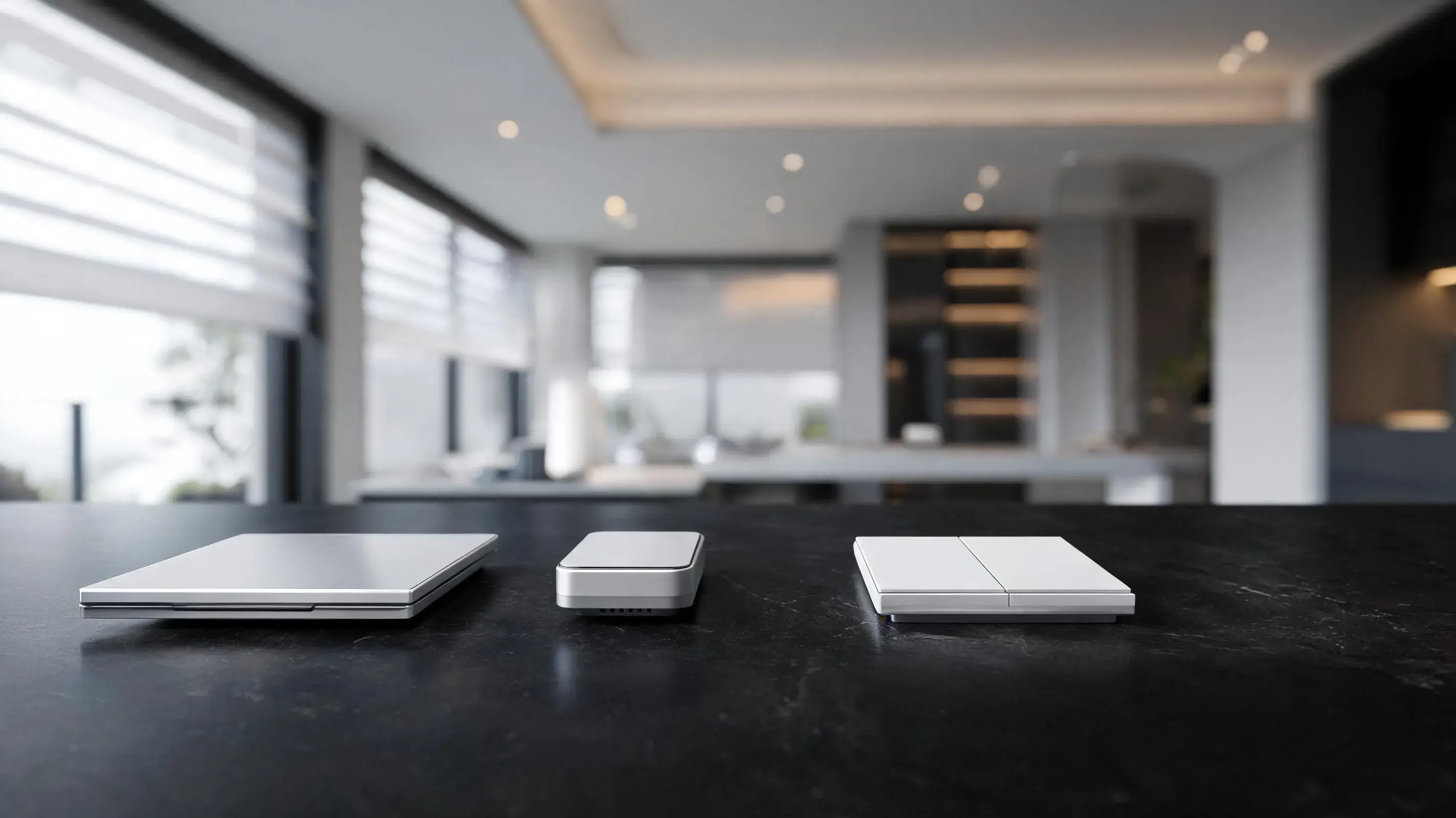
Selecting the correct communication protocol is the foundation of any successful smart home integration. The technology you choose dictates the reliability, scalability, and security of your home automation system. Two prominent standards dominate the market: KNX and Zigbee.
Understanding the technical distinctions between these protocols is essential for homeowners, architects, and system integrators. This guide provides a precise, point-to-point comparison to help you determine which technology aligns with your specific infrastructure requirements.
Understanding the Core Technologies
To make an informed decision, it is necessary to first understand the fundamental architecture of both KNX and Zigbee.
What is KNX?
KNX is a standardized, OSI-based network communications protocol for building automation. It is an established global standard primarily utilizing wired infrastructure.
- Wired Reliability: KNX systems predominantly operate via a dedicated twisted-pair cable, ensuring maximum stability.
- Decentralized Architecture: Every connected device contains its own microprocessor. If one component fails, the rest of the system continues to function independently.
- Industry Standardization: Over 500 manufacturers produce KNX-certified devices, guaranteeing seamless interoperability across different brands.
- Target Application: Ideal for new constructions, large-scale commercial buildings, and high-end residential properties.
What is Zigbee?
Zigbee is a wireless technology designed specifically for low-speed, low-power applications. It operates on the IEEE 802.15.4 specification.
- Wireless Mesh Networking: Zigbee devices communicate with one another to form a mesh network. Each mains-powered device acts as a repeater, extending the network's overall range.
- Ease of Installation: As a wireless protocol, Zigbee requires no specialized cabling, making it highly adaptable.
- Low Power Consumption: It is optimized for battery-operated devices like door sensors and smart switches.
- Target Application: Best suited for retrofitting existing homes, budget-conscious projects, and modular smart home setups.
Point-to-Point Comparison
When evaluating KNX against Zigbee, several critical factors must be considered to ensure optimal performance.
1. Installation and Infrastructure
- KNX: Requires extensive planning and professional installation. The twisted-pair cabling must be integrated into the walls during the construction or major renovation phase.
- Zigbee: Offers high flexibility. Devices can be plugged into standard outlets, screwed into light fixtures, or attached to walls using adhesive. Installation can often be completed without professional assistance.
2. System Reliability and Range
- KNX: Unaffected by radio frequency interference, thick walls, or network congestion. It delivers uninterrupted, highly reliable communication across vast distances.
- Zigbee: Vulnerable to physical obstructions and interference from standard 2.4 GHz Wi-Fi networks. However, its mesh network capability allows the signal to route around obstacles effectively in smaller environments.
3. Scalability and Device Limitations
- KNX: Highly scalable. A single KNX system can support over 65,000 devices, making it suitable for massive commercial deployments and expansive estates.
- Zigbee: Networks typically support up to 65,000 nodes in theory, but practical limitations usually restrict stable networks to a few hundred devices due to bandwidth constraints and routing complexity.
4. Cost Considerations
- KNX: Represents a significant upfront capital investment. The costs include specialized cabling, professional system integration, and higher-priced certified hardware.
- Zigbee: Highly cost-effective. Hardware is mass-produced and affordable, and the lack of dedicated wiring drastically reduces installation expenses.
Selecting the Right Solution for Your Property
The decision between KNX and Zigbee should be based entirely on the specific phase of your project and your long-term performance expectations.
Choose KNX If:
- You are building a new home or undertaking a full structural renovation.
- You demand zero latency and absolute reliability without signal interference.
- Your project involves a large property with complex automation requirements.
- You require a permanent infrastructure that adds tangible value to the real estate.
Choose Zigbee If:
- You are upgrading an existing, finished home where running new cables is not viable.
- You prefer a modular approach, adding smart devices gradually over time.
- You are working within a restricted budget.
- You want the flexibility to easily relocate devices or take them with you when moving.
Frequently Asked Questions
-
Can KNX and Zigbee be used together in the same smart home?
Yes. Professional system integrators can bridge KNX and Zigbee networks using specialized gateways. This allows you to utilize KNX for the permanent, reliable backbone of the house (like heating and primary lighting) while using Zigbee for flexible, battery-operated sensors or smart bulbs.
-
Is a central hub required for these systems?
KNX is fundamentally decentralized, meaning devices communicate directly with one another without requiring a central server for basic operations. Zigbee, however, relies on a central hub or coordinator to manage the mesh network and execute automation routines.
-
How secure are KNX and Zigbee networks?
Both protocols prioritize security. KNX Secure uses AES-128 encryption to authenticate and encrypt telegrams on the network. Zigbee also utilizes AES-128 symmetric encryption to secure data transmissions, though wireless networks inherently carry a slightly higher risk of remote interception compared to closed, wired systems.
-
What happens to my smart home if the internet goes down?
Both KNX and Zigbee networks operate locally. If your internet connection fails, basic functions such as light switches, automated blinds, and localized heating controls will continue to operate normally. You will only lose remote access from outside the home and cloud-dependent voice integrations.
-
Does Zigbee interfere with home Wi-Fi?
Zigbee operates on the 2.4 GHz frequency band, which is the same band used by many Wi-Fi routers. While this can cause interference, configuring your Wi-Fi router and Zigbee hub to operate on non-overlapping channels mitigates this issue and ensures stable performance for both networks.
Securing Your Smart Home Future
Modern properties require secure, flexible, and high-performance communication systems. Whether you select the robust, wired infrastructure of KNX or the flexible, wireless adaptability of Zigbee, investing in standardized protocols guarantees a more efficient and comfortable living environment. Evaluate your architectural constraints, budget, and long-term automation goals to deploy a system that delivers optimal performance and durability.
About Blue Edge
Blue Edge Company is a value-added technology distributor based in Dammam, Saudi Arabia, supplying interactive displays, smart building systems, networking infrastructure and IT security software to businesses and residential projects across the Kingdom, with installation and technical support.
Learn more about Blue Edge →Published 21 May 2026 • Last updated 23 September 2026 • This article is reviewed when standards, regulations or product guidance change.