Smart Residential Compound Solutions in Saudi Arabia
One access and automation system that runs from the perimeter gate to the villa door to the wall panel inside — specified, supplied and supported across the Kingdom by Blue Edge.



 Riyadh · Dammam · Jeddah · Khobar
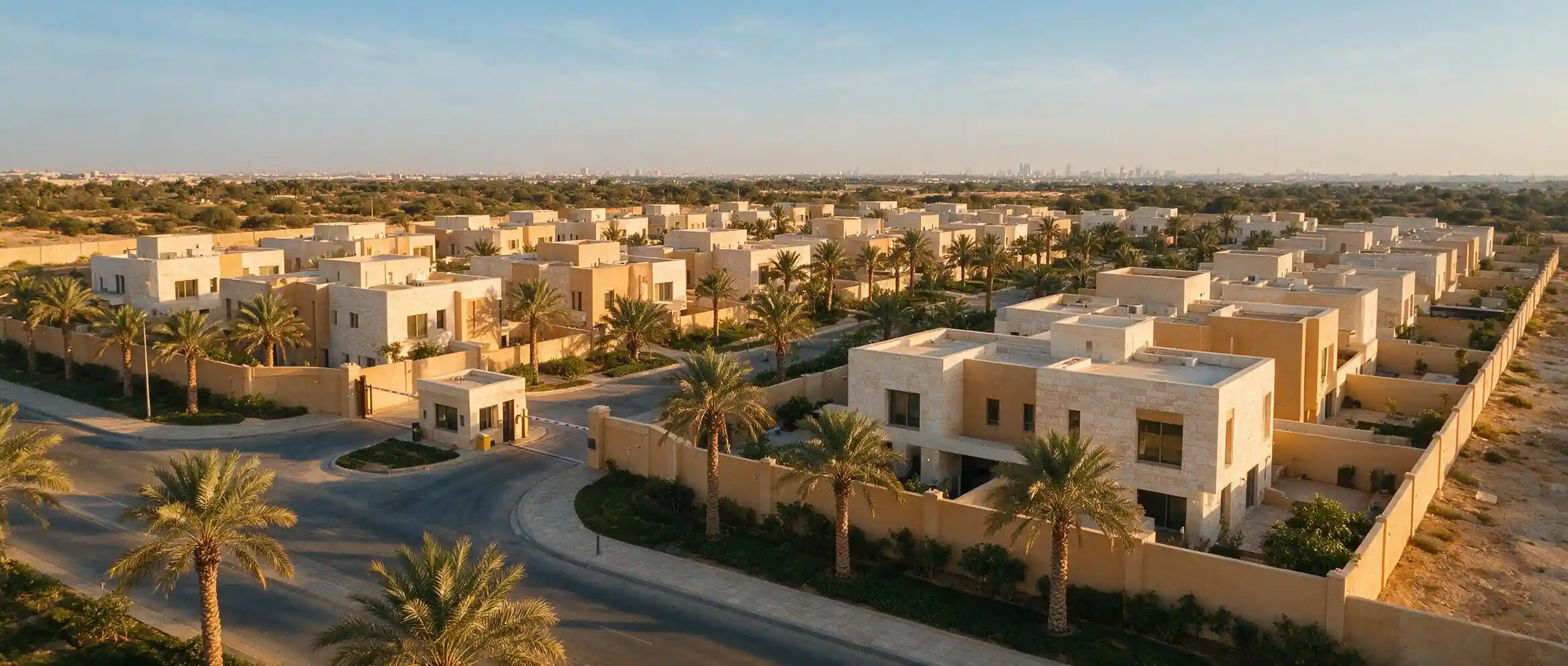
Gate, villa door, living room. Three access points, three different owners of the problem — and in most Saudi compounds, three systems that have never spoken to each other.
The Kingdom is building compounds faster than it is standardising them
Every one of those master-planned communities eventually gets handed from a developer to a facilities team, and the systems chosen during construction decide what that team spends for the next decade. Access control is one of the few line items where the cheap decision at design stage is still visible eight years later.
A compound has three doors, and most run three unconnected systems
The failure is almost never the hardware. It is that nothing talks to anything else.
The main gate runs on a barrier and a guard booth. The villa door has whatever lock the contractor fitted. Inside, the resident has added a smart plug and a camera bought online. Three databases, three admin logins, and no shared record of who went where.
The consequences are mundane rather than dramatic. A tenant moves out and gets removed from one system but not the other two. A delivery driver arrives at eleven at night and the guard phones the villa from his own mobile. A domestic worker needs daily access, so someone hands over a resident card and it never comes back. The FM contract changes hands and the new team inherits a controller nobody has the password for.
None of that is a security breach in the headline sense. It is just a compound where nobody can answer a simple question — who opened this door, and were they supposed to be able to? Building the three layers as one system is what makes that question answerable, and it costs considerably less at design stage than it does as a retrofit.
Three layers, one system, one set of credentials
The gate should not depend on a guard recognising a face
Compound gatehouses run shifts and rotate staff. Any process that relies on the man on duty remembering which cars belong breaks the first week someone new starts.
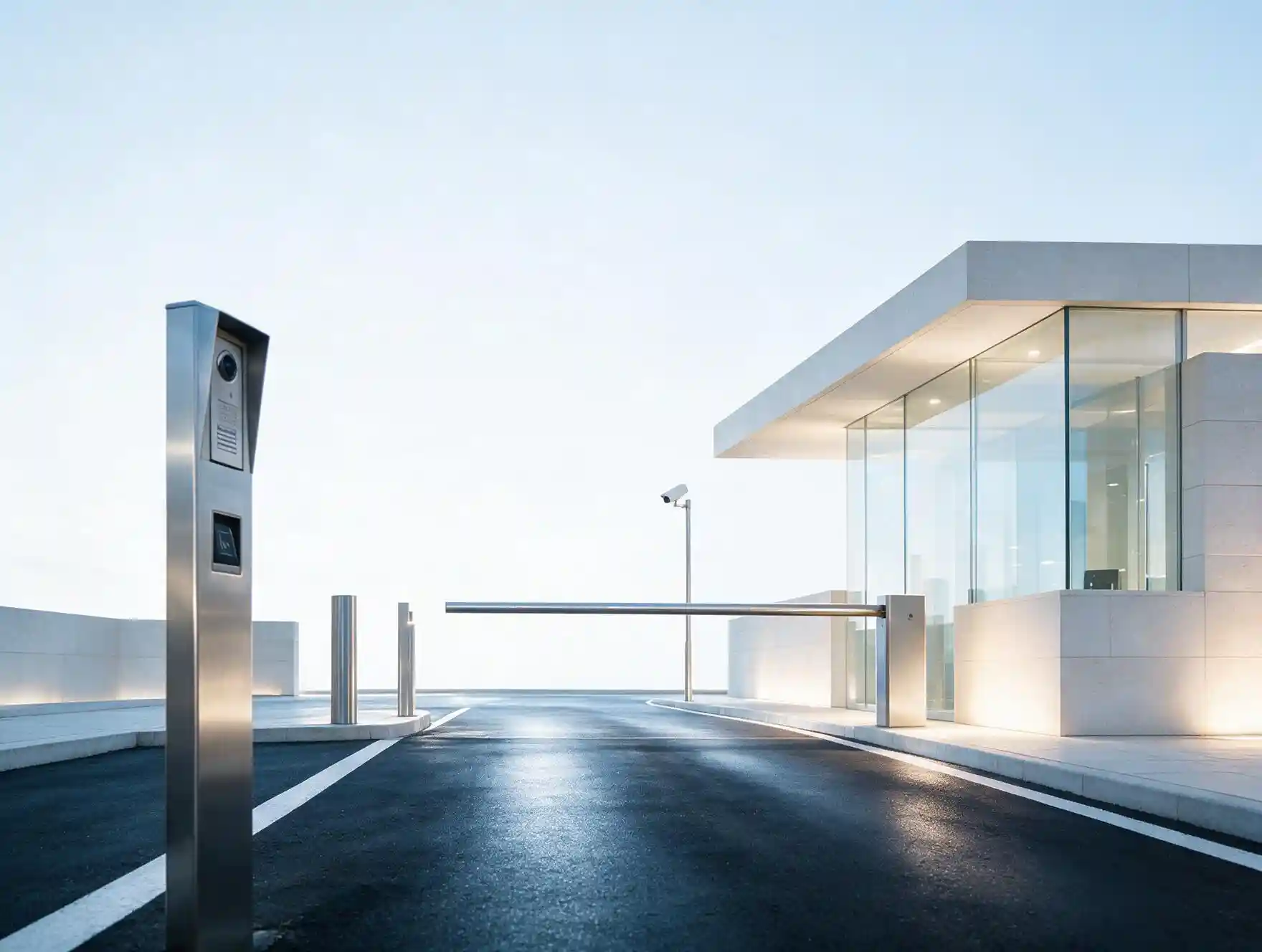
- Akuvox SIP door stations at the vehicle and pedestrian gates, with calls routed to the resident's phone or indoor panel rather than to the guard's personal mobile.
- Axis network cameras covering the lane, the plate and the driver as separate views, so the footage is usable rather than merely present.
- Licence plate recognition for registered resident vehicles, so residents stop being stopped.
- Time-limited visitor and delivery codes that expire on their own instead of relying on somebody remembering to cancel them.
Layer 01
Every entry logged against a name, not a timestamp
This is the layer compounds get wrong most often, because the villa door is usually fitted by the building contractor and never revisited.
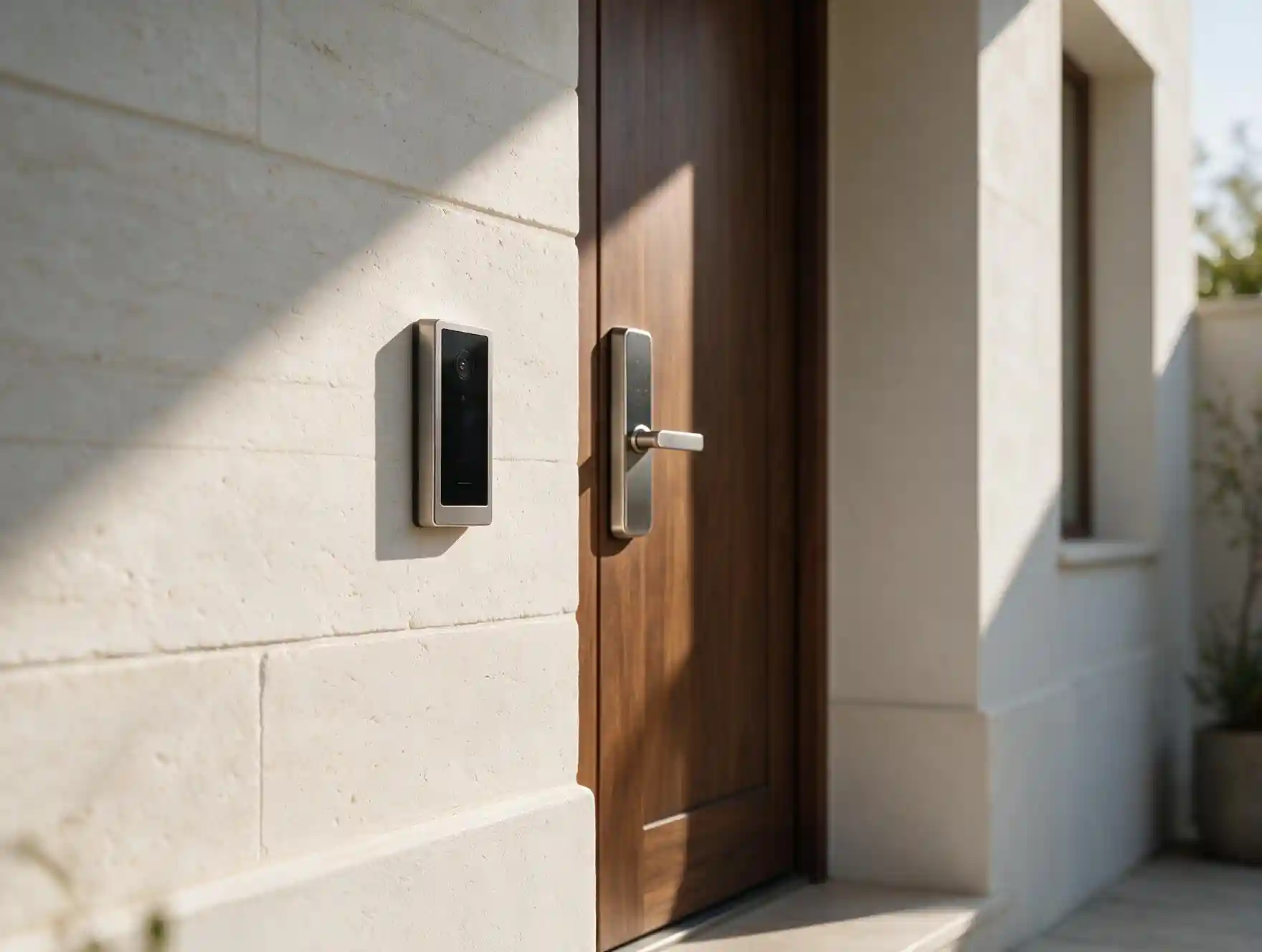
- Akuvox video door stations at each villa, answered on the indoor monitor or on a phone from anywhere — which is what makes a gate call work when the family is out.
- Akubela smart locks supporting PIN, card, fingerprint and app entry, so domestic staff and drivers get their own recurring credential instead of borrowing a resident's.
- A named audit trail for every entry, rather than a log that says a door opened at 14:12 and nothing else.
- Credentials revoked centrally when a tenancy ends, in one place rather than three.
Layer 02
One wall panel instead of four apps
Residents will not learn a separate app for lighting, another for climate and a third for the door. If it is not on one panel by the front door, it does not get used.
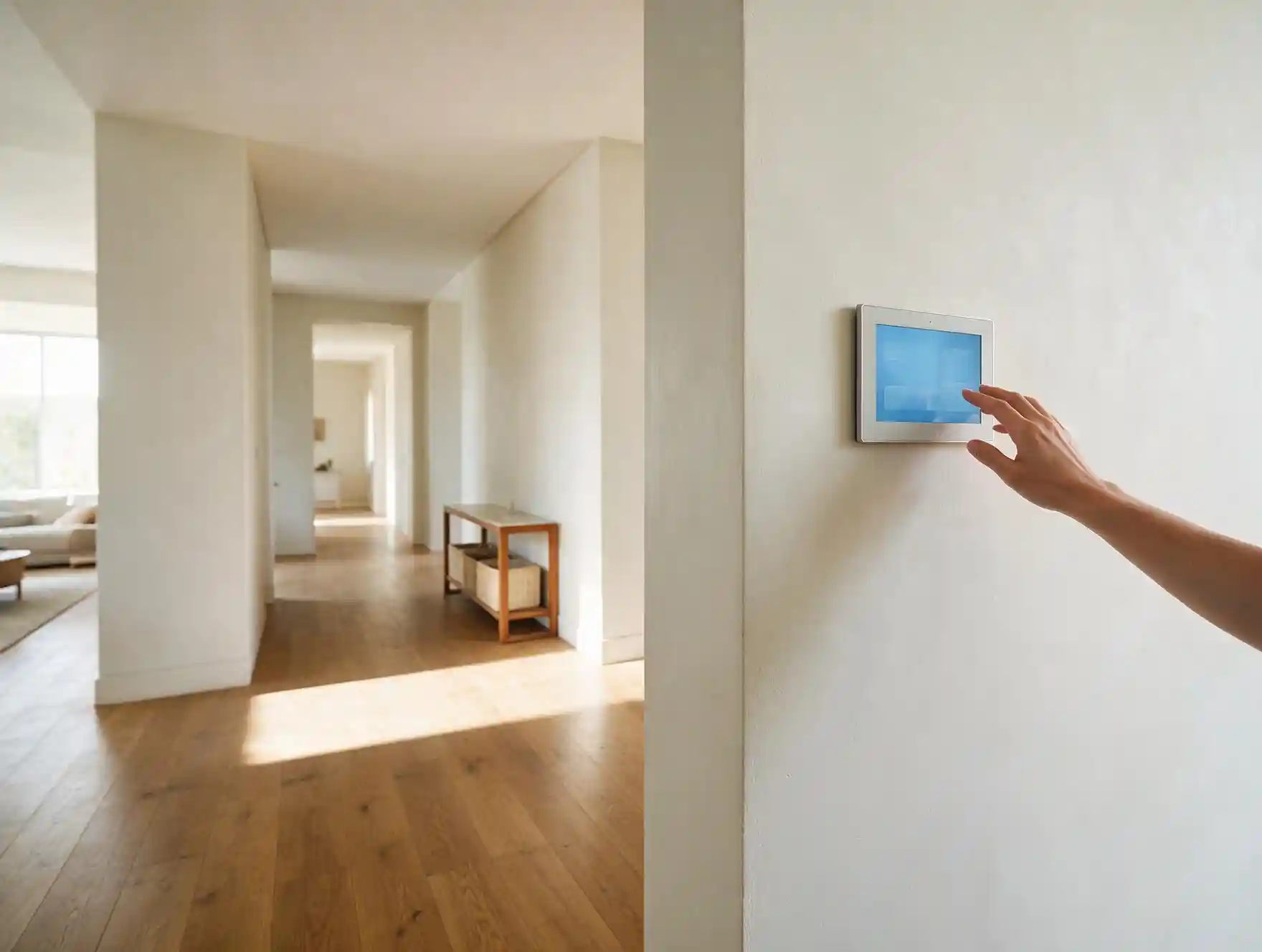
- Akubela HyPanel as the in-villa controller — lighting, climate, curtains, scenes and the door intercom on a single wall unit.
- Zigbee switches and modules that retrofit into existing villas without pulling new cable, which matters on any compound built before about 2020.
- An identical handover configuration shipped to every villa, so the FM team supports one setup rather than four hundred improvised ones.
- Cisco networking underneath it, because none of the above is more reliable than the network it sits on.
Layer 03
What each layer has to do, and who ends up owning it
| Layer | What it has to do | Typical hardware | Who administers it |
|---|---|---|---|
| Perimeter | Admit residents without stopping them, admit visitors and deliveries on a code that expires, record every vehicle | Akuvox SIP gate stations, Axis network cameras, licence plate recognition, barrier interface | Compound management or the FM provider |
| Villa entrance | Answer the door from anywhere, issue recurring access to staff without sharing a resident credential, log entries by name | Akuvox video door station, Akubela smart lock, indoor monitor | The resident, with an override held by management |
| Inside the home | Put lighting, climate, scenes and the intercom on one control the resident will actually use | Akubela HyPanel, Zigbee switches and modules, sensors | The resident |
| Network | Carry all three layers reliably, keep resident traffic separate from management systems | Cisco switching and wireless, PoE distribution, segmented VLANs | The FM provider or an appointed IT contractor |
Key takeaway: the perimeter and the villa door are operational systems owned by management, while the in-home layer belongs to the resident. A compound design that ignores that split ends up with either residents who cannot control their own homes or a management team locked out of its own gate.
From site walk to handover
Site walk
We walk the gates, a sample villa and the existing cabling, and tell you what can be reused rather than assuming a clean sheet.
Design & BOQ
A layer-by-layer design with a priced bill of quantities your contractor or consultant can tender against directly.
Supply & commission
Genuine stock supplied in-Kingdom, configured to one standard villa template and commissioned against the design.
Handover & support
Admin training for the FM team, documented credentials, and after-sales support from Blue Edge rather than an overseas ticket queue.
What Blue Edge does, and what it does not
Blue Edge is a technology distributor and value-added partner based in Dammam, supplying across Saudi Arabia. We specify, supply, configure and support the equipment, and we work alongside your main contractor, consultant or FM provider rather than replacing them.
On compound projects the useful conversation happens at design stage. Once the conduit is in the ground and the gatehouse is poured, the options narrow and the cost of changing your mind goes up sharply. If you are already built and looking at a retrofit, say so at the start — that is a different scope and we will price it as one instead of pretending otherwise.
If your compound falls under a specific security authority's requirements, share them at design stage and we will specify against the document rather than against an assumption.
Start with the site, not the catalogue
Tell us the number of villas, the number of gates and whether you are building or retrofitting. We will walk the site, mark up what already works, and come back with a layer-by-layer design and a priced bill of quantities in Saudi Riyals.
Compound questions we get asked
Can this work in an existing compound, or only a new build?
Both, but they are different projects. New builds get the full three-layer design with cabling planned around it. Existing compounds usually keep the barrier and the cabling and change the gate station, the villa door hardware and the management software. Zigbee devices are what make the in-villa layer viable in an older compound, because they retrofit without new wiring.
Do residents have to use an app?
No. The gate call can ring an indoor monitor inside the villa, a phone, or both. Residents who want app control get it; residents who never open it still have a working doorbell and a wall panel. Any compound system that only works through an app will have a compliance problem within a year.
How do deliveries and visitors get in without calling the guard?
The resident issues a time-limited code or a QR from the panel or the app. It works for a defined window and expires by itself. The guard stays for the exceptions rather than being the process, which is the point — a gate that depends on one person's phone stops working the moment that person changes shift.
What happens when a tenant moves out?
Management revokes the credential centrally and it stops working at the gate and at the villa door at the same time. This is the single strongest argument for building the layers as one system: in a split setup, removing someone properly depends on three separate people each remembering to do their part.
Who supports it after handover?
Blue Edge, from Dammam, in-Kingdom. We train the FM or management team on the admin side at handover and document the credentials rather than leaving them with the installer. Spares and replacements come from local stock rather than an overseas RMA queue.
Which brands do you supply for compound projects?
Akuvox for IP intercom and access control at the gate and the villa door, Akubela for smart locks, wall panels and in-home automation, Axis for network cameras and licence plate recognition, and Cisco for the switching and wireless underneath. All supplied, installed and supported in Saudi Arabia. Call +966 53 9855 188 to discuss a specific site.
Talk to Blue Edge about your compound
Blue Edge has always embraced our clients and partners as part of our team. Every project is performed with open communication, and a mutual respect with our clients provides the groundwork for our success.
Send us the villa count, the number of gates and your stage — design, construction or operational. We will come back with what we would specify and what it costs.