Shopping Cart


- Articles
- IP Telephony
- SIP vs VoIP: Key Differences Explained for Business Communication
SIP vs VoIP: Key Differences Explained for Business Communication
Learn the key differences between SIP and VoIP, including functionality, scalability, compatibility, and business communication benefits for modern enterprises.
By Blue Edge Team | Published May 15, 2026 | Updated Sep 23, 2026 | 6 min read
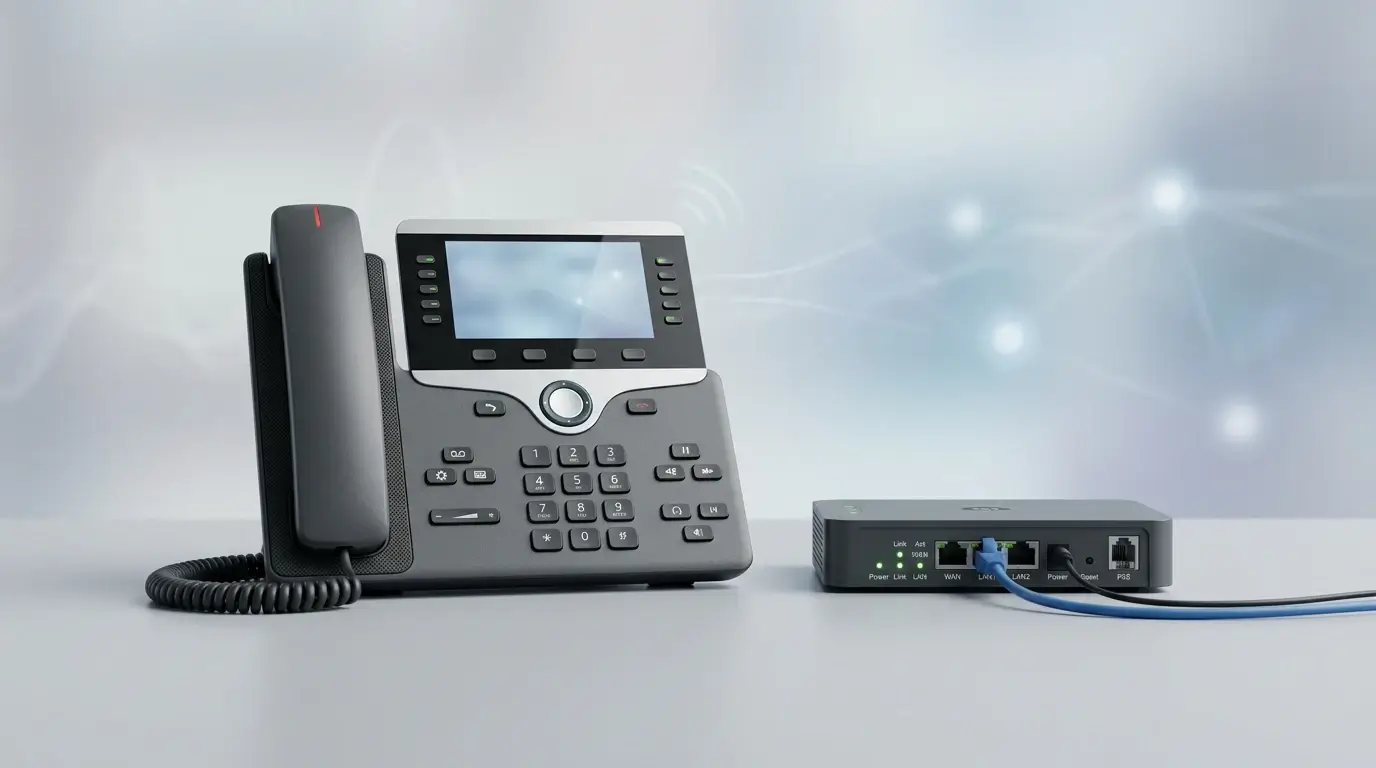
Modern businesses require secure, flexible, and high-performance communication systems to maintain operational efficiency. Transitioning from traditional landline networks to internet-based communication is a fundamental step in achieving this capability. However, navigating the underlying technology can often present a terminology challenge for decision-makers.
Two acronyms frequently dominate discussions regarding enterprise communication: VoIP and SIP. While they are often used interchangeably in casual conversation, they represent distinct technologies that serve entirely different functions within a network architecture. Understanding the distinction between the two is vital for building a unified communication infrastructure that meets your organizational requirements.
This article provides a comprehensive overview of SIP and VoIP, detailing how each technology functions and highlighting the specific differences that dictate how they are implemented in modern business environments.
What is VoIP?
Voice over Internet Protocol (VoIP) is a broad term that describes any technology used to transmit voice calls over the internet rather than through traditional analog telephone lines. When a user makes a VoIP call, the technology converts the analog audio signal into digital data packets. These packets travel across the internet and are reassembled into audio at the receiving end.
VoIP serves as the foundational technology for internet telephony. It relies on a high-speed internet connection and can be implemented using dedicated hardware, such as IP phones, or software applications installed on computers and mobile devices.
The primary advantage of VoIP is its ability to reduce communication costs significantly while offering features that traditional phone systems cannot match, such as call routing, voicemail-to-email, and advanced analytics. However, VoIP strictly refers to the transmission of voice data.
What is SIP?
Session Initiation Protocol (SIP) is a specific set of rules—a protocol—used to establish, maintain, and terminate multimedia communication sessions over the internet. While VoIP is the overarching technology for voice calls, SIP is the industry-standard method used to make those VoIP calls happen.
SIP acts as the digital operator for your communication network. It locates the user, determines their availability, and establishes the connection. Crucially, SIP is not limited to voice data. It is capable of managing a wide array of multimedia sessions, meaning it can handle voice, video conferencing, instant messaging, and file sharing simultaneously.
By utilizing SIP, organizations can unify their communication channels into a single, cohesive system. This flexibility makes SIP an essential component for businesses looking to implement robust, scalable enterprise networking solutions.
The Core Differences Between SIP and VoIP
To provide clear and precise information, it is helpful to look at how these technologies compare across several key operational areas.
Scope of Communication
The most significant difference lies in the types of media they support. VoIP is exclusively dedicated to transmitting voice traffic. If a system only uses basic VoIP protocols, it will function much like a traditional telephone, just operating over the internet.
SIP supports multimedia communication. It allows users to seamlessly integrate video calls, instant messaging, and presence information (seeing if a colleague is online or busy) alongside standard voice calling.
Device Compatibility
Basic VoIP systems often rely on proprietary software or specific hardware endpoints, meaning that devices from different manufacturers may not always communicate effectively with one another.
Because SIP is a globally recognized industry standard, it provides universal interoperability. You can connect SIP-enabled devices from different vendors—such as desktop phones, mobile applications, and conference room screens—ensuring they all function flawlessly within the same network. For example, devices like the Akuvox S560 SIP Handset Intercom or the Akuvox R29S SIP Android Door Phone are built on this open standard for seamless integration.
Scalability and Network Integration
A standard VoIP solution is highly effective for small operations that simply need to make and receive audio calls over the internet. However, scaling a basic VoIP system to accommodate complex routing or multimedia demands can be restrictive.
SIP enables dynamic scalability. It allows IT administrators to add new communication channels without requiring entirely new infrastructure. Through a process known as SIP trunking, businesses can connect their existing Private Branch Exchange (PBX) systems to the internet, preserving their hardware investments while unlocking advanced digital features. This is particularly relevant when deploying cabling and networking solutions across large facilities.
How SIP and VoIP Work Together
It is incorrect to view SIP and VoIP as competing technologies. Instead, they are complementary. SIP is a method for achieving VoIP.
When you implement a SIP trunking solution, you are using the SIP protocol to facilitate VoIP communication, alongside video and messaging capabilities. Every SIP system utilizes VoIP to transmit voice, but not every VoIP system utilizes SIP.
For modern enterprises requiring high-performance communication, deploying SIP-enabled VoIP is the definitive standard. This combination empowers partners and clients to utilize cutting-edge technology that supports remote workforces, multi-channel customer service centers, and seamless internal collaboration.
Choosing the Right Technology for Your Operations
Selecting the appropriate communication infrastructure depends entirely on the specific needs of your organization.
If your business strictly requires basic outbound and inbound voice calling with minimal upfront investment, a standalone VoIP solution may be sufficient. It provides the cost-saving benefits of internet telephony without unnecessary complexity.
However, if your organization demands a versatile, secure, and unified communication system, SIP is the required choice. SIP provides the architectural foundation necessary for video conferencing solutions, smart building technologies, and advanced enterprise networking. By standardizing on SIP, you ensure that every product and endpoint you integrate meets the highest industry standards for optimal performance and durability.
Frequently Asked Questions
-
Can I use VoIP without SIP?
Yes. VoIP is a broad category, and there are other protocols available to transmit voice over the internet. However, these alternatives are often proprietary and lack the multimedia capabilities and broad hardware compatibility that SIP provides.
-
Does SIP require an internet connection?
Yes. Because SIP manages sessions that operate over IP (Internet Protocol) networks, a stable and secure internet connection is required to establish and maintain SIP communication. Learn more about building a reliable foundation with our IT installation and configuration services.
-
Is SIP more secure than basic VoIP?
Security depends on the network configuration rather than the protocols themselves. However, SIP systems are typically deployed in enterprise environments that utilize advanced cybersecurity systems, including encryption protocols like TLS (Transport Layer Security) and SRTP (Secure Real-Time Transport Protocol), making the overall architecture highly secure.
-
Can SIP replace my traditional landline phone system?
Yes. Through a process called SIP trunking, businesses can completely replace traditional analog telephone lines (PRI/ISDN). SIP trunks connect your business's PBX system directly to the internet, providing greater flexibility and lower operational costs. Our IT technical consultations can help you plan and execute this transition effectively.
-
What devices are compatible with SIP?
Because SIP is an open industry standard, it is compatible with a vast array of hardware and software. This includes IP desk phones, softphone applications on computers, mobile devices, and dedicated video conferencing hardware from world-leading brands. Explore our range of compatible SIP devices such as the Akuvox R28A SIP Video Door Phone, Akuvox R27A SIP Video Door Phone, and the Akuvox S539 SIP Android Door Phone.
Upgrading Your Communication Infrastructure
Modern business environments demand communication tools that are as dynamic and adaptable as the teams that use them. Understanding the technical relationship between SIP and VoIP allows organizational leaders to make informed, strategic decisions regarding their IT investments.
By upgrading to a SIP-enabled unified communications platform, businesses ensure their infrastructure is scalable, secure, and capable of supporting future technological advancements. Read our guide on why IP telephony is essential for modern enterprises and explore how IP telephony integrates with IoT and smart buildings. Evaluate your current communication network today to determine how integrating SIP protocols can optimize your operational performance and drive long-term business growth. Contact us to speak with our specialists.
About Blue Edge
Blue Edge Company is a value-added technology distributor based in Dammam, Saudi Arabia, supplying interactive displays, smart building systems, networking infrastructure and IT security software to businesses and residential projects across the Kingdom, with installation and technical support.
Learn more about Blue Edge →Published 15 May 2026 • Last updated 23 September 2026 • This article is reviewed when standards, regulations or product guidance change.