Smart Apartment & Multi-Tenant Building Solutions in Saudi Arabia
Video intercom, entrance access control and in-unit automation for apartment blocks and multi-tenant residential buildings — including retrofits into occupied buildings on the cabling you already have.

 New build & occupied retrofit
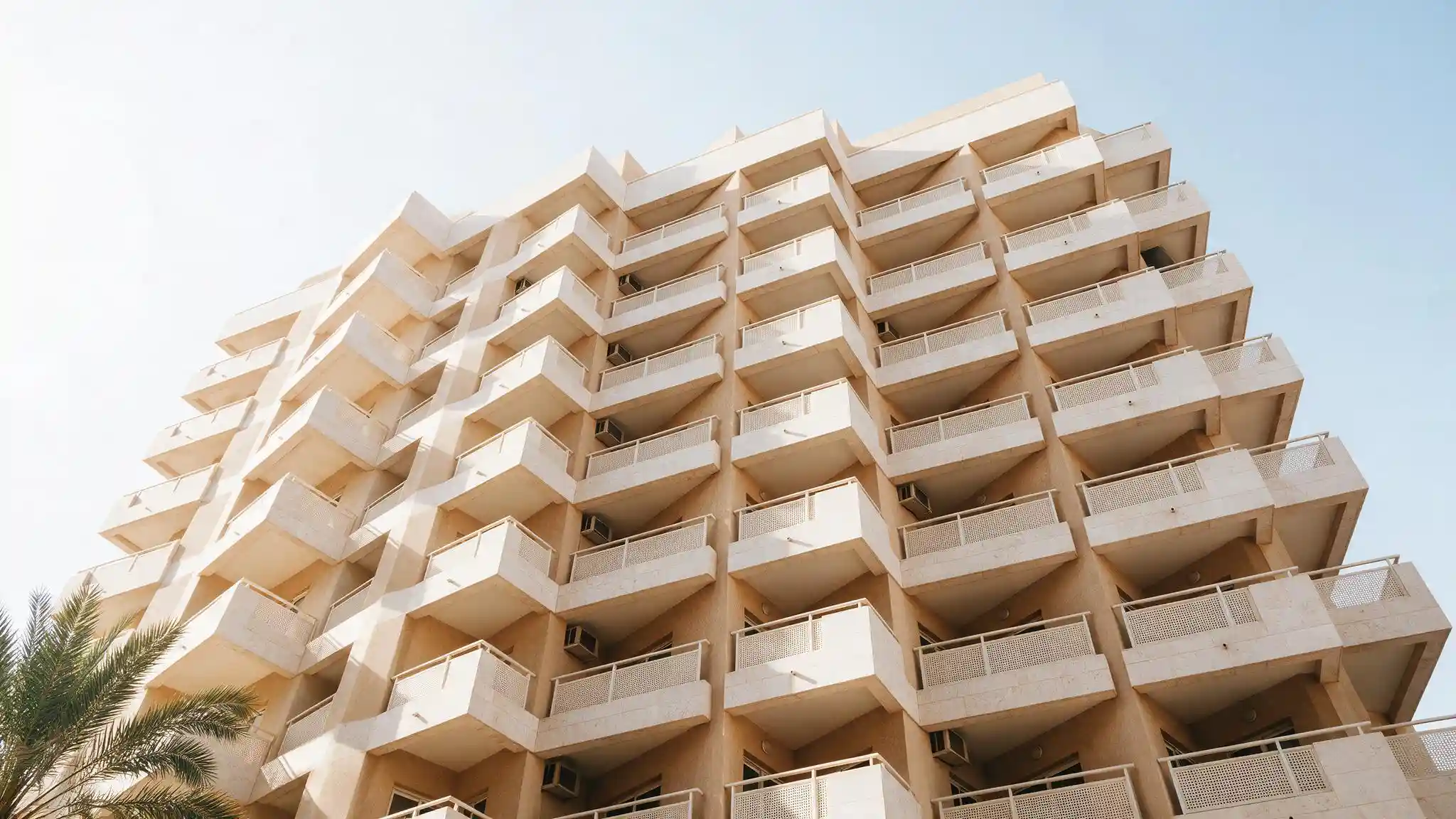
Tenants change constantly, and in Riyadh the rent cannot follow them up
Which leaves operating cost and tenant retention as the only levers a landlord still controls. Both of them run through the front door.
An apartment building has one front door and forty owners of it
That single sentence is the whole difference between an apartment block and every other building type. A villa has one owner. A compound has one management company. A hotel has an operator. An apartment building has one shared entrance that everybody uses and nobody individually owns.
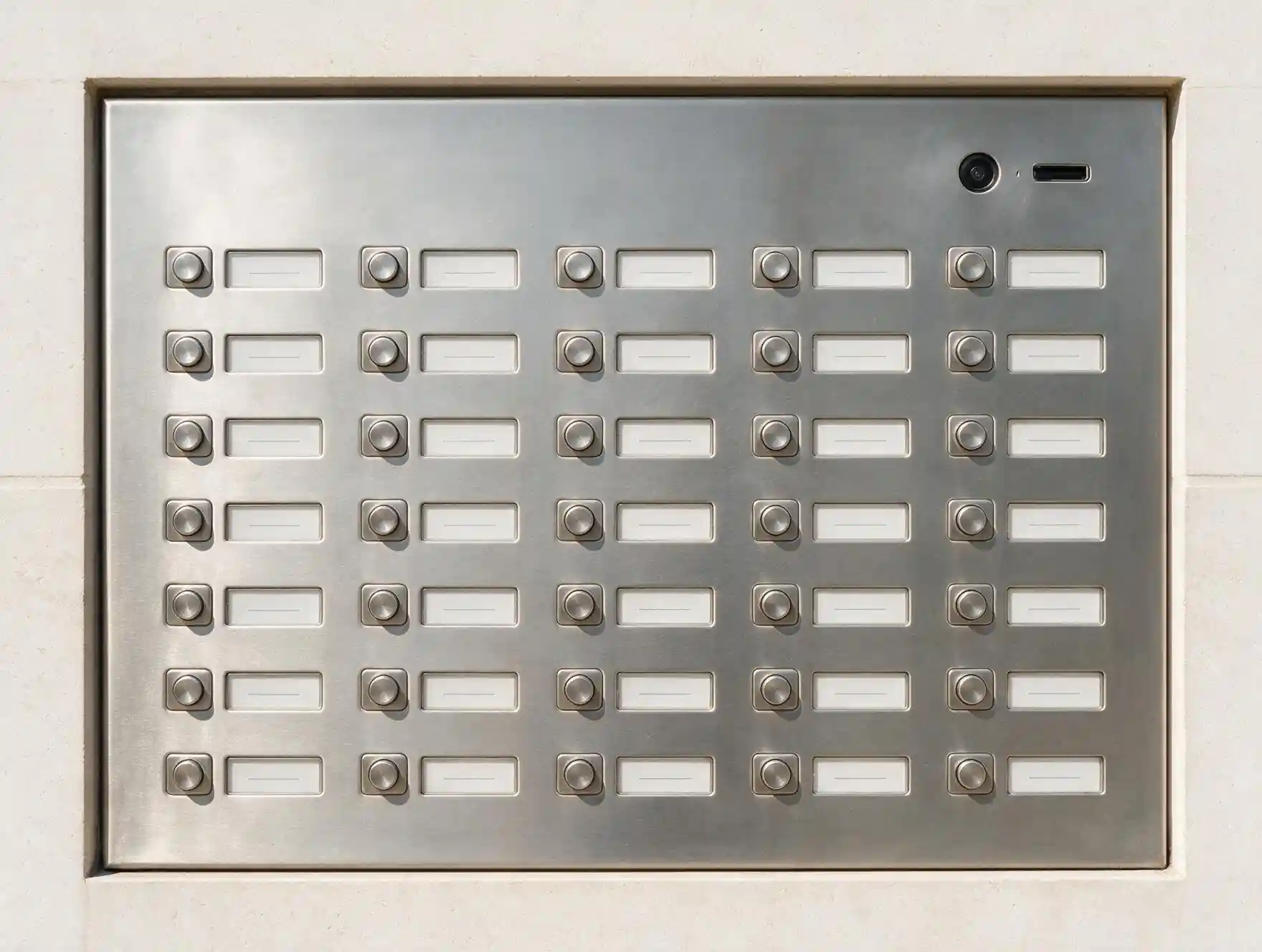
So the hard questions are not technical
Who administers the credential list?
Who pays for the entrance panel — the developer, the owners, or the landlord of unit 14?
What happens on the day a tenant moves out and the new one moves in the same week?
Who does a delivery driver call at nine in the evening when no concierge exists?
Most Saudi apartment buildings answer these questions by accident
None of that is a security incident. It is just a building where the front door has quietly stopped being managed.
- The entrance panel is whatever the contractor fitted
- Half the buttons no longer work
- Three units have a key that opens the main door
- Nobody remembers who holds them
Three parties, three budgets, one system
Get this split wrong at design stage and you end up with either residents who cannot control their own homes or a building nobody can administer. Decide it before anything is ordered.
The developer
Chooses the riser, the entrance panel and the topology — and then leaves. This is the party whose decisions are permanent.
- Cabling type and route to every unit
- Entrance and lobby panel specification
- Whether the system can be administered by a non-technical person afterwards
- Documentation handed to whoever inherits it
Building management or the owners
Runs the shared parts. Usually the weakest link, because it is often nobody's actual job.
- Adding and revoking credentials as tenants change
- Entrance, lobby, lift, car park and roof access
- Common-area faults and the maintenance contract
- Holding an override for units when there is an emergency
The individual owner or tenant
Owns everything inside the front door of the unit, and will not accept management having control of it.
- Answering the door from the indoor monitor or a phone
- Issuing access to family, domestic staff and deliveries
- In-unit lighting, climate and scene control
- Their own privacy inside the unit, which is not negotiable
Two wires or eight: the riser choice you only get to make once
Everything else on this page can be changed later. The cable in the riser cannot. In an occupied building it is the difference between a two-week job and a project nobody will approve.
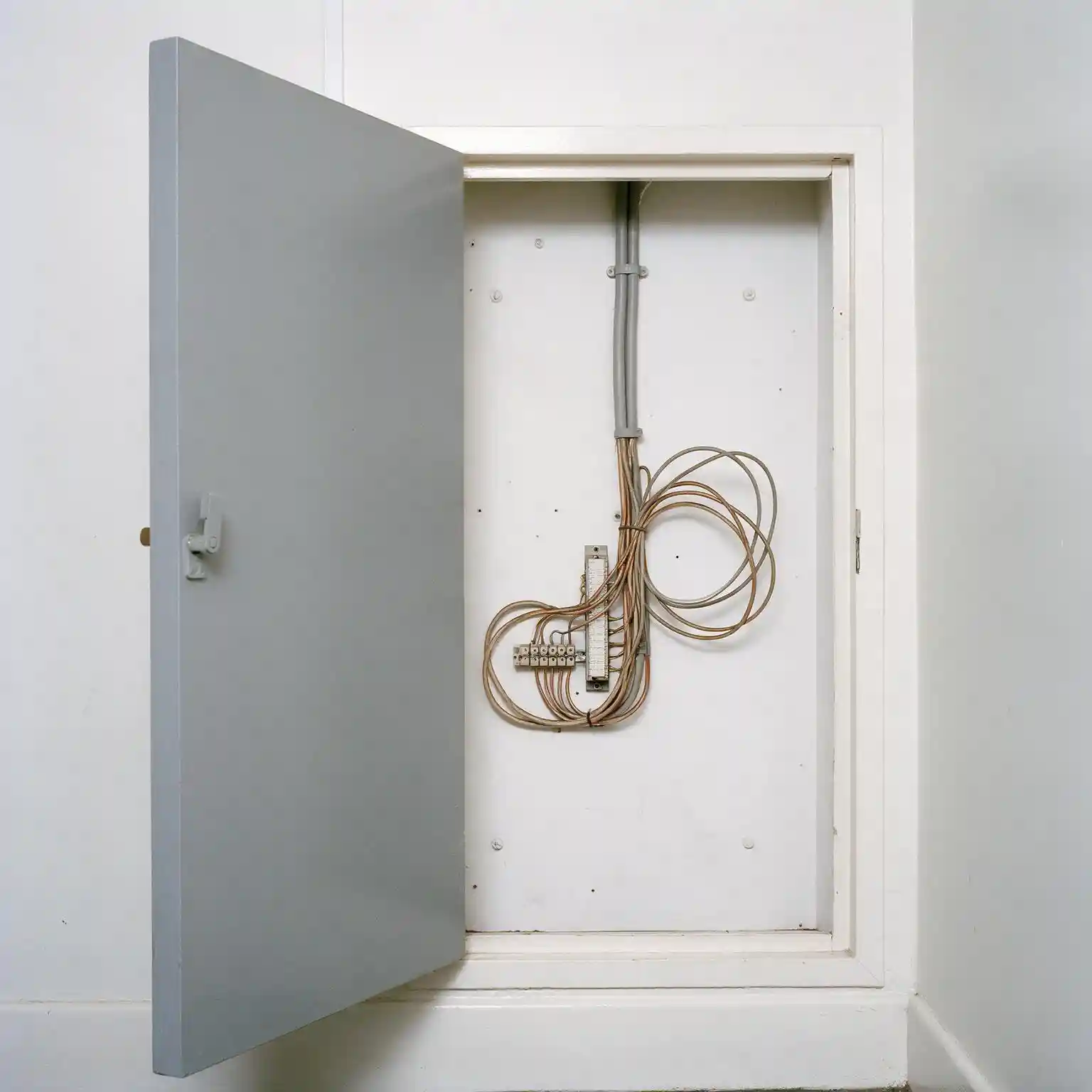
Why this is the whole project in an existing building
Most Saudi apartment buildings put up before roughly 2015 have a two-wire analogue audio riser running from an entrance panel to a handset in every unit. It works, badly, and it has no video.
The instinct is to rip it out and pull structured cable to all forty units. In an occupied building that means:
Most owners associations look at that programme once and do nothing for another five years.
The alternative is IP intercom that runs over the existing two-wire riser. It is the option most retrofits in the Kingdom should be looking at first, and the one most quotations skip because a full rewire is a bigger invoice.
Retrofit over two wires, or rewire for full IP
IP intercom over the existing two-wire riser
Akuvox two-wire units carry IP over the pair already in the building, so the riser stays where it is and the work happens at the entrance panel and inside each unit.
- No new riser cabling — no core drilling, no containment through common areas
- Unit-by-unit changeover — residents can be done as they become available rather than all at once
- Video where there was only audio — the upgrade residents actually notice
- Far shorter programme — which is usually what gets it approved at all
Choose this when the building is occupied, the existing riser is intact, and getting a decision through an owners association matters more than having the highest-specification result.
Full IP over structured cabling
Cat6 to every unit and PoE throughout. The right answer when you are building, and an expensive one when you are not.
- Highest specification — best video, most headroom, cleanest expansion path
- One network for everything — intercom, access control and in-unit automation on the same infrastructure
- Adds capacity you will use later — car park, lift, roof, additional entrances
- Requires real construction — containment, drilling, resident access, programme time
Choose this when the building is under construction or empty, or when the existing riser is already failing and would need replacing regardless.
| Consideration | IP over existing two-wire | Full IP over structured cabling |
|---|---|---|
| Riser work required | None — the existing pair is reused | New cable to every unit, with containment and drilling |
| Suits which building | Occupied blocks, older stock, buildings with an intact analogue riser | New build, shell-and-core, or a building being stripped anyway |
| Disruption to residents | Entrance panel plus a short visit per unit | Weeks of contractor presence and access to every unit |
| Phasing | Unit by unit, on the residents' availability | Riser first, then commissioning — much harder to phase |
| Expansion later | Adequate for intercom and entrance access; limited headroom beyond it | Car park, lift, roof, extra entrances and in-unit automation all on one network |
| Who normally approves it | An owners association, because the programme is short enough to agree | A developer or a single-owner landlord with a capital budget |
Key takeaway: if the building is occupied, start from the two-wire option and only move to a full rewire if the survey shows the existing riser cannot carry it. If the building is still under construction, put structured cable in the riser now — it is the cheapest it will ever be, and you will not get another chance.
The two days that decide whether the system is real
With 19,000 rental contracts registered nationally on an average day, changeover is the normal operating condition of a Saudi apartment building rather than an occasional event.
Move-out day — what should happen
-
One revocation, everywhere at once
Management removes the tenant centrally and the credential stops working at the main entrance, the lift, the car park and the unit door in the same action.
-
Nothing depends on collecting anything back
No cards to chase, no keys to count, no assumption that the departing tenant handed everything over.
-
The unit's own guests expire too
Any codes the tenant issued to family, staff or delivery services stop at the same moment rather than living on quietly.
-
A record that survives the handover
The entry log for that unit stays with the building, not with the person who left.
Move-in day — what should happen
-
Credentials issued in minutes, not visits
New tenant added once by management and active immediately across every door they are entitled to use.
-
The nametag is not a sticker
Unit labelling updated in software rather than someone writing on the panel with a marker, which is how most Saudi entrance panels currently read.
-
They control their own door on day one
Answering the entrance call on the indoor monitor or a phone, and issuing their own visitor access without going through management.
-
Nobody inherits the last tenant's access
Which sounds obvious and is the single most common failure in buildings running on physical keys and copied fobs.
Deliveries are the real volume, not visitors
A forty-unit building might get five genuine visitors a day and fifty deliveries. If every one of those is a call to a resident's handset, or worse a call to a building WhatsApp group, the entrance stops functioning as a controlled door by about seven in the evening.
The workable pattern is that residents issue their own time-limited code or QR from the app or the indoor monitor, valid for a window and expiring by itself. Management does not administer it, no concierge is required, and the door stays closed the rest of the time. For buildings with a parcel room, the same credential opens that instead of the lobby.
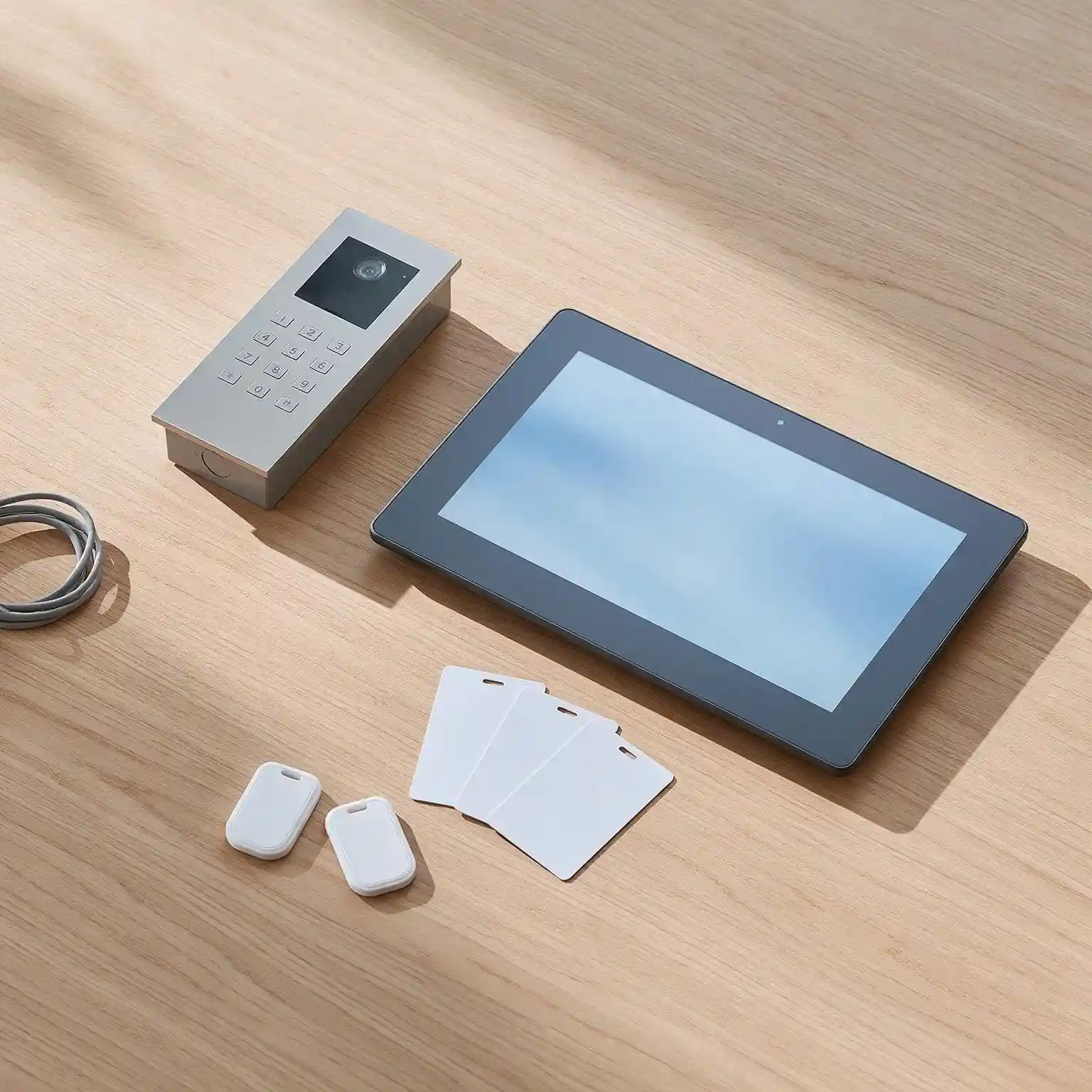
Two brands, and nothing you do not need
Blue Edge supplies, configures and supports the equipment in-Kingdom from Dammam, working alongside your contractor, consultant or building management rather than replacing them.
Entrance, lobby, lift & car park
SIP and two-wire video door phones for the entrance, indoor monitors for each unit, access control terminals for lobby, lift and car park doors, and vandal-resistant stations where a panel is exposed.
Akuvox
Inside each unit
In-unit wall panels, smart locks, scene control and Zigbee devices for lighting and climate, which retrofit inside a unit without new cable.
AkubelaFor a wider view of the intercom and access range, see the Akuvox partner page. Cameras, networking and interactive displays are outside the scope of this page and quoted separately when a project needs them.
What we will not pretend to solve
We supply and support the technology. We cannot fix the governance, and on multi-tenant buildings the governance is usually the real obstacle. If no single person is responsible for the credential list, a better entrance panel will be unmanaged within a year, exactly like the one it replaced.
So the first question we will ask is not about hardware. It is who administers this after handover, and whether that person knows they have been given the job. If the honest answer is nobody, the design should be simpler than you were planning — fewer credential types, fewer doors on the system, and management holding the whole thing rather than splitting it with forty owners.
Tell us the unit count and open the riser
Number of units, number of floors, number of entrances, and whether the building is occupied. One photograph of the inside of the riser cupboard is worth more than any of it — it tells us in seconds whether this is a two-wire job or a rewire, and therefore what it costs.
Apartment building questions we get asked
Can we upgrade an apartment intercom without rewiring the building?
Usually yes. If the building has an intact two-wire analogue riser, Akuvox two-wire IP intercom runs over the pair already installed, so the work is limited to the entrance panel and a short visit to each unit. This avoids core drilling, containment through common areas and weeks of contractor presence. A photograph of the riser cupboard is normally enough for us to say whether it will work on your building.
How many units can one system handle?
Enough for the buildings this page is about — typical Saudi blocks of ten to a hundred and fifty units are well within range for both approaches. The limits that matter are per-riser and per-line rather than per-building, and they depend on the specific topology, so we confirm them against current device specifications during the survey rather than quoting a headline number here.
Who manages the tenant list — the owners, the landlord or us?
Whoever you decide, and deciding it before ordering equipment matters more than the equipment. In practice the workable pattern is that building management holds the shared doors and each tenant controls access to their own unit. Blue Edge trains whoever takes it on at handover and documents the configuration rather than leaving it with the installer.
Do residents need a smartphone app?
No. The entrance call can ring an indoor monitor inside the unit, a phone, or both. Residents who want app control and remote door release get it; residents who never open an app still have a working video doorbell. Any multi-tenant building where the system only functions through an app will have a problem with part of its residents within months.
How do deliveries get in without calling every resident?
The resident issues a time-limited code or QR from the indoor monitor or the app, valid for a window and expiring by itself. Management does not have to administer it and no concierge is needed. Where a building has a parcel room, the same credential can be scoped to open that instead of the main lobby.
Can this be done floor by floor while the building stays occupied?
With the two-wire approach, yes — units can be changed over as residents become available, which is usually what makes the project approvable in the first place. A full rewire is much harder to phase because the riser has to be completed before anything is commissioned.
Who supports it after handover?
Blue Edge, from Dammam, in-Kingdom. Management or the owners association is trained on the admin side at handover, credentials and configuration are documented, and spares come from local stock rather than an overseas RMA queue. Call +966 53 9855 188 to discuss a specific building.
Talk to Blue Edge about your building
Blue Edge has always embraced our clients and partners as part of our team. Every project is performed with open communication, and a mutual respect with our clients provides the groundwork for our success.