Smart Retail & Shopping Mall Solutions in Saudi Arabia
Surveillance built to the Kingdom's camera law, access control on the doors that actually matter, and displays where customers and staff need them — specified, supplied and supported across Saudi Arabia by Blue Edge.

 Mall operators & retail tenants
In Saudi Arabia, retail surveillance is not a decision. It is a legal requirement.
And the same law that requires cameras also tells you where you may not point one. Most retail security conversations in the Kingdom start with a camera count. They should start with this.
The Security Surveillance Cameras Law, issued by Royal Decree in 2022 and in force since 2023, makes installation and operation of a compliant camera system mandatory for a long list of premises. Commercial complexes and shopping centres are on it. So are warehouses, fuel stations, food service establishments, financial institutions, hotels and healthcare and education facilities.
It classifies premises into three sensitivity categories, which determine whether the system must connect to an operations room and over what kind of network. It sets technical specifications and a minimum retention period. It restricts who may transfer or publish recordings, and it names locations where cameras are prohibited outright.
For a retailer or a mall operator that turns the question around entirely. It is no longer
Premises the law covers
Relevant to retail, the mandatory categories include:
- Commercial complexes and shopping centres
- Economic and commercial activity areas
- Commercial warehouses
- Establishments offering food services
- Financial institutions, banks and exchange centres
- Fuel stations and gas sales outlets
Where you may not install
Locations with a heightened expectation of privacy, including:
- Changing rooms and fitting rooms
- Restrooms and washrooms
- Women's salons and women's clubs
- Medical examination and treatment rooms
- Physiotherapy facilities
- Residential units within tourist accommodation
Read this before you use any of the above
This is a plain summary for planning purposes, not legal advice, and Blue Edge is not a law firm. We have deliberately not quoted article numbers, because they change between editions and a page that cites the wrong one is worse than a page that cites none — the same reason we stripped control numbers out of our cybersecurity pages when the national controls were reissued. Confirm the current requirements and your premises' sensitivity classification with your legal advisor or the relevant authority before finalising a design. We will build the specification against whatever that comes back as.
Your cameras are pointed at the shop floor. Your losses are not happening there.
Retail is the only building type whose business model requires unrestricted public entry. You cannot control who walks in, so the instinct is to cover the floor with cameras and watch the customers.
But the shop floor is the most watched part of any store and the hardest place to remove anything of value unnoticed. Loss prevention practice consistently finds external theft is only one part of the picture, alongside internal loss and administrative error — and both of those happen behind the door marked staff only, where there is usually one camera or none.
The other thing that has changed is what is worth taking. With roughly eighty-five per cent of retail payments in the Kingdom now electronic, the cash office is no longer the prize it was a decade ago. Stock is. Which moves the security question from the till to goods-in, the stock room and the staff exit.
That is an access control problem at least as much as a camera problem, and it is the part most retail quotations skip.
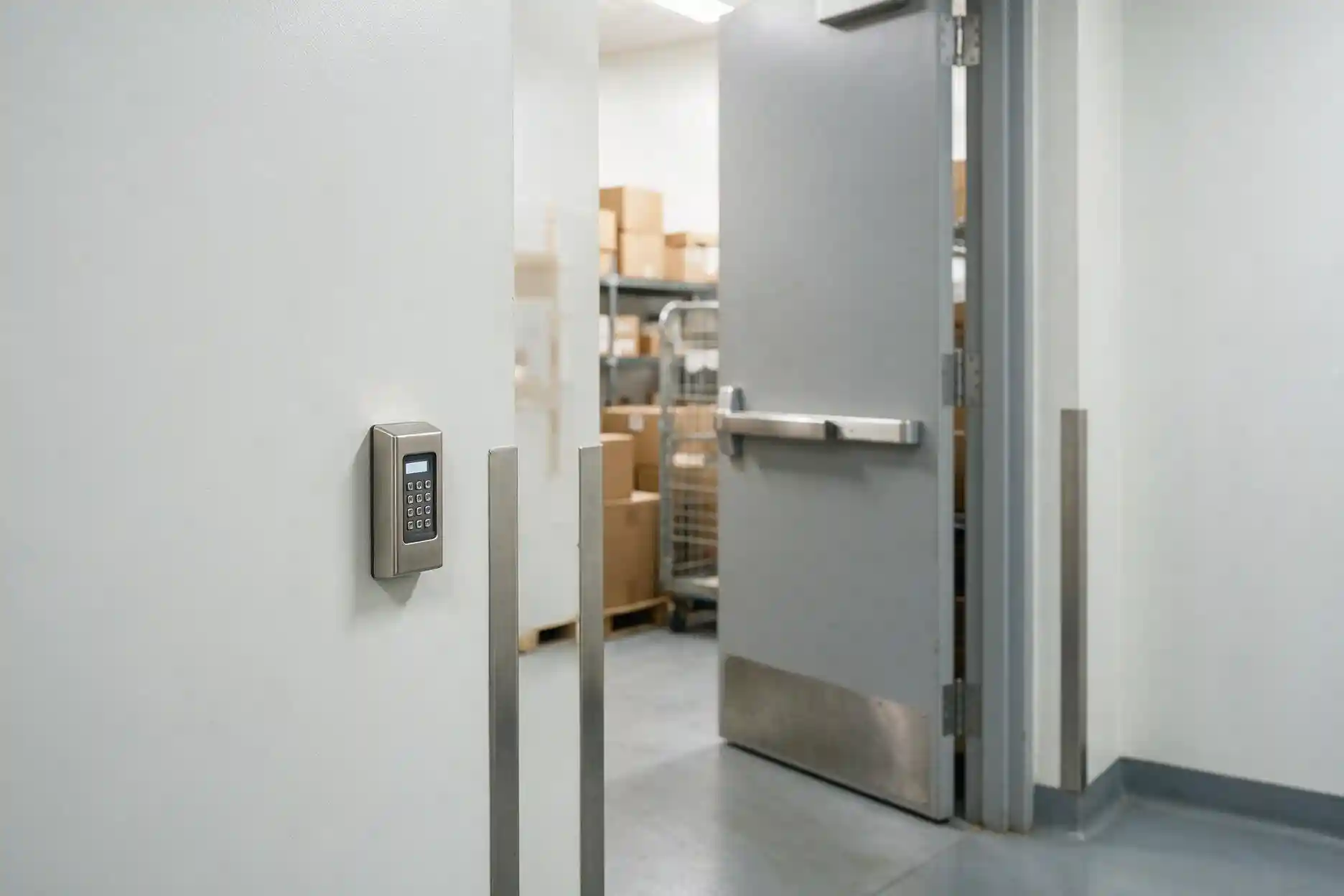
Four doors, and a credential that means something
Almost every retail unit runs its back of house on one key held by whoever opened up, copied twice, and a stock room door that is propped open during a delivery and stays open until somebody notices.
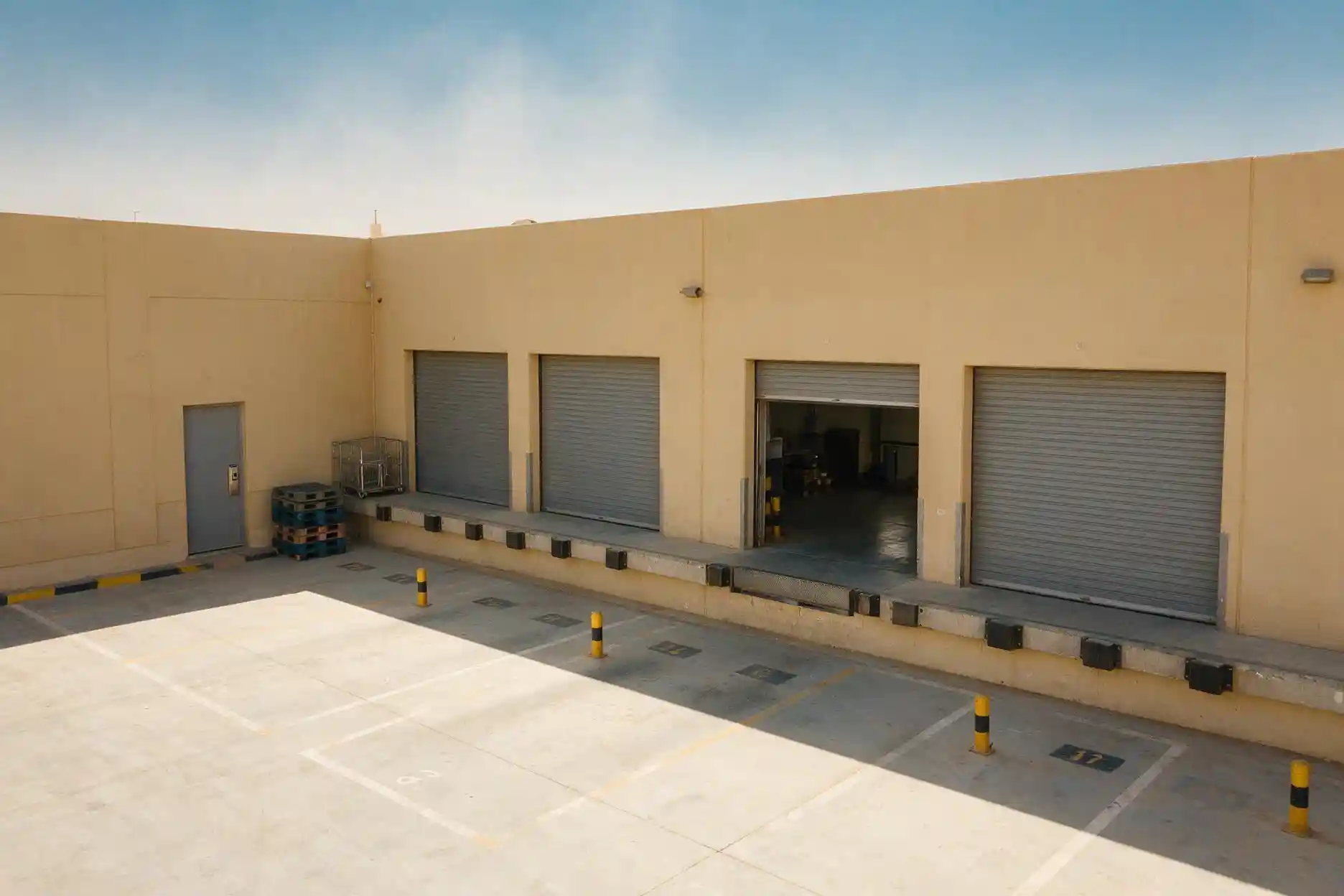
Goods-in and the loading bay
Akuvox intercom so a driver reaches the stock team without the door being left open, and a credential for regular delivery contractors that expires by itself.
Stock room
Access by role rather than by shift, so seasonal and part-time staff are scoped separately and revoked centrally when a contract ends.
Cash office
The shortest authorised list in the unit, with a named entry log rather than a key that lives in a drawer.
Staff exit
The door with the least coverage in most stores and the one loss prevention teams ask about first.
In a mall, all of this sits behind the tenant's own line and the mall operator has no visibility of it — which is exactly why a tenant cannot rely on the mall's system and needs its own.
The mall operator and the retailer are solving different problems
They sit in the same building and share almost none of the same requirements. Suppliers who quote one specification for both get it wrong in both directions.
| Concern | Mall operator | Retail tenant |
|---|---|---|
| Camera coverage | Common areas, atria, entrances, corridors, car parks, service routes and the perimeter | Their own four walls only. Till points, stock room door, staff exit and goods-in |
| Who they let in | The public, plus hundreds of tenant staff and contractors on a constantly changing list | The public on the floor, a small named team behind the door |
| Access control scope | Service corridors, plant rooms, roof, management suite, loading docks and tenant fit-out access | Stock room, cash office, staff exit and their own shutter |
| Compliance burden | Sits with the operator for the complex, including sensitivity classification and any operations room connection | Sits with the tenant for their unit. The mall's compliance does not cover you |
| Biggest recurring cost | Credential churn across tenant staff and contractors, and the admin to keep it current | Staff turnover, and credentials that outlive the person they were issued to |
| What usually gets missed | Service corridors behind the tenant line, and roof access during fit-out | Everything behind the staff door, because the fit-out budget went on the shop front |
Key takeaway: a mall's camera and access system stops at the tenant's line, and a tenant's compliance obligation does not transfer to the operator. If you are a retailer, assume the mall covers nothing inside your unit — because it does not, and finding that out during an incident is the wrong time.
Where an interactive screen genuinely earns its place in retail
We are not going to pretend an interactive display belongs on every wall of a shop. Most retail screen requirements are for straightforward digital signage, and that is a different product.
Where Dahua interactive displays do earn their cost in a retail environment is anywhere a person interacts with the screen rather than watches it.
Mall information and wayfinding points
A customer touching the screen to find a store, which is the definition of interactive rather than broadcast.
Customer service and returns desks
Showing a policy, a size chart or an order status to the customer across the counter.
Showroom and high-consideration retail
Furniture, appliances, automotive and telecoms, where a staff member configures options with the customer.
Back-of-house briefing and training rooms
Shift briefings, product training and compliance sessions, in the room behind the stock room that every large store has.
Browse all Dahua displays or interactive screens, and tell us the room and the viewing distance — we will size it rather than sell you the largest one.
What we supply, and what we will send you elsewhere for
Retail security has a lot of adjacent categories and it is easy for a supplier to imply they cover all of them. These are the boundaries, stated before the meeting rather than during it.
Axis network cameras
Coverage designed against the law's requirements and its prohibited zones, with licence plate recognition at car park entrances and people counting where footfall data is wanted.
Akuvox
Access control on stock rooms, cash offices, staff exits, service corridors and plant, plus intercom at goods-in and loading bays. See the Akuvox partner page.
Dahua interactive displays
Information points, service desks, showroom and back-of-house training, as set out above.

Networking
Cisco switching, wireless and PoE, with camera and payment traffic on separate segments.
Electronic article surveillance
The tags and the pedestals at the shop entrance are a specialist category from dedicated vendors. We design around them, not instead of them.
Point of sale and stock management systems
Separate procurement. A camera can be pointed at a till; it does not replace the transaction record.
Manned guarding
We supply the systems, not the people who watch them.
Legal advice on the camera law
See the note above. We build to the requirement you confirm; we do not determine it for you.
Tell us whether you are the landlord or the tenant
It is the first thing that changes the whole scope. Then a floor plan with the back-of-house doors marked, the number of units or tills, and whether you have been given a sensitivity classification for the premises. We will come back with a camera schedule designed against the law's requirements, an access control scope and a priced bill of quantities in Saudi Riyals.
Retail questions we get asked
Are security cameras actually mandatory for a shop in Saudi Arabia?
For the premises categories named in the Security Surveillance Cameras Law, yes — and commercial complexes, shopping centres, commercial activity areas, warehouses, food service establishments and fuel stations are among them. Whether your specific unit falls inside a covered category, and which sensitivity classification applies, is a question for your legal advisor or the relevant authority. We build to whatever that answer is.
Can we put a camera in a fitting room?
No. Changing and fitting rooms are among the locations where installation is prohibited, alongside restrooms, women's salons and clubs, and medical examination and treatment rooms. The fine is set per camera installed in a prohibited place. Coverage of the approach to a fitting room area is a different matter and is normal practice.
How long do we have to keep recordings?
The law sets a minimum retention period in its conditions document, and there is a fine for failing to meet it. Confirm the current figure for your classification before sizing storage — it is the single specification most often got wrong, because storage is quoted against a camera count rather than against a retention requirement.
We are a tenant in a mall. Does the mall's system cover us?
No. A mall's cameras and access control stop at your line, and its compliance position does not transfer to your unit. Assume nothing inside your four walls is covered by the landlord, because it is not, and an incident is the wrong moment to discover it.
Where should cameras go if the budget is limited?
Entrances and any coverage the law requires first, because that is not optional. After that, the transaction — a camera framed on the till and the customer's hands rather than a wide shot of the queue — then goods-in, then the stock room door and the staff exit. The wide shop floor view is the one most often over-specified and least often useful.
Is access control worth it for a single store?
For the stock room and cash office, usually yes, and it is a small scope. The argument is not theft prevention so much as knowing who entered and when, and being able to revoke a departed employee in one action instead of changing a lock and reissuing keys to everyone still there.
Do you supply digital signage screens?
Our display range is interactive — screens a person touches. For a wall of broadcast signage playing content on a loop, an interactive panel is the wrong purchase and we will say so. Where the screen is genuinely interacted with, such as a mall wayfinding point, a service desk or a showroom, it is the right one.
Who supports it after handover?
Blue Edge, from Dammam, in-Kingdom. Your loss prevention or store operations team is trained on the admin side at handover, retention settings and credential scoping are documented rather than left with the installer, and spares come from local stock rather than an overseas RMA queue. Call +966 53 9855 188 to discuss a specific site.
Talk to Blue Edge about your site
Blue Edge has always embraced our clients and partners as part of our team. Every project is performed with open communication, and a mutual respect with our clients provides the groundwork for our success.