Smart Villa Automation Solutions in Saudi Arabia
Zoned lighting, climate and access control designed around how a Saudi villa is actually used — majlis, family, private and outdoor — supplied and supported in-Kingdom by Blue Edge.

 New build & existing villa retrofit
A Saudi villa is not a large house. It is four buildings sharing one meter.
Most smart home systems are designed around a Western floor plan, where the whole house is occupied by the same people at roughly the same times. A Saudi villa does not work like that, and applying that logic to one produces a system nobody uses.
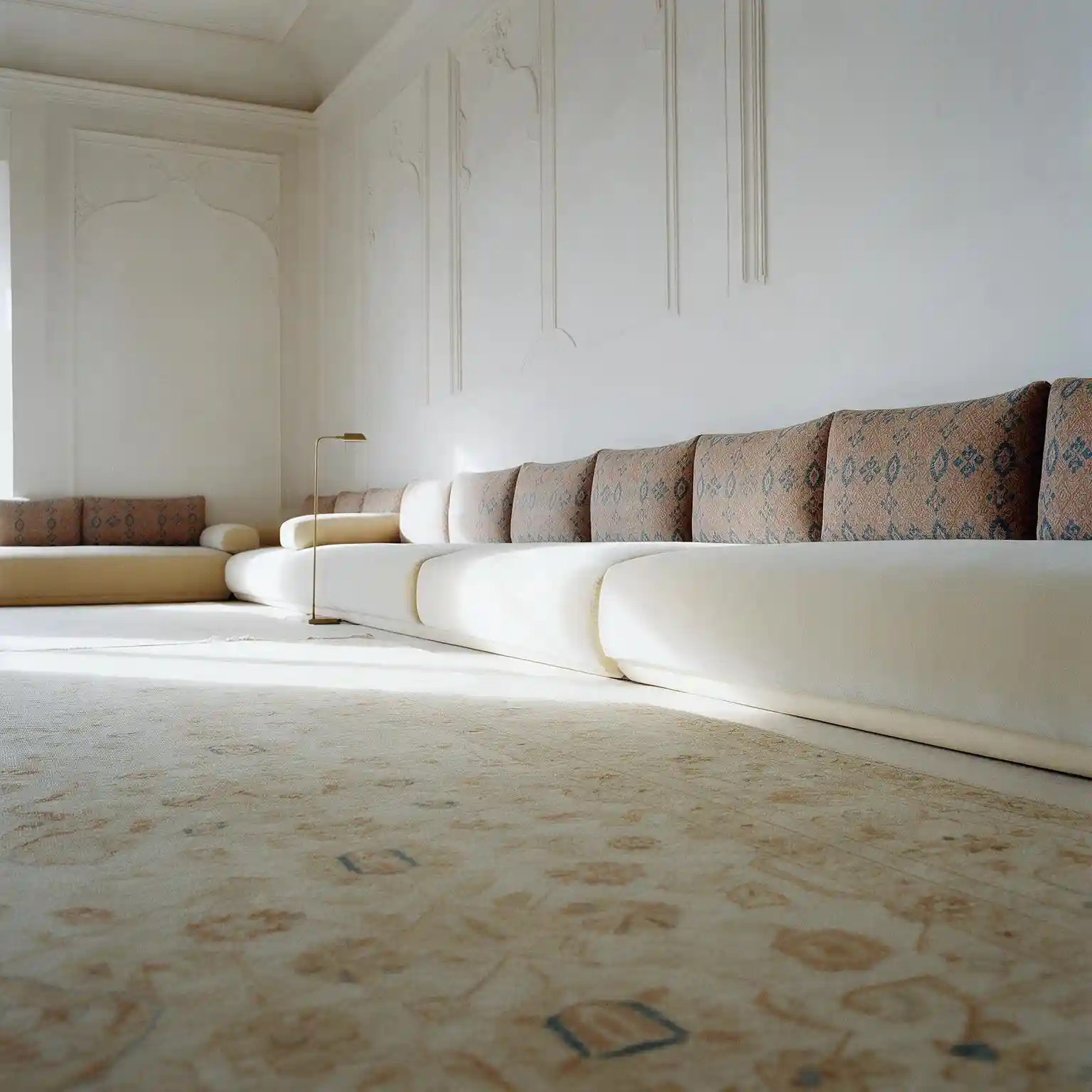
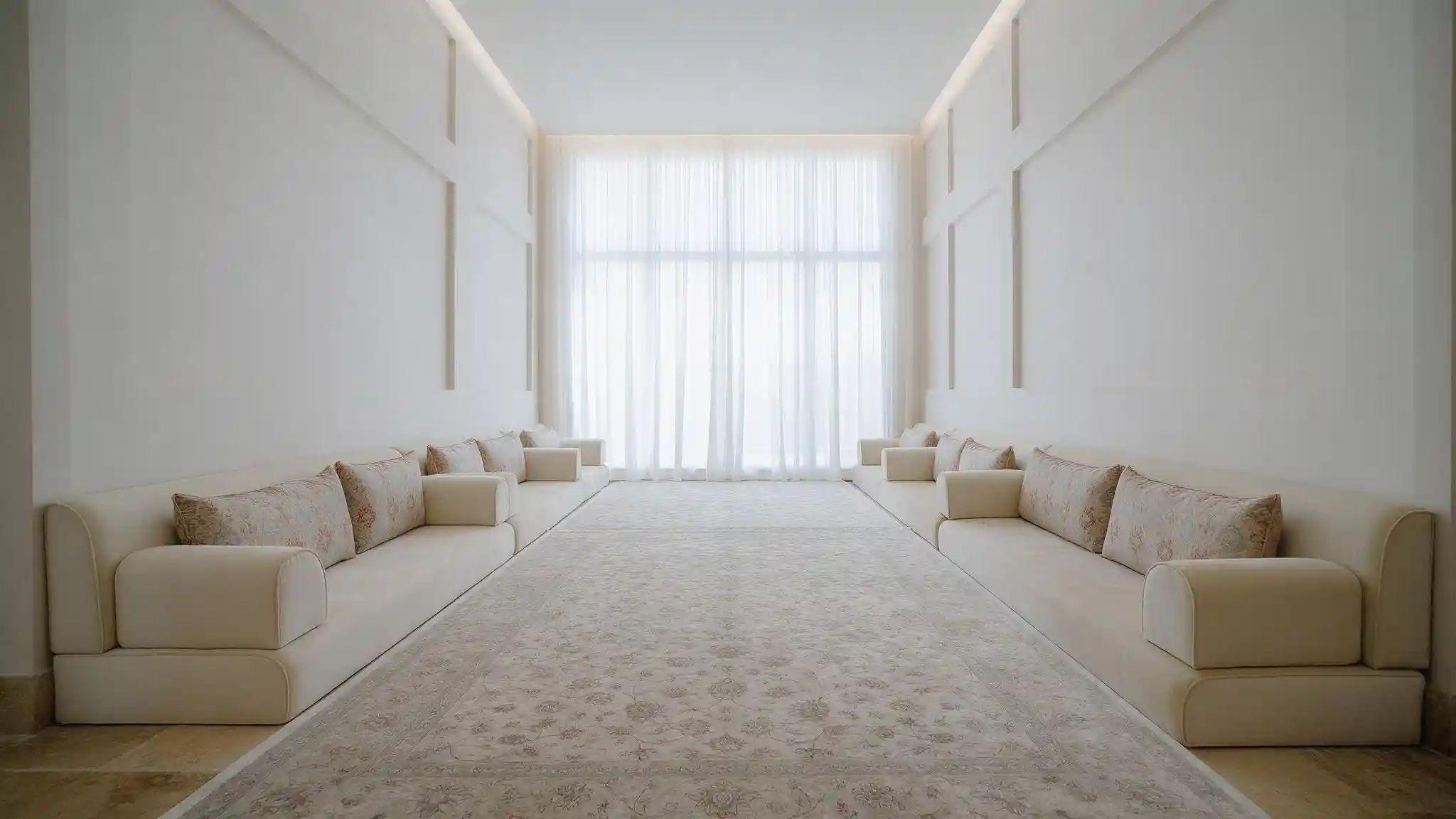
The majlis is used intensively for a few hours, a few times a week, and sits empty and cooled the rest of the time.
The family living area is in use from early morning to late at night.
The bedroom floor is empty all day.
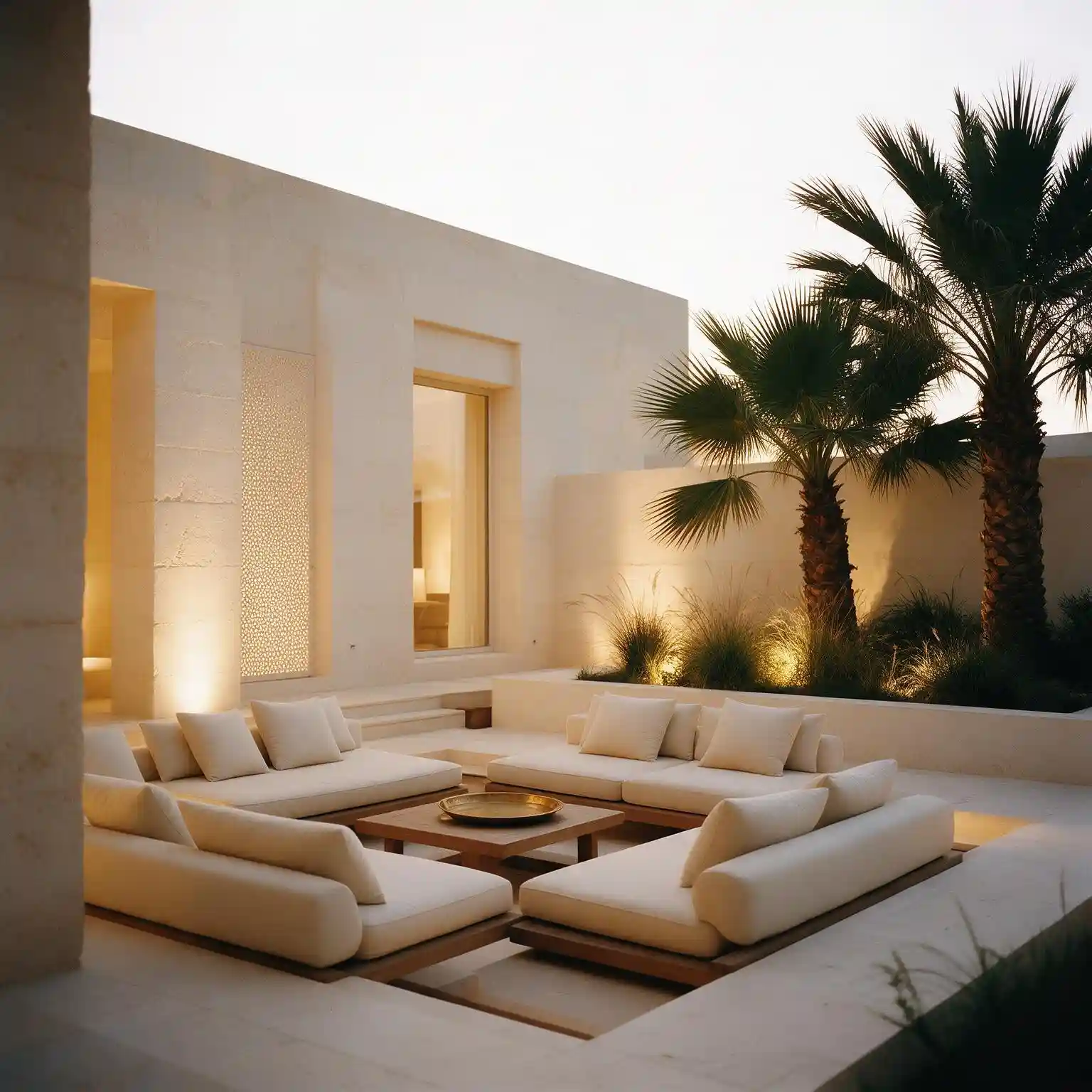
The courtyard is the main living space for eight months of the year and unusable for the other four.
Each of those has a different pattern, and the pattern is what a system should be built around — not the room labels on the drawing.
The villa costs meaningfully less to run, because you stop conditioning three quarters of it for nobody.
The family actually uses the system, because the controls match how they already live rather than asking them to change.
There is a cliff in your electricity bill at 6,000 kWh
The Saudi residential tariff has two tiers. Up to 6,000 kWh in a month you pay the subsidised rate. Every single unit above that costs two thirds more. It is not a gentle curve — it is a step, and a large villa in a Saudi summer walks straight over it.
Air conditioning is commonly estimated to account for around seventy per cent of residential electricity use in the Kingdom, and a large villa can exceed 10,000 kWh in a peak summer month. Which means the single most valuable thing zoned climate control does here is not abstract efficiency. It is keeping you under the threshold in the shoulder months, and reducing how far over it you go in July and August.
That is a much more concrete argument than a percentage saving, and it is why we ask to see a recent bill before designing anything. The kWh figure on it tells us where the zoning effort is worth spending.
Saudi residential electricity tariff, per kilowatt-hour, before the meter charge and 15 per cent VAT. Crossing the threshold raises the marginal rate by roughly two thirds. Verify the current rates on the official portal before relying on them for a business case — tariffs are set by the regulator and can change.
Four zones, four completely different requirements
This is the part that decides whether a villa system is worth what it cost. Zone by use pattern, not by floor.
- Deep setback when empty — the largest single saving available in the whole villa, because this is often the biggest room with the fewest occupied hours.
- Pre-cool on demand — one press, twenty minutes before guests arrive, from anywhere in the house or from a phone on the way home.
- One scene, not eight switches — a guest-arrival scene that sets lighting and climate together, because nobody adjusts nine dimmers with visitors at the door.
- Answer the gate from here — an indoor monitor in the majlis itself, so the host is not walking the length of the villa to see who has arrived.
- Comfort first, savings second — this is the one zone where aggressive setback is the wrong answer, because someone is always in it.
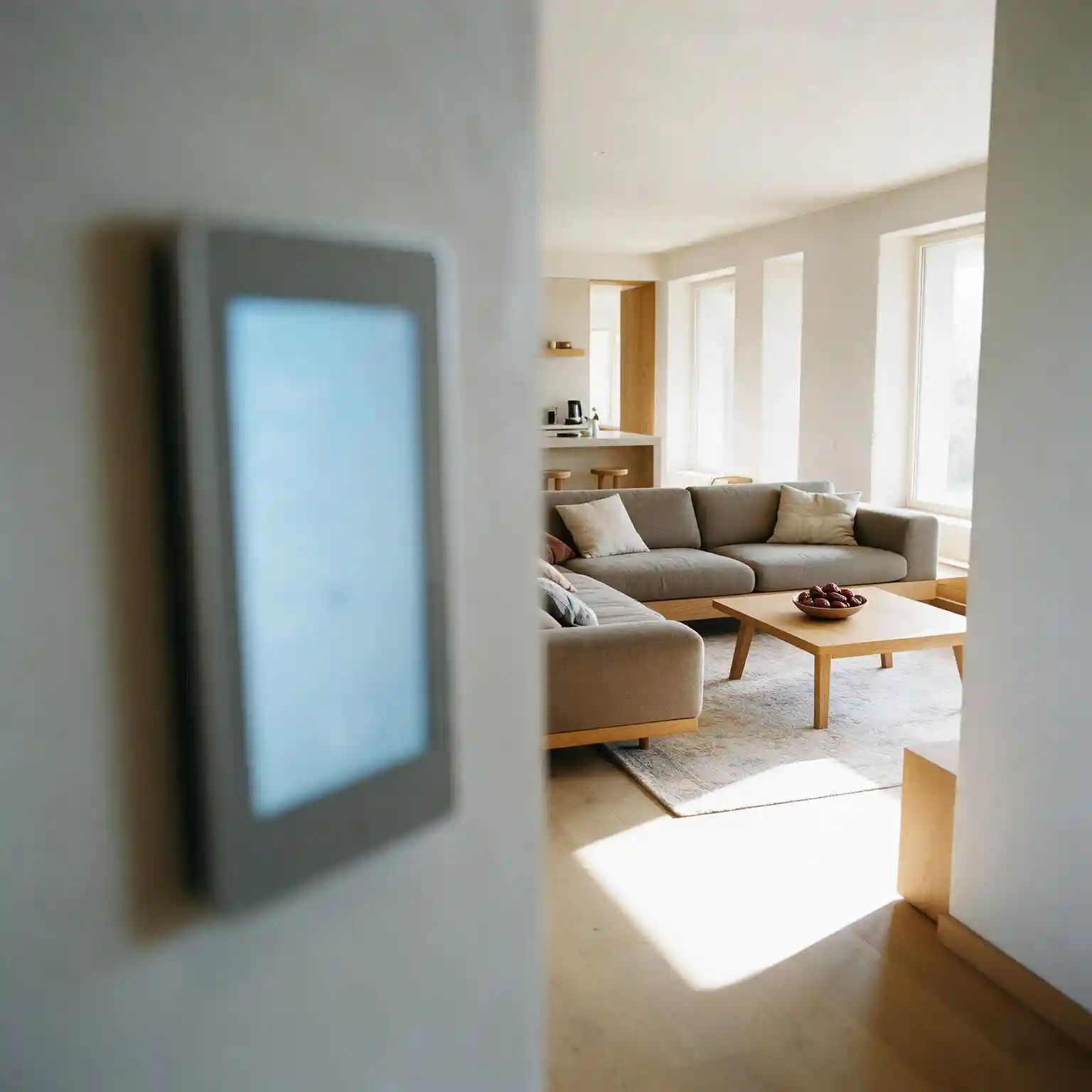
- A panel everyone can use — including children and grandparents, which in practice means physical scene buttons alongside the touchscreen.
- The primary indoor monitor — the main point for answering the gate and the front door during the day.
- Sensors that earn their place — water leak detection under the kitchen sink and behind the washing machine repays itself the first time it fires.
- Per-room control, not per-floor — an upstairs zoned as one block means cooling five bedrooms so one person can nap.
- Daytime setback across the floor — the second largest saving in the villa after the majlis, and the easiest to automate because the pattern is so predictable.
- Night scenes that are actually simple — one control by the bed for lights off, climate to sleep setpoint, and the gate call muted.
- Privacy stays with the family — no camera coverage inside the private wing, on any project, regardless of what is technically possible.
- Gate and front door as one system — Akuvox video door station at the gate, answered on any panel in the villa or on a phone anywhere.
- Access for staff and drivers — their own recurring credential, so nobody hands over a family card that never comes back.
- Time-limited codes for deliveries — issued from the panel, expiring by themselves, no call to anyone.
- Seasonal lighting schedules — evening lighting that follows sunset through the year rather than a fixed clock time that drifts six weeks out by winter.
- Room to setpoint
- Lighting scene
- Gate call unmuted
Twenty minutes before the guests arrive
Every villa owner in the Kingdom knows this sequence. A message arrives saying people are on their way. Somebody walks to the majlis, turns the air conditioning to its lowest setting, switches on every light, and hopes the room is comfortable by the time the first car pulls up.
It usually is not, because a large room that has been sitting at ambient temperature does not come down in ten minutes no matter how hard you drive it. So the room is either still warm when guests sit down, or it has been over-cooled all week to avoid the problem — and that second option is what most villas quietly do.
A pre-cool scene fixes it properly. The majlis sits at a deep setback all week, and one press twenty minutes out brings it to setpoint, sets the lighting scene and unmutes the gate call. That single automation is usually the one that convinces a family the system was worth installing, and it is also the one that saves the most electricity — the same change does both.
What is practical in your villa, and what is not
| Your villa | What is practical | What to avoid |
|---|---|---|
| Under construction | Wired panels in every zone, cable to the gate, structured cabling to a small rack, per-room climate control designed in with the mechanical drawings | Leaving the automation decision until after the mechanical design is fixed — by then the zoning is decided for you |
| Built, walls still open | Most of the above. This is the last cheap moment, and the window is usually only a few weeks wide | A partial first phase with no conduit left for the rest — spend on containment now, devices later |
| Finished and occupied | Zigbee switches and modules behind existing plates, wireless thermostats, a panel where a switch plate already is, gate intercom on the existing gate cabling | Chasing walls in a finished villa for a cosmetic result. Retrofit wireless does the same job at a fraction of the disruption |
| Older villa, pre-2010 | A staged approach: gate and door first, then the majlis, then climate zoning. Each phase works on its own | Designing a whole-villa system in one go. The survey almost always turns up something that changes the plan |
| Rented villa | Reversible devices only — wireless switch modules, plug-in units, a panel that mounts on an existing plate | Anything requiring landlord permission or new cabling, which usually stalls the project entirely |
Key takeaway: the honest answer for most existing Saudi villas is wireless retrofit, staged, starting with the gate and the majlis. That is not the biggest quotation available, and it is the one most likely to end with a family that uses the system two years later.
Two brands, and a short list
Blue Edge supplies, configures and supports the equipment in-Kingdom from Dammam, working alongside your contractor, electrician or interior consultant rather than replacing them.
Inside the villa
Gate, door & access
Villa automation is the easiest category in this business to oversell. A quotation with two hundred devices on it looks thorough and produces a system a family abandons inside a year.
So we will argue against:
For a wider view of the intercom and access range, see the Akuvox partner page. Cameras, networking and interactive displays sit outside this page and are quoted separately.
Go deeper
Smart Home Automation in Saudi Arabia
The broader picture of what a modern smart home and building system includes, beyond villa zoning.
ArticleSmart Home Installation in Riyadh
What a professional installation involves, from architectural planning through to calibration and training.
Send a floor plan and a recent bill
The floor plan tells us the zones. The kWh figure on a recent summer electricity bill tells us where the zoning effort is worth spending, and whether you are crossing the tariff threshold. Between them we can come back with a zone-by-zone design and a priced bill of quantities in Saudi Riyals.
Villa questions we get asked
Can an existing villa be automated without breaking walls?
Yes, and for most finished villas it is the right answer. Zigbee switch and dimmer modules fit behind existing switch plates, thermostats and fan coil controllers replace what is already on the wall, and a control panel mounts where a switch plate already sits. Gate intercom usually runs on the cabling the existing gate bell uses. Chasing walls in a finished villa buys a slightly neater result for a great deal of disruption.
How much will it actually save on the electricity bill?
It depends on how far above the 6,000 kWh threshold you currently sit and how much of the villa is being conditioned for nobody. A villa with a large majlis cooled continuously and an empty bedroom floor has a great deal of room to improve; a villa already zoned and managed carefully has much less. This is why we ask for a recent bill rather than quoting a percentage — the kWh figure is the only honest starting point.
Should the majlis be on its own zone?
Almost always, and it is usually the first zone to separate. It is often the largest room in the villa with the fewest occupied hours, which makes it both the biggest cost when left running and the biggest saving when set back. Separating it also makes the pre-cool scene possible, which is the automation families notice most.
Do you install cameras inside the villa?
Not in the private wing, on any project. Gate and entrance coverage is a normal part of a villa design and we supply it. Interior camera coverage in family and private areas is something we will advise against even when a client asks for it, and if it is a requirement the honest answer is that another supplier is a better fit.
Can we answer the gate from a phone when nobody is home?
Yes. An Akuvox video door station at the gate can ring indoor monitors inside the villa, a phone, or both, with remote door release. It is one of the few features that genuinely changes daily life in a large villa, because it removes the walk to the gate to see who is there.
How do domestic staff and drivers get access?
Their own recurring credential — a PIN, card or app access scoped to the doors they need and nothing else, revocable in one action. The alternative most villas currently use is handing over a family card or a physical key, which then never comes back and cannot be traced.
Should we do the whole villa at once or in phases?
In phases, for almost every existing villa. Gate and door first, then the majlis, then climate zoning across the rest. Each phase works on its own and each one proves whether the family actually uses what was installed before more money goes in. A whole-villa first phase is the larger quotation and the higher risk.
Who supports it afterwards?
Blue Edge, from Dammam, in-Kingdom. The family is trained on the panels at handover, the scene configuration is documented rather than left in the installer's head, and spares come from local stock rather than an overseas RMA queue. Call +966 53 9855 188 to discuss a specific villa.
Talk to Blue Edge about your villa
Blue Edge has always embraced our clients and partners as part of our team. Every project is performed with open communication, and a mutual respect with our clients provides the groundwork for our success.