Shopping Cart


- Articles
- Cybersecurity
- Biometric Authentication: The Smarter Way to Secure Your Business
Biometric Authentication: The Smarter Way to Secure Your Business
Learn how biometric authentication helps businesses strengthen identity security, reduce unauthorized access, and improve authentication with fingerprints, facial recognition, and other biometric methods. NIST recommends using biometrics as part of multi-factor authentication with appropriate security and privacy controls.
By Blue Edge Team | Published Aug 20, 2026 | Updated Oct 03, 2026 | 6 min read
Quick answer
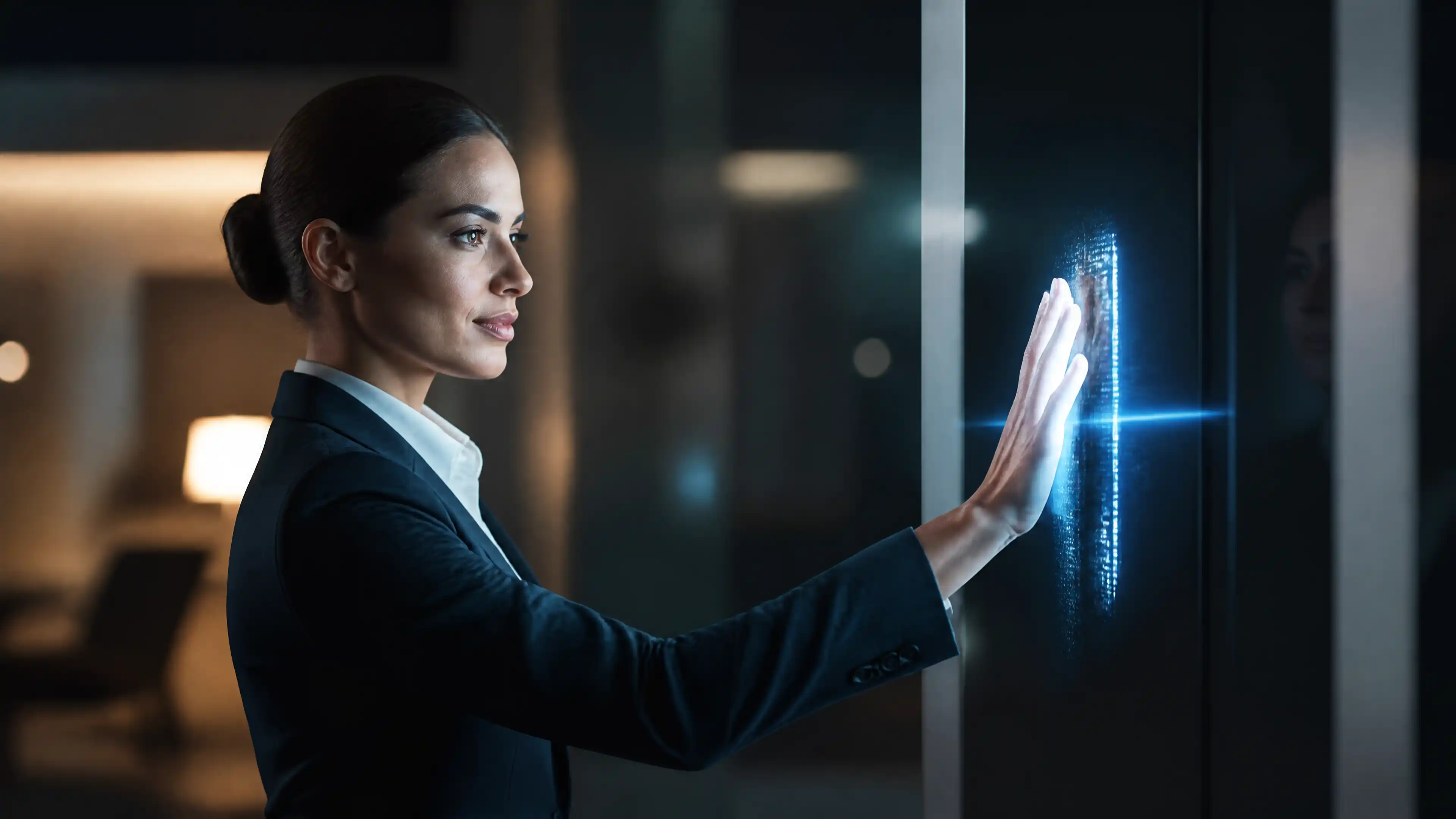
Biometric authentication uses unique physical or behavioral traits—fingerprints, facial recognition, iris patterns, or voice—to verify identity. For businesses, it offers stronger security than passwords, reduces unauthorized access, and streamlines employee verification across physical and digital environments.
Passwords have long been the default security measure for businesses. Yet they remain one of the weakest links in enterprise security. According to Verizon's 2023 Data Breach Investigations Report, over 80% of hacking-related breaches involve compromised or weak credentials. The solution many organizations are turning to: biometric authentication.
Biometric authentication eliminates the vulnerabilities inherent in password-based systems by tying access to something uniquely human—a fingerprint, a face, a voice. For businesses managing sensitive data, physical assets, or distributed workforces, this shift is not just convenient. It is strategically essential.
This post breaks down how biometric authentication works, the types available, a feature-by-feature comparison of leading solutions, and how your organization can implement it effectively.
How Does Biometric Authentication Work in a Business Context?
Biometric authentication captures a physical or behavioral characteristic, converts it into a digital template, and compares it against stored data to confirm identity. The process typically involves three steps:
- Enrollment — The user's biometric data is scanned and stored as an encrypted template.
- Authentication — During login or access attempts, a live scan is compared to the stored template.
- Verification or Rejection — Access is granted if the match meets the system's accuracy threshold; otherwise, it is denied.
Unlike passwords or PINs, biometric data cannot be guessed, stolen from a sticky note, or shared between employees. This makes it significantly more resistant to social engineering and brute-force attacks.
What Are the Main Types of Biometric Authentication for Businesses?
Different environments demand different biometric approaches. The five most widely deployed types in enterprise settings are:
- Fingerprint Recognition — The most established and cost-effective method. Widely used in access control systems, attendance tracking, and device login.
- Facial Recognition — Increasingly common in physical entry systems and remote workforce verification. Works without physical contact.
- Iris Recognition — Highly accurate and difficult to spoof. Typically deployed in high-security environments such as data centers or government facilities.
- Voice Recognition — Useful for call center authentication and remote access scenarios where physical scanners are impractical.
- Behavioral Biometrics — Analyzes patterns such as typing rhythm or mouse movement to continuously authenticate users during a session, rather than only at login.
Each type carries its own accuracy rate, infrastructure requirements, and suitability depending on the business environment.
Comparing Leading Biometric Authentication Solutions
The table below provides a structured comparison of key features across four widely used enterprise biometric platforms.
| Feature | Suprema BioStar 2 | Microsoft Azure AD + Windows Hello | IDEMIA MorphoWave | BIO-key PortalGuard |
|---|---|---|---|---|
| Biometric Type | Fingerprint, Face | Face, Fingerprint | Fingerprint (contactless) | Fingerprint, Face, Voice |
| Deployment | On-premise | Cloud / Hybrid | On-premise | Cloud / On-premise |
| Multi-Factor Support | Yes | Yes | Yes | Yes |
| Best For | Physical access control | Enterprise IT environments | High-throughput environments | Higher education & healthcare |
| Integration | LDAP, OSDP, Wiegand | Microsoft 365, Azure AD | SDK / API available | SAML, LDAP, RADIUS |
| Accuracy Rate | 99.7% | 99.9% (IR sensor) | 99.9% | 99.5% |
| Offline Functionality | Yes | Limited | Yes | Limited |
| Pricing Model | License-based | Per-user subscription | Hardware + license | Per-user subscription |
Key takeaway
Organizations deeply embedded in the Microsoft ecosystem will find Azure AD with Windows Hello to be the most seamless integration. For physical access control across facilities, Suprema BioStar 2 and IDEMIA MorphoWave offer more purpose-built capabilities. BIO-key PortalGuard is particularly well-suited for regulated industries requiring flexible authentication methods.
What Are the Key Business Benefits of Biometric Authentication?
Significantly Reduced Risk of Unauthorized Access
Biometric identifiers are inherently personal. A stolen password can be used by anyone; a stolen fingerprint cannot. For businesses handling financial records, client data, or intellectual property, this distinction carries significant weight.
Lower Long-Term Operational Costs
Password management is expensive. According to Gartner, between 20% and 50% of all IT help desk calls are related to password resets, at an average cost of $70 per incident. Biometric systems eliminate this overhead, delivering measurable ROI over time.
Improved Compliance Posture
Regulations such as GDPR, HIPAA, and ISO 27001 require robust identity verification measures. Biometric authentication supports compliance by providing verifiable, auditable access logs tied to confirmed individual identities.
Streamlined Employee Experience
Multi-step login processes slow down workflows. Biometric authentication is fast—most fingerprint and facial recognition systems authenticate in under a second—reducing friction without compromising security.
What Are the Challenges and Risks of Biometric Authentication?
Biometric authentication is not without its complexities. Businesses must address the following considerations before deployment:
- Data Privacy and Storage — Biometric data is classified as sensitive personal information under most data protection regulations. Organizations must ensure encrypted storage and limit data retention.
- Spoofing Threats — Lower-quality systems may be vulnerable to photograph-based facial recognition attacks or replica fingerprints. Choosing solutions with liveness detection is critical.
- Hardware Dependency — Physical biometric devices require maintenance, calibration, and eventual replacement. Factor these costs into total cost of ownership.
- Employee Consent and Trust — Transparent communication about how biometric data is collected, stored, and used is essential to maintaining employee trust and meeting legal obligations.
How to Implement Biometric Authentication in Your Organization
A phased, risk-informed approach reduces disruption and builds employee confidence:
- Assess Your Security Requirements — Identify which access points, systems, and data categories require the strongest identity controls.
- Select the Right Biometric Type — Match the technology to the environment. High-traffic entrances may benefit from contactless solutions; remote teams may require device-based facial recognition.
- Choose a Compliant Vendor — Evaluate vendors on encryption standards, data residency policies, and regulatory compliance certifications.
- Pilot Before Full Deployment — Test the system with a smaller user group to identify integration issues and refine the user experience.
- Train Employees and Define Policies — Establish clear usage policies, communicate data handling practices, and provide hands-on training.
- Monitor and Audit Continuously — Regularly review access logs, system performance, and potential anomalies to maintain the integrity of your security posture.
The Future of Biometric Security in Business
Biometric authentication is advancing rapidly. Contactless fingerprint scanning, multimodal biometrics (combining two or more methods simultaneously), and AI-driven behavioral analytics are all gaining traction in enterprise deployments. According to MarketsandMarkets, the global biometric system market is projected to grow from $42.9 billion in 2022 to $82.9 billion by 2027—a clear signal that adoption across industries is accelerating.
Organizations that invest in biometric infrastructure now are positioning themselves to meet increasingly stringent security requirements while future-proofing their identity management strategies.
Frequently Asked Questions
-
Is biometric data stored on-device or in the cloud?
This depends on the solution. Many enterprise systems store encrypted biometric templates locally on the device or hardware unit to reduce exposure risk. Cloud-based systems offer centralized management but require rigorous encryption and compliance controls to meet data protection standards.
-
What happens if an employee's biometric data is compromised?
Unlike passwords, biometric traits cannot be changed. This is why biometric data should always be stored as an encrypted mathematical template—not as a raw image. If a template is compromised, the system can generate a new template using a different algorithmic representation of the same trait.
-
Can biometric authentication work alongside existing security systems?
Yes. Most enterprise-grade biometric platforms support integration with existing identity and access management (IAM) systems, including LDAP, Active Directory, and SAML-based platforms. Biometric authentication is frequently deployed as part of a multi-factor authentication (MFA) strategy.
-
How accurate are biometric authentication systems?
Modern enterprise systems achieve accuracy rates between 99.5% and 99.9%, with false acceptance rates (FAR) typically below 0.001%. Accuracy varies by biometric type, hardware quality, and environmental conditions.
-
Is biometric authentication compliant with GDPR and other data protection regulations?
Biometric data is classified as a special category of personal data under GDPR and similar frameworks. Compliance requires explicit consent, purpose limitation, secure storage, and the right to erasure. Organizations must conduct a Data Protection Impact Assessment (DPIA) before deploying biometric systems in applicable jurisdictions.
Secure Your Business With Confidence
Biometric authentication represents a meaningful advancement in how organizations protect their people, assets, and data. Moving beyond passwords is no longer a future consideration—it is a present-day business imperative.
Ready to evaluate the right biometric solution for your organization? Contact our team today for a tailored consultation and discover how biometric authentication can strengthen your security infrastructure from the ground up.
About Blue Edge
Blue Edge Company is a value-added technology distributor based in Dammam, Saudi Arabia, supplying interactive displays, smart building systems, networking infrastructure and IT security software to businesses and residential projects across the Kingdom, with installation and technical support.
Learn more about Blue Edge →Published 20 August 2026 • Last updated 3 October 2026 • This article is reviewed when standards, regulations or product guidance change.