Shopping Cart


How to Choose the Right IoT Platform for Your Business
Learn how to choose the right IoT platform for your business by evaluating scalability, security, device management, analytics, integration, and long-term performance.
By Blue Edge Team | Jun 29, 2026
How to Choose the Right IoT Platform for Your Business
Quick answer: The right IoT platform depends on your deployment scale, data needs, security requirements, and integration environment. Evaluate platforms across five core criteria—scalability, security, ecosystem compatibility, pricing model, and vendor support—before committing to a long-term solution.
The IoT platform market is growing fast. According to MarketsandMarkets (2025), the global IoT platform market is valued at USD 44.30 billion and is projected to reach USD 65.29 billion by 2030, growing at a compound annual growth rate (CAGR) of 8.1%. For businesses deploying connected devices at scale, the platform you choose is not just a software decision—it is a strategic infrastructure commitment.
The challenge is that no two IoT platforms are alike. Some specialize in device connectivity management. Others focus on data orchestration, analytics, or application development. Choosing the wrong one can result in integration failures, cost overruns, and scalability bottlenecks that are expensive to reverse.
This guide breaks down what IoT platforms actually do, how they differ, and the specific criteria you should use to evaluate them for your organization.
What Is an IoT Platform?
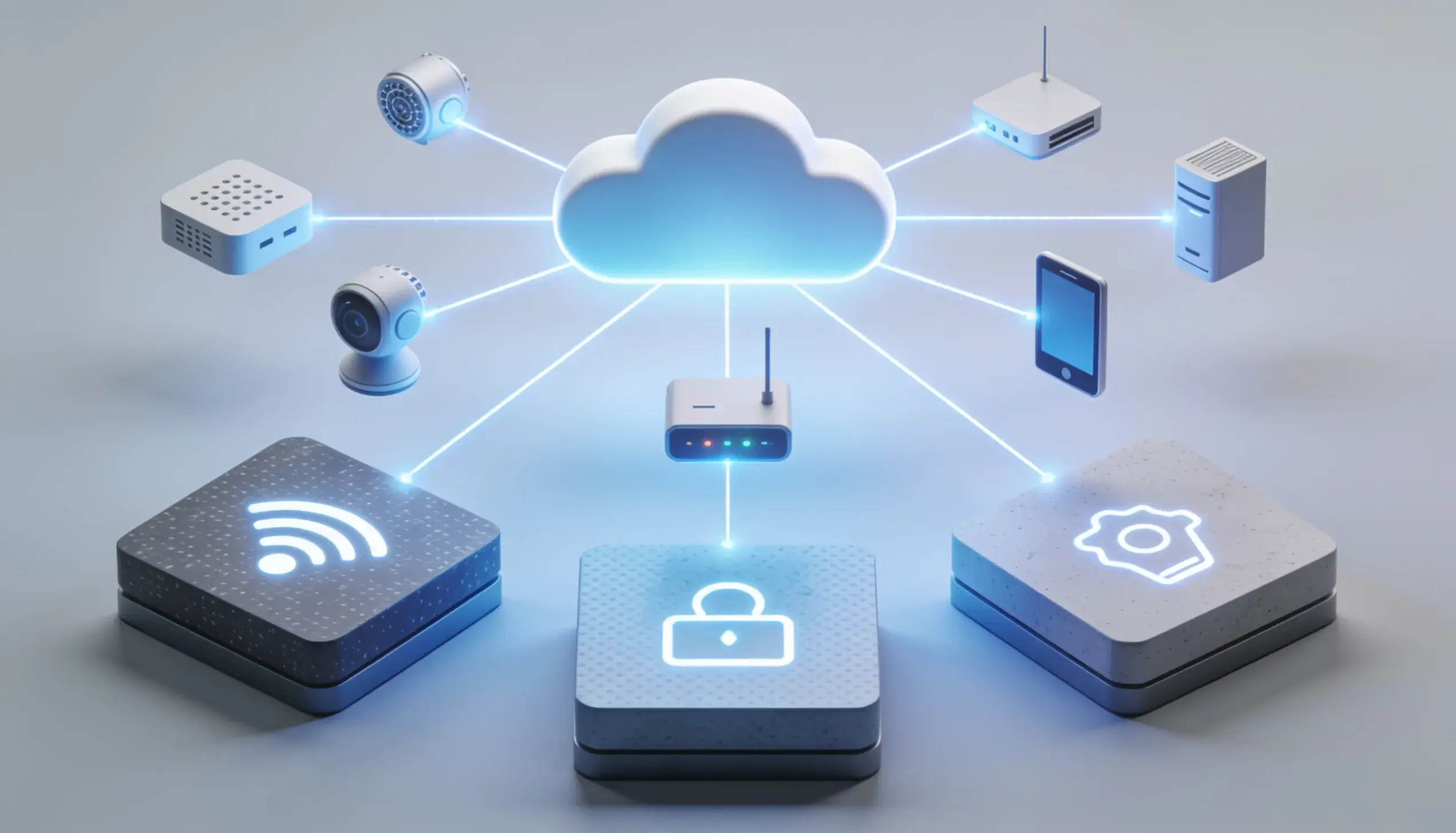
An IoT platform is a software system—typically delivered as a SaaS product—that connects, monitors, and manages a fleet of Internet of Things devices. It serves as the operational backbone between physical devices in the field and the business systems that consume their data.
IoT platforms perform several core functions:
- Device connectivity and management: Provisioning devices, monitoring their health, and delivering over-the-air (OTA) firmware updates
- Data collection and routing: Receiving data from endpoints and directing it to storage, analytics, or enterprise systems
- Visualization and dashboards: Providing real-time overviews of device status, data usage, and anomaly alerts
- Security controls: Enforcing role-based access control (RBAC) and monitoring for unauthorized activity
The specific combination of these features varies significantly across platforms, which is why matching the right platform to your use case is critical.
What Are the Main Types of IoT Platforms?
Understanding platform types prevents costly mismatches between what you purchase and what you actually need.
Application Enablement Platforms (AEPs)
AEPs provide tools to build, deploy, and manage IoT applications. They are self-contained environments that include data collection, storage, and application-building capabilities through APIs and prebuilt templates. AEPs work well for smart city deployments, remote patient monitoring, and early-stage Industrial IoT (IIoT) implementations.
Device Management Platforms
These platforms prioritize control over a device fleet rather than data analysis. They allow organizations to provision devices, authenticate them on a network, and push configuration or security updates remotely. Common use cases include connected home appliances, vehicle telematics, and factory equipment monitoring.
Data Orchestration Platforms
Data orchestration platforms collect sensor data and transform it into actionable insights for enterprise systems. They integrate with AI and machine learning tools and support real-time and batch data processing. These platforms are best suited for complex industrial environments, predictive maintenance programs, and large-scale manufacturing operations.
IoT Cloud and Connectivity Platforms
Cloud platforms—such as AWS IoT Core, Microsoft Azure IoT Hub, and Google Cloud IoT—offer end-to-end services including connectivity, storage, and analytics. Connectivity platforms are more narrowly focused on managing data flows for devices that rely on cellular or LPWAN networks, such as connected vehicles or industrial monitors deployed in remote locations.
What Key Factors Should You Evaluate When Choosing an IoT Platform?
Does the Platform Scale With Your Deployment?
Scalability is a non-negotiable requirement. A platform that handles 500 devices comfortably may create serious bottlenecks when your deployment reaches 50,000. Before committing to a vendor, ask specifically how the platform performs at your projected scale—and request references from customers operating at that level.
How Does the Platform Handle Security?
Security risk increases proportionally with fleet size. The most effective IoT platforms implement role-based access control (RBAC), ensuring that each team member accesses only the functions relevant to their role. An IT administrator should have different permissions than a billing manager. Platforms without granular access controls expose organizations to costly errors and security vulnerabilities.
Additionally, confirm that the platform supports encrypted communications, device authentication, and regular security compliance updates.
Is the Platform Compatible With Your Existing Ecosystem?
Ecosystem compatibility is frequently underestimated at the evaluation stage. Key questions to ask include:
- Does the platform support your existing communication protocols (e.g., MQTT, HTTP, OPC-UA)?
- Can it integrate with legacy machines or older PLC devices?
- Does it connect natively with cloud services you already use, such as AWS or Google Cloud?
- Does it offer open REST API access for custom application development?
Platforms that require significant middleware or custom code to integrate with your existing systems will increase your total cost of ownership substantially.
What Is the Total Cost of Ownership?
Pricing models vary widely. Some platforms charge a flat subscription fee; others price based on the number of connected devices or data consumption volumes. Neither model is inherently better—the right choice depends on your growth trajectory.
Calculate total cost of ownership (TCO) by accounting for licensing fees, integration costs, training, ongoing support, and the cost of potential migration if you need to switch platforms later. Compare this against your projected return on investment (ROI) from the IoT deployment.
What Level of Vendor Support Is Available?
IoT deployments encounter unexpected issues—network anomalies, device failures, firmware conflicts. When they do, the responsiveness of your platform vendor directly affects how quickly you recover. Look for vendors that provide:
- 24/7 technical support channels
- Dedicated onboarding assistance for new deployments
- Active developer communities and documentation
- Regular platform updates that address emerging security threats
A vendor's longevity and market reputation also matter. Choosing a platform from a provider that discontinues services mid-deployment creates significant operational and financial risk.
How Do You Match an IoT Platform to Your Business Stage?
The right platform also depends on where your organization currently sits in its IoT journey.
Early-stage and prototyping: Prioritize platforms that support rapid development, off-the-shelf hardware compatibility, and flexible API access. Avoid vendor lock-in at this stage.
Production and scaling: Focus on device management reliability, security controls, and data throughput performance. Verify that the platform has proven performance records at scale.
Enterprise integration: Seek data orchestration platforms capable of connecting IoT data streams with ERP, CRM, and other enterprise systems. AI and ML integration capabilities become critical at this stage.
Make the Right Decision Before You Deploy
Choosing an IoT platform is not a decision that benefits from trial and error—migration is expensive, and poor platform choices delay the ROI from your IoT investment. The most effective approach is to define your business objectives first, map those to technical requirements, and then evaluate vendors systematically against those criteria.
Start by asking three foundational questions:
- What specific business problem does this IoT deployment solve?
- How many devices will you manage, and how quickly will that number grow?
- What enterprise systems does your IoT data need to connect with?
The answers to these questions will narrow your platform options considerably and give you a clear evaluation framework. If you need expert guidance in assessing your specific requirements, consult directly with IoT platform specialists who can align solutions to your operational environment.
Frequently Asked Questions
-
What is the difference between an IoT platform and IoT middleware?
An IoT platform is a comprehensive system that manages device connectivity, data collection, and application support in a single environment. IoT middleware, by contrast, refers specifically to the software layer that enables communication between devices and applications—it is one component that a full IoT platform typically includes as a built-in feature.
-
How many IoT devices do I need before I require a dedicated management platform?
There is no fixed threshold, but most organizations find that manual device management becomes impractical beyond 50–100 connected devices. At that point, the operational overhead of monitoring connectivity, pushing updates, and tracking data usage across individual devices justifies the investment in a dedicated IoT platform.
-
Can I use multiple IoT platforms simultaneously?
Yes, and many enterprises do. It is common to use a connectivity management platform alongside a data analytics or application enablement platform. However, managing multiple platforms increases integration complexity and total cost of ownership. Where possible, evaluate whether a single platform can meet your full requirements before adding additional vendors to your stack.
-
What security certifications should an IoT platform vendor have?
Depending on your industry, relevant certifications include ISO/IEC 27001 (information security management), SOC 2 Type II (data security controls), and industry-specific frameworks such as HIPAA (healthcare) or IEC 62443 (industrial automation). Request compliance documentation from vendors during the evaluation process and verify that certifications are current.
-
How difficult is it to migrate from one IoT platform to another?
Migration complexity varies significantly based on how deeply the platform is integrated with your devices and enterprise systems. Proprietary data formats and closed APIs create the highest migration barriers. To reduce future risk, prioritize platforms that support open standards, provide data export capabilities, and do not require proprietary hardware that locks you into a single vendor ecosystem.