Shopping Cart



IoT Asset Tracking: The Competitive Edge KSA Warehouses Can't Ignore
Discover how IoT asset tracking helps KSA warehouses improve inventory visibility, reduce losses, optimize operations, and increase supply chain efficiency with real-time tracking.
By Blue Edge Team | Jun 29, 2026
IoT Asset Tracking: The Competitive Edge KSA Warehouses Can't Ignore
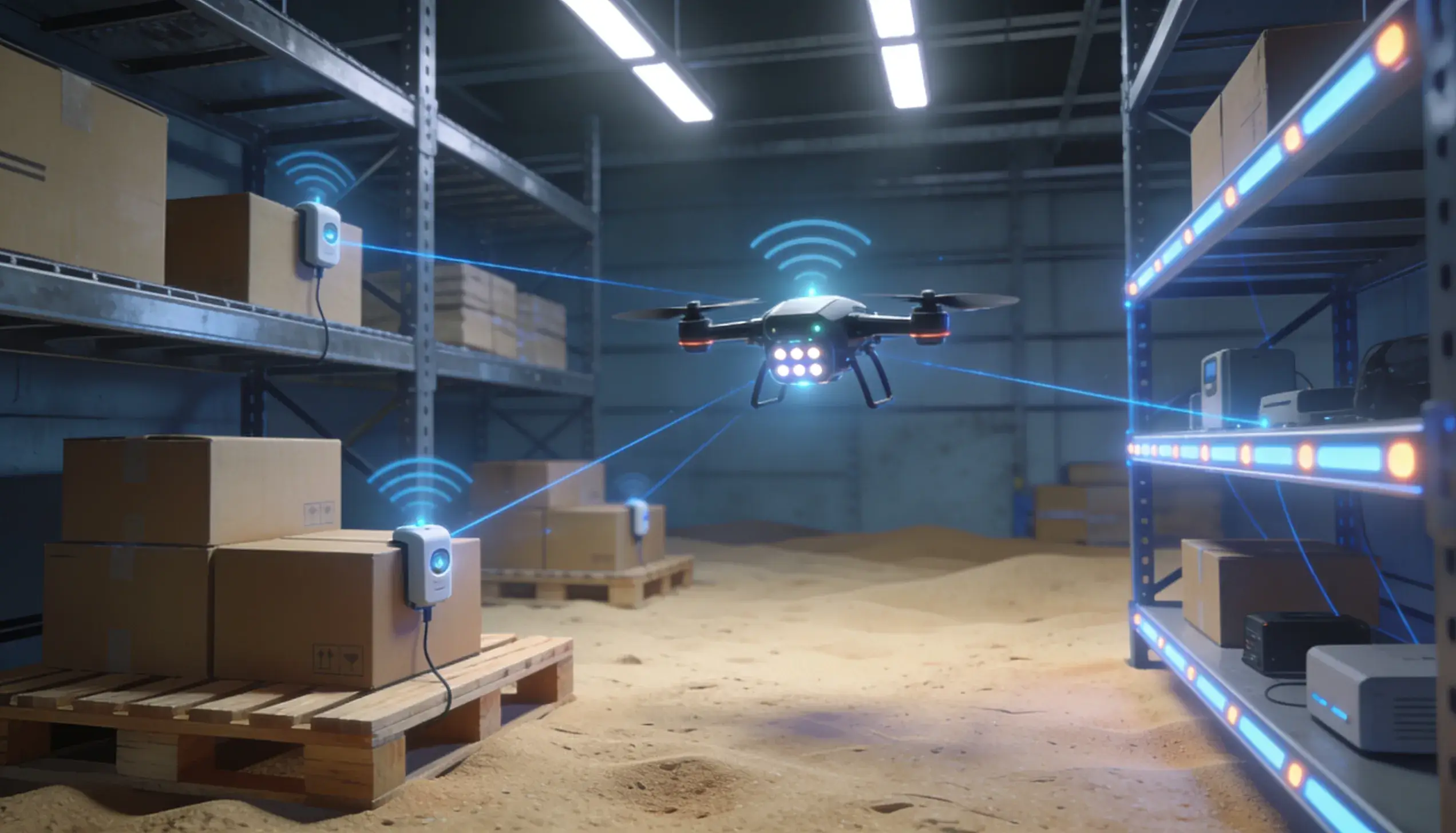
IoT asset tracking uses GPS, RFID, BLE, and cellular sensors to give warehouse and logistics operators in Saudi Arabia real-time visibility over their assets. For a logistics market projected to reach USD 123.9 billion by 2033, adopting IoT tracking is no longer optional—it is a strategic necessity aligned with Vision 2030's smart infrastructure goals.
Saudi Arabia's logistics sector is undergoing a transformation of historic proportions. Backed by a USD 100 billion investment under Vision 2030, the Kingdom is building smart ports, AI-driven freight corridors, and IoT-enabled monitoring systems across strategic hubs like Riyadh, Jeddah, and NEOM. The KSA logistics market—already valued at USD 55.0 billion in 2024—is projected to nearly double, reaching USD 123.9 billion by 2033, at a CAGR of 9.4% (Dimension Market Research, 2024).
Fueling a significant share of that growth is a critical technology: IoT asset tracking. Warehouses and logistics operators across the Kingdom are discovering that real-time visibility is the single most controllable variable separating efficient operations from costly ones. This post explains how IoT asset tracking works, which technologies apply to KSA logistics environments, and what measurable outcomes operators can expect.
Why Are KSA Warehouses Turning to IoT Asset Tracking?
Traditional asset management in warehouses—manual counts, spreadsheets, periodic barcode scans—cannot keep pace with the speed demanded by modern supply chains. E-commerce expansion, last-mile delivery pressures, and the rise of 3PL/contract logistics models have raised the stakes significantly.
The Saudi government's National Industrial Development and Logistics Program (NIDLP) has made technology adoption a central requirement for logistics operators seeking to remain competitive. At the Riyadh Integrated Logistics Zone, AI algorithms and IoT sensors already monitor cargo conditions in real time, with autonomous forklifts and robotic sorting systems reducing human error across the facility.
The result: facilities without IoT tracking are increasingly disadvantaged—facing higher inventory discrepancies, longer dwell times, and reduced service reliability compared to technology-enabled peers.
What Technologies Power IoT Asset Tracking in KSA Warehouses?
IoT asset tracking is not a single technology. It is an ecosystem of sensors, connectivity protocols, and analytics platforms. The right combination depends on your facility size, asset type, and tracking precision requirements.
- GPS (Global Positioning System): Best for outdoor and cross-border tracking of vehicles, containers, and mobile assets. GPS provides meter-level accuracy and global coverage, making it essential for fleet management and inter-city freight.
- RFID (Radio Frequency Identification): The standard for high-volume indoor inventory tracking. Passive RFID tags are cost-effective and battery-free, while active RFID tags transmit continuously for longer-range applications. Widely used across Saudi Arabia's warehousing and distribution segment.
- Bluetooth Low Energy (BLE): Low-power beacons are ideal for tracking assets within defined indoor zones. BLE's energy efficiency gives tags a long battery life—a practical advantage in large distribution centers where manual battery replacement is impractical.
- Ultra-Wideband (UWB): Delivers sub-meter indoor accuracy, making it the preferred choice for high-value asset tracking in manufacturing floors, pharmaceutical storage, and temperature-sensitive zones.
- Cellular IoT (4G LTE / 5G): Provides wide-area connectivity for assets that move across regions. As Saudi Arabia accelerates its 5G rollout, cellular IoT is enabling near-real-time tracking with ultra-low latency and support for massive device networks.
Each technology balances accuracy, power consumption, range, and cost differently. Most enterprise deployments in KSA warehouses layer two or more of these technologies to cover both indoor operations and outbound logistics.
What Are the Key Benefits of IoT Asset Tracking for KSA Logistics Operations?
Real-Time VisibilityIoT tracking delivers a continuous, live view of every asset's location and condition. Warehouse managers can identify misplaced inventory, monitor cargo integrity, and respond to exceptions—without manual searches or delays.
Reduced Shipment DelaysAccording to NASSCOM, IoT-based tracking of vehicles and cargo minimizes shipment delays by up to 40%. In a market where last-mile delivery expectations are tightening, this reduction directly impacts customer satisfaction and contract retention.
Predictive MaintenanceIoT sensors continuously monitor equipment health—forklifts, conveyor belts, refrigeration units. Combined with AI algorithms, the system forecasts failures before they occur. This eliminates unplanned downtime and reduces emergency repair costs, extending asset lifecycles and improving overall equipment effectiveness (OEE).
Inventory Accuracy and Cost ReductionBy monitoring stock levels in real time, operators can eliminate overstocking, prevent stockouts, and reduce carrying costs. Automated inventory reconciliation through IoT-integrated warehouse management systems (WMS) also cuts the labor hours associated with manual cycle counts.
Security and Loss PreventionGeofencing capabilities trigger instant alerts when an asset is moved outside a predefined boundary. This is particularly valuable for high-value goods, pharmaceutical shipments, and cold chain cargo—all high-growth segments in the KSA logistics market.
Regulatory ComplianceIoT systems automatically generate audit trails and compliance reports. For operators handling pharmaceuticals, food products, or hazardous materials under Saudi standards, this removes a significant administrative burden and reduces the risk of regulatory penalties.
How Is IoT Asset Tracking Being Applied Across KSA Logistics?
Real-world adoption in the Kingdom demonstrates that IoT asset tracking is not theoretical—it is already delivering results.
At the Riyadh Integrated Logistics Zone, IoT sensors monitor cargo in real time across automated facilities where autonomous forklifts and robotic systems handle picking, packing, and sorting. The result is a measurable reduction in human error and a faster throughput rate.
NEOM's Oxagon—set to become the world's largest floating logistics hub—is being built around renewable energy, autonomous transport, and AI-driven traffic systems, with IoT forming the monitoring backbone throughout.
In September 2024, Smartlog and Tamer Group partnered to automate a new logistics park in Saudi Arabia using AutoStore and Galys Monitor technology, improving storage and order pickup operations. In February 2024, DHL Supply Chain and Aramco announced a joint venture to establish a sustainable procurement and logistics hub in the Kingdom, with technology integration at its core.
Cold chain logistics—covering pharmaceutical distribution, food, and perishables—represents one of the fastest-growing use cases. IoT temperature sensors paired with AI-powered anomaly detection ensure goods remain within required conditions throughout transit, meeting both Saudi Food & Drug Authority (SFDA) standards and GDP compliance requirements.
How Do You Choose the Right IoT Asset Tracking Solution for a KSA Warehouse?
The optimal solution depends on your operational profile:
- Choose RFID if you need cost-effective, high-volume indoor inventory identification across a fixed facility.
- Choose GPS + Cellular IoT if your assets move across cities, borders, or between facilities, and you require continuous outdoor tracking.
- Choose BLE or UWB if precision indoor positioning within a warehouse is the priority—particularly for high-value or compliance-sensitive assets.
- Choose a hybrid architecture if your operation spans both indoor storage and outbound logistics, which is the case for most 3PL operators and large distribution centers in KSA.
Integration with your existing WMS or ERP system is equally critical. IoT tracking data generates its full value only when it flows into operational dashboards where managers can act on it—not when it exists in a separate silo.
The Road Ahead: IoT, AI, and KSA's Logistics Ambition
Saudi Arabia's logistics technology market is expected to grow from USD 350.6 million in 2025 to USD 670.8 million by 2034 (IMARC Group, 2025), with smart warehousing and IoT adoption cited as primary drivers. The Kingdom is also preparing to train over 50,000 logistics professionals in digital skills by 2027, ensuring the workforce can operate and extract value from these systems.
As 5G infrastructure expands across KSA, the capabilities of IoT asset tracking will scale with it—enabling near-zero-latency tracking, larger device networks, and richer data streams for AI-driven decision-making. Operators who build their IoT foundation now will be best positioned to leverage those advances as they arrive.
IoT asset tracking is not simply a warehouse technology. It is the data layer upon which smarter, faster, and more resilient KSA logistics operations are being built. If your facility is still operating without real-time asset visibility, the gap between your operation and your competitors is widening every day.
Ready to implement IoT asset tracking in your KSA warehouse or logistics operation? Contact our team today for a tailored consultation and discover the right solution for your environment.
Frequently Asked Questions
-
What is IoT asset tracking, and how does it work in a warehouse?
IoT asset tracking uses sensors—GPS, RFID, BLE, or UWB—attached to physical assets to collect real-time data on location, status, and condition. This data is transmitted wirelessly to a cloud platform, where it is processed and visualized on management dashboards, giving operators continuous visibility over inventory, equipment, and goods in transit.
-
Which IoT tracking technology is best suited for warehouses in Saudi Arabia?
The best technology depends on the use case. RFID is widely used for indoor inventory management due to its cost-effectiveness and scalability. BLE is preferred for zone-level indoor tracking, while UWB provides sub-meter accuracy for high-value assets. GPS and cellular IoT are best for assets that move outside the facility. Most large KSA logistics operations deploy a hybrid combination.
-
How does IoT asset tracking support Vision 2030 logistics goals?
Vision 2030 positions Saudi Arabia as a global logistics hub, targeting a logistics sector contribution of 10% of GDP by 2030. IoT asset tracking directly supports this by improving supply chain efficiency, reducing operational costs, enabling smart warehousing, and providing the data infrastructure required for AI-driven logistics optimization—all priorities under the NIDLP framework.
-
What ROI can KSA warehouse operators expect from IoT asset tracking?
Documented outcomes include a reduction in shipment delays of up to 40% (NASSCOM), significant decreases in inventory discrepancies through automated reconciliation, and lower maintenance costs through predictive maintenance capabilities. Exact ROI varies by facility size and asset type, but operators consistently report improvements in throughput, asset utilization, and labor efficiency.
-
Is IoT asset tracking suitable for cold chain logistics in Saudi Arabia?
Yes. IoT temperature and humidity sensors are specifically designed for cold chain applications, monitoring conditions throughout storage and transit. When integrated with AI analytics, these systems detect temperature excursions in real time and trigger alerts before spoilage occurs—making them essential for pharmaceutical, food, and chemical logistics operations operating under Saudi regulatory standards.