Shopping Cart



What Is CCaaS? The Complete Guide to Contact Center as a Service
Learn what Contact Center as a Service (CCaaS) is, how it works, and how cloud-based contact centers improve customer experience, agent productivity, and business communication.
By Blue Edge Team | Aug 10, 2026
What Is CCaaS? The Complete Guide to Contact Center as a Service
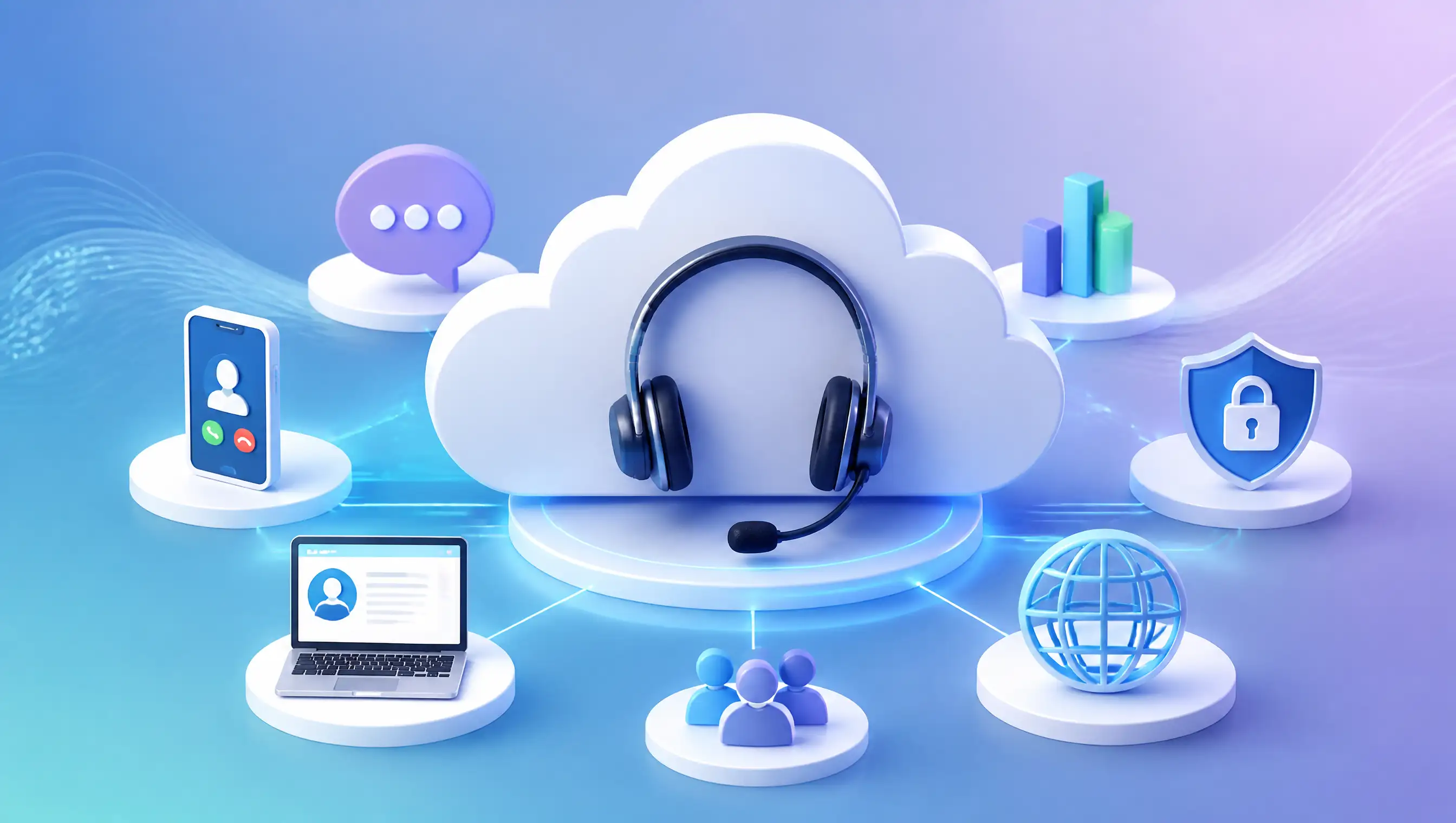
Quick answer: Contact Center as a Service (CCaaS) is a cloud-based customer engagement platform that replaces traditional on-premise contact center infrastructure. CCaaS solutions deliver omnichannel communication, AI-powered automation, and real-time analytics through a subscription model—enabling businesses to scale support operations without heavy capital investment.
Customer expectations have never been higher. Customers want fast, consistent, personalized support—whether they reach out by phone, email, live chat, or social media. Meeting that expectation requires the right infrastructure. For many organizations, that infrastructure is Contact Center as a Service, or CCaaS.
CCaaS has moved from a niche technology category to a mainstream enterprise priority. According to Gartner, the global CCaaS market is projected to reach $19.8 billion by 2031, growing at a CAGR of over 15%. That growth reflects a fundamental shift in how organizations think about customer communication—not as a fixed cost to manage, but as a strategic function to optimize.
This guide explains precisely what CCaaS is, how it works, what distinguishes leading platforms, and how to determine whether it is the right solution for your organization.
How Does CCaaS Work?
CCaaS delivers contact center functionality through the cloud, hosted and maintained by a third-party vendor. Instead of purchasing servers, installing software on-site, and managing ongoing hardware maintenance, organizations access everything through a web browser or lightweight desktop application.
The vendor manages the underlying infrastructure—servers, security patches, software updates, and uptime—while the customer configures the platform to match their specific workflows.
Core components of a CCaaS platform typically include:
- Automatic Call Distributor (ACD): Routes inbound calls to the most appropriate available agent based on skills, language, or customer history.
- Interactive Voice Response (IVR): Allows callers to self-serve or navigate to the right department without agent intervention.
- Omnichannel routing: Unifies voice, email, SMS, live chat, and social media into a single agent interface.
- Workforce management (WFM): Forecasts call volumes and schedules agents accordingly to minimize wait times.
- Real-time and historical analytics: Provides supervisors with dashboards tracking key performance indicators such as first contact resolution (FCR), average handle time (AHT), and customer satisfaction (CSAT).
- CRM integration: Connects customer interaction data with systems like Salesforce, HubSpot, or Microsoft Dynamics for a complete customer view.
Because everything runs in the cloud, updates and new features are deployed automatically—without the downtime or IT burden associated with on-premise upgrades.
CCaaS vs. Traditional On-Premise Contact Centers: What's the Difference?
The distinction between CCaaS and legacy on-premise systems goes beyond where the software runs. The two models differ in cost structure, scalability, maintenance burden, and strategic flexibility.
| Feature | CCaaS (Cloud-Based) | On-Premise Contact Center |
|---|---|---|
| Deployment | Cloud-hosted, browser-based | Installed on local servers |
| Upfront cost | Low (subscription-based) | High (hardware + licenses) |
| Scalability | Elastic—scale up or down instantly | Limited by physical infrastructure |
| Maintenance | Managed by vendor | Managed by internal IT team |
| Upgrades | Automatic, continuous | Manual, disruptive, costly |
| Remote work support | Native—agents work from anywhere | Requires VPN and complex setup |
| Time to deploy | Days to weeks | Months |
| Disaster recovery | Built-in redundancy | Requires separate planning |
| AI and automation | Typically built-in | Requires third-party integration |
| Analytics | Real-time, customizable dashboards | Often limited or siloed |
For most organizations, the operational and financial advantages of CCaaS are substantial—particularly for businesses experiencing rapid growth, seasonal volume fluctuations, or distributed workforces.
Key Features to Look for in a CCaaS Platform
Not all CCaaS solutions are equal. The right platform depends on your industry, team size, and customer engagement strategy. The following features are worth evaluating carefully during any procurement process.
Omnichannel Communication Management
A capable CCaaS platform consolidates every customer touchpoint into one unified workspace. Agents should be able to transition a conversation from chat to voice without asking the customer to repeat themselves. True omnichannel capability—as distinct from multichannel, where channels operate in silos—is a defining feature of mature CCaaS offerings.
AI-Powered Automation and Self-Service
Modern CCaaS platforms increasingly embed artificial intelligence directly into the platform. Conversational AI handles routine inquiries through intelligent IVR and chatbots, reducing agent load. AI-assisted tools also provide real-time guidance to agents during live conversations—surfacing relevant knowledge base articles or flagging sentiment shifts mid-call. Look for platforms that offer AI summarization (automatic after-call notes) and predictive routing (matching customers to agents most likely to resolve their issue successfully).
Workforce Engagement Management (WEM)
Workforce engagement management encompasses scheduling, forecasting, quality monitoring, and agent coaching. Platforms that integrate WEM natively—rather than relying on third-party tools—provide a more cohesive experience for supervisors and reduce administrative overhead.
Security and Compliance Capabilities
For organizations operating in regulated industries—healthcare, financial services, or government—compliance is non-negotiable. Evaluate whether a CCaaS platform supports PCI DSS compliance for payment data, HIPAA safeguards for health information, and GDPR requirements for personal data. Role-based access controls, call recording encryption, and audit logs are baseline requirements.
Open APIs and Integration Ecosystem
CCaaS platforms do not operate in isolation. They need to exchange data with CRMs, ticketing systems, billing platforms, and workforce tools. A robust API layer and a well-documented integration marketplace reduce implementation complexity significantly.
Top CCaaS Platforms: Feature Comparison
The CCaaS market includes a range of vendors positioned for different organization types and use cases. The table below provides a structured comparison of leading platforms based on publicly available information.
| Platform | Best For | AI Capabilities | Omnichannel | Native WFM | Notable Integration |
|---|---|---|---|---|---|
| Genesys Cloud CX | Mid-to-large enterprise | Advanced (predictive routing, AI coaching) | ✅ Full | ✅ Yes | Salesforce, ServiceNow |
| Five9 | SMB to enterprise | AI-powered IVR, agent assist | ✅ Full | ✅ Yes | Salesforce, Zendesk |
| NICE CXone | Large enterprise | AI analytics, smart routing | ✅ Full | ✅ Yes | Microsoft Teams, Oracle |
| Amazon Connect | Tech-forward organizations | ML-based routing, real-time insights | ✅ Full | Via add-on | AWS ecosystem |
| Talkdesk | Healthcare, retail, finance | AI agent assist, auto-summarization | ✅ Full | ✅ Yes | Epic, Salesforce |
| 8x8 Contact Center | SMB and mid-market | Basic AI tools, analytics | ✅ Full | Via partner | Microsoft Teams |
| Dialpad Support | Small to mid-size teams | Real-time transcription, AI scoring | ✅ Full | Limited | Google Workspace |
Note: Features and pricing vary by plan. Consult vendor documentation for current specifications.
What Are the Business Benefits of Adopting CCaaS?
The case for CCaaS is built on measurable operational outcomes, not abstract technology benefits.
Reduced operational costs: Eliminating on-site hardware, software licenses, and the IT resources to maintain them typically reduces total cost of ownership significantly. Organizations pay only for what they use, adjusting capacity in real time.
Faster deployment and iteration: A CCaaS platform can be configured and deployed in days rather than months. New features—AI tools, new communication channels, updated routing rules—are available as soon as the vendor releases them.
Business continuity and resilience: Because CCaaS runs in the cloud with built-in redundancy, it continues operating during local outages or infrastructure failures. This was a decisive advantage for organizations that transitioned to remote work rapidly during the COVID-19 pandemic.
Improved agent experience: Unified interfaces, AI assistance, and integrated knowledge bases reduce the cognitive load on agents. When agents spend less time navigating disparate systems, they handle more interactions—and handle them better.
Data-driven performance management: Real-time dashboards and historical reporting give supervisors the visibility to identify bottlenecks, recognize top performers, and intervene before service levels degrade.
Is CCaaS Right for Your Organization?
CCaaS is not universally the best choice. The decision depends on your organization's size, existing infrastructure, regulatory environment, and long-term strategy.
CCaaS is likely the right fit if:
- Your contact center manages multi-channel interactions and needs a unified platform.
- Your team is distributed or partially remote.
- You require rapid scalability—seasonal peaks, rapid growth, or new market entry.
- Your current on-premise system is approaching end-of-life or requires significant capital investment to upgrade.
On-premise may still be appropriate if:
- Your organization operates in a highly restricted environment with stringent data sovereignty requirements.
- You have a recently invested, stable infrastructure with a long depreciation horizon.
- Your contact center handles a narrow, single-channel use case with low complexity.
For most organizations evaluating their options today, CCaaS offers a compelling combination of operational flexibility, lower total cost, and access to AI capabilities that would otherwise require significant independent development.
What's Next for CCaaS? Key Trends Shaping the Market
The CCaaS category is evolving rapidly. Several developments are reshaping what organizations should expect from their platforms over the next two to three years.
Generative AI integration: Vendors are embedding large language models (LLMs) into agent interfaces to draft responses, summarize interactions, and guide complex troubleshooting in real time. Genesys, NICE, and Salesforce (through Agentforce) are among those investing heavily in this area.
Proactive engagement: CCaaS platforms are moving beyond reactive support. Predictive analytics and journey orchestration tools enable organizations to reach customers before problems escalate—sending alerts, appointment reminders, or satisfaction check-ins automatically.
Employee experience as a priority: As agent attrition remains a significant industry challenge, vendors are investing in gamification, performance coaching, and well-being tools embedded directly within the CCaaS interface.
Unified Communications and CCaaS convergence: The boundary between UCaaS (Unified Communications as a Service) and CCaaS is narrowing, with vendors like 8x8 and RingCentral offering integrated platforms that serve both front-office (contact center) and back-office (general communication) needs.
Make the Right Decision for Your Contact Center
CCaaS represents a decisive shift in how organizations deliver customer support—replacing fixed, costly infrastructure with flexible, intelligent cloud platforms. For businesses looking to improve customer satisfaction, reduce operational overhead, and enable their teams to work from anywhere, CCaaS provides a proven and scalable solution.
The right platform depends on your specific requirements: team size, channel mix, integration needs, and compliance obligations. The vendors compared in this guide represent the leading options across a range of use cases.
Ready to evaluate your options? Contact our team today to discuss which CCaaS solution aligns with your organization's goals, and get a tailored recommendation based on your environment and requirements.
Frequently Asked Questions
-
What is the difference between CCaaS and UCaaS?
CCaaS (Contact Center as a Service) is designed specifically for customer-facing teams—delivering tools for inbound and outbound customer interactions, including omnichannel routing, IVR, and agent performance management. UCaaS (Unified Communications as a Service) serves broader internal communication needs, including voice calls, video conferencing, messaging, and file sharing for all employees. Some vendors now offer converged platforms that combine both capabilities.
-
How much does a CCaaS solution typically cost?
CCaaS pricing varies significantly based on the vendor, feature tier, and number of agents. Most platforms use a per-agent, per-month pricing model. Entry-level plans can start at approximately $75–$100 per agent per month, while enterprise-grade plans with advanced AI, analytics, and workforce management can exceed $200 per agent per month. Implementation, training, and integration costs are additional considerations.
-
How long does it take to implement a CCaaS platform?
Implementation timelines depend on the complexity of your environment. A basic CCaaS deployment with standard configurations can be completed in as little as one to two weeks. More complex deployments—involving deep CRM integration, custom workflows, compliance configuration, and agent training—typically take four to twelve weeks. Vendors like Amazon Connect and Genesys offer implementation partners to accelerate the process.
-
Is CCaaS secure enough for regulated industries like healthcare or finance?
Most leading CCaaS platforms are designed with enterprise-grade security and regulatory compliance in mind. Reputable vendors support PCI DSS for payment card data, HIPAA for health information, SOC 2 Type II for operational security, and GDPR for European data privacy. Organizations in regulated industries should request vendor compliance documentation and confirm that data residency options meet their specific obligations.
-
Can a small business benefit from CCaaS, or is it only for large enterprises?
CCaaS is well-suited for organizations of all sizes. Platforms such as Dialpad, 8x8, and Talkdesk offer plans specifically designed for small to mid-size teams, with lower per-agent costs and simplified setup. The subscription model eliminates the high upfront capital investment that previously made enterprise-grade contact center technology inaccessible to smaller organizations.