Shopping Cart



Deepfake Fraud Is Targeting Your Business—Are You Ready?
Learn how deepfake fraud uses AI-generated voices, videos, and identities to target businesses, manipulate employees, and enable financial scams—and how organizations can strengthen defenses. In 2026, research shows organizations remain significantly underprepared for AI-driven fraud.
By Blue Edge Team | Aug 19, 2026
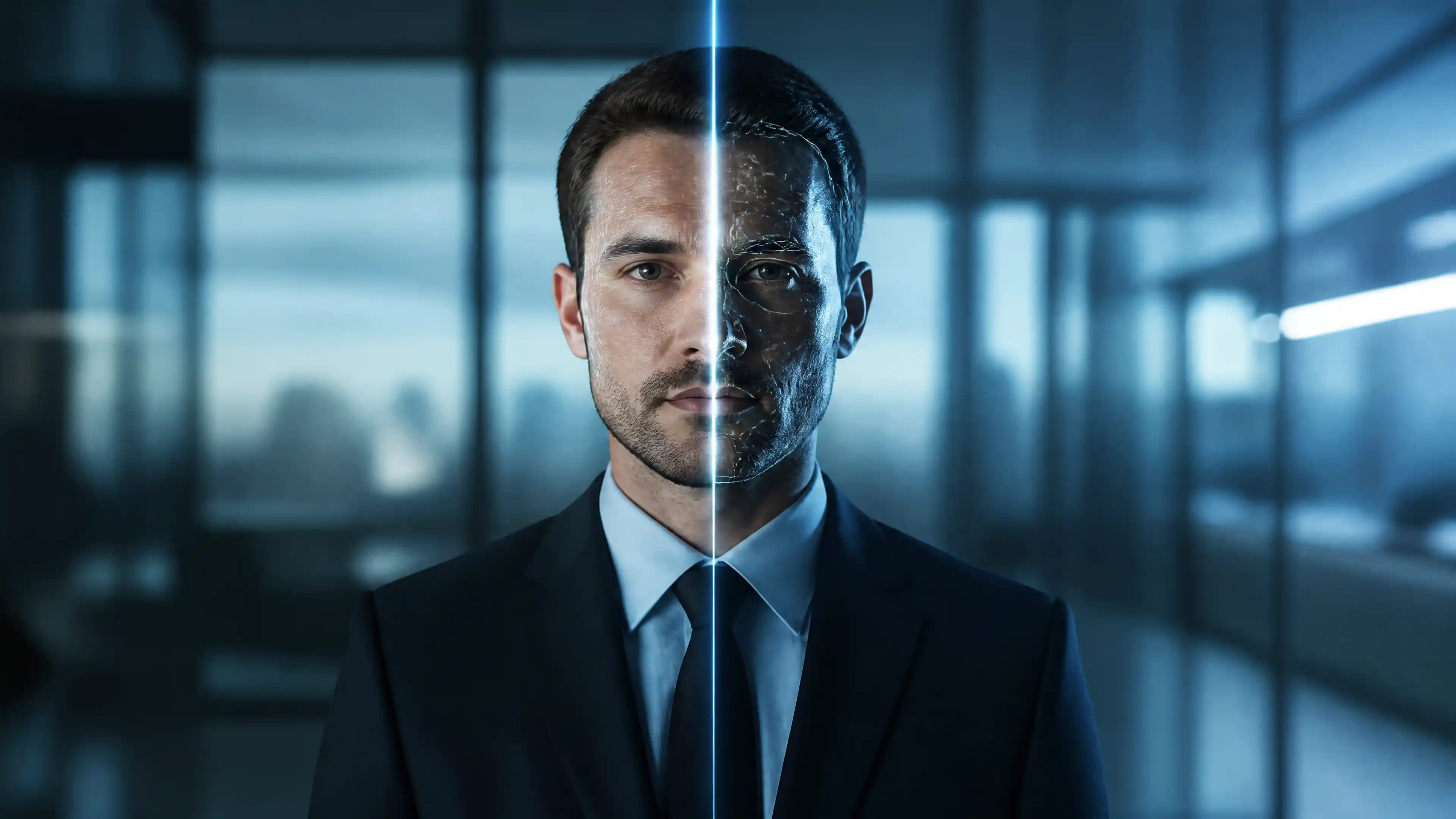
Deepfake Fraud Is Targeting Your Business—Are You Ready?
Deepfake fraud uses AI-generated audio and video to impersonate executives, vendors, and colleagues in business communications. Deepfake-enabled financial fraud has surged in recent years, costing organizations millions. Businesses can reduce their risk by implementing multi-factor authentication, verification protocols, and employee awareness training.
The voice on the call sounded exactly like the CFO. The instructions were clear: transfer $25 million to a supplier account immediately. The finance team complied. There was no CFO on that call—only an AI-generated voice clone crafted to deceive.
This incident, reported by Hong Kong police in early 2024, is not an isolated case. Deepfake fraud has evolved from a theoretical risk into a documented, operational threat to business communication. Executives are being cloned. Invoices are being approved. And many organizations have no protocol in place to detect it.
This post breaks down how deepfake fraud works, where it strikes hardest, and what practical steps your organization can take to defend against it.
What Is Deepfake Fraud in a Business Context?
Deepfake fraud refers to the use of AI-generated synthetic media—video, audio, or both—to impersonate a trusted individual within a business communication. Unlike traditional phishing, which relies on text-based deception, deepfake fraud exploits human trust in voices and faces.
Fraudsters use publicly available recordings—executive interviews, earnings calls, LinkedIn videos—to train AI models capable of replicating a person's voice or appearance with high accuracy. The resulting content can be deployed in live phone calls, video conferences, and voice messages.
The technology barrier to entry is falling rapidly. Tools capable of generating convincing voice clones are now accessible online, often for free or at minimal cost.
How Do Deepfake Attacks Target Business Communication Channels?
Deepfake fraud targets the communication channels businesses rely on most. Understanding where these attacks occur is critical to building an effective defense.
Voice-Based Attacks (Vishing)
Attackers clone an executive's voice and call employees—typically in finance or HR—with urgent instructions. The familiarity of the voice creates immediate trust and compresses the time available for verification.
Video Conferencing Fraud
Live deepfake video technology allows fraudsters to appear as colleagues or senior leaders during video calls. Employees who see a recognizable face are far less likely to question the legitimacy of instructions received.
Internal Messaging and Voicemail
Pre-recorded deepfake audio clips are used to leave voicemails or messages through internal platforms, often requesting password resets, wire transfers, or access to sensitive systems.
Deepfake Fraud vs. Traditional Business Email Compromise: Key Differences
Understanding how deepfake fraud compares to conventional fraud methods helps organizations allocate defenses appropriately.
| Feature | Traditional BEC (Email Fraud) | Deepfake Fraud |
|---|---|---|
| Primary medium | Text-based email | Audio, video, live calls |
| Detection difficulty | Moderate (grammar, domain checks) | High (sensory deception) |
| Trust exploitation | Identity spoofing via email | Voice/face impersonation |
| Technology required | Low | Moderate to high |
| Employee training coverage | Widely covered | Often overlooked |
| Average financial impact | $50,000–$500,000+ | $25M+ (documented cases) |
| Verification methods | Email headers, sender checks | Behavioral cues, out-of-band verification |
| Regulatory guidance available | Yes (FBI IC3, CISA) | Emerging |
The critical distinction is sensory trust. Traditional fraud exploits habits around email; deepfake fraud exploits the human instinct to trust what we hear and see. This makes deepfake attacks significantly harder to detect without formal protocols in place.
Which Industries Face the Highest Deepfake Fraud Risk?
While no sector is immune, certain industries face elevated exposure due to the nature of their communication workflows and financial authority structures.
- Financial Services: High-value transactions and executive-level authorization make finance teams prime targets for voice clone fraud.
- Legal and Professional Services: Sensitive client communications and document approvals create opportunities for identity impersonation.
- Technology Companies: Remote-first cultures with heavy reliance on video conferencing increase exposure to live deepfake attacks.
- Healthcare: Patient data, vendor communications, and billing processes present multiple exploitation points.
- Government and Defense Contractors: Classified communications and procurement processes carry significant national security implications.
How Can Organizations Defend Against Deepfake Fraud?
Effective defense requires a combination of technical controls, organizational protocols, and employee readiness. The following measures represent current best practice.
Implement Out-of-Band Verification for High-Stakes Requests
Any request involving financial transfers, access credentials, or sensitive data—received via phone or video—should be verified through a separate, pre-established channel. For example, if a voice call requests a wire transfer, the recipient should hang up and call back using a known, verified number.
Establish Code Word Protocols
Organizations can implement internal challenge-response systems where executives and key personnel use pre-agreed phrases to authenticate identity during sensitive communications. This adds a low-friction verification layer that is difficult for attackers to replicate in real time.
Deploy AI-Based Detection Tools
Several cybersecurity platforms now offer deepfake detection capabilities that analyze audio and video streams for synthetic indicators—unnatural blinking patterns, micro-inconsistencies in lip sync, or tonal artifacts in voice recordings. Integrating these tools into communication infrastructure provides a technical safety net.
Train Employees to Recognize Behavioral Red Flags
Deepfake attacks almost always involve urgency, secrecy, or pressure to bypass standard procedures. Regular training that teaches employees to recognize these psychological manipulation tactics—regardless of how the message is delivered—significantly reduces the likelihood of a successful attack.
Limit Publicly Available Executive Media
Since deepfake models are trained on publicly accessible recordings, organizations should audit and, where possible, restrict the volume of high-quality audio and video available online for key personnel.
What Should Businesses Do After a Suspected Deepfake Attack?
If an employee suspects they have been targeted—whether or not a transaction was completed—the following steps should be taken immediately:
- Do not complete any pending transactions linked to the suspected communication.
- Report the incident to your internal security or IT team without delay.
- Preserve all evidence, including call logs, voicemails, and screen recordings.
- Notify relevant financial institutions if funds have been transferred.
- File a report with your national cybercrime authority (e.g., the FBI's Internet Crime Complaint Center in the United States).
Early reporting improves the chances of fund recovery and helps law enforcement identify broader attack patterns.
Protecting Your Organization Starts with Awareness
Deepfake fraud is not a distant risk—it is an active and growing threat to the integrity of business communication. The organizations most vulnerable are those that rely heavily on voice and video interaction without verification protocols to support them.
The path forward is clear: establish verification frameworks, invest in employee education, and integrate detection tools into your communication infrastructure. Deepfake technology will continue to advance, but well-prepared organizations are substantially harder to deceive.
Concerned about your organization's communication security posture? Contact our teamat Blue Edge for Communication and Technology (BEC) to explore enterprise-grade cybersecurity and communication solutions designed to protect your people, data, and assets.
Frequently Asked Questions
-
What is deepfake fraud, and how does it affect businesses?
Deepfake fraud involves the use of AI-generated audio or video to impersonate trusted individuals—such as executives or vendors—within business communications. It affects businesses by enabling unauthorized financial transfers, data breaches, and reputational damage. Unlike email-based fraud, deepfake attacks exploit sensory trust, making them significantly harder to detect without formal verification protocols.
-
How can employees detect a deepfake voice or video during a call?
Employees can watch for subtle signs such as unnatural pauses, inconsistent audio quality, slight lip-sync delays in video, or requests that bypass standard approval processes. However, detection by ear or eye alone is unreliable. Organizations should train employees to apply verification protocols—such as callback procedures or code words—regardless of how convincing the communication appears.
-
How much does a deepfake fraud attack typically cost a business?
Documented cases have resulted in losses ranging from hundreds of thousands to tens of millions of dollars. A widely reported 2024 incident involving a Hong Kong-based company resulted in a $25 million loss following a deepfake video conference. Costs extend beyond financial loss to include regulatory penalties, reputational damage, and incident response expenditures.
-
Are there specific regulations addressing deepfake fraud in business?
Regulatory guidance on deepfake fraud specifically is still emerging. However, existing frameworks—such as those issued by the FBI's Internet Crime Complaint Center (IC3) and the Cybersecurity and Infrastructure Security Agency (CISA)—address synthetic media threats within broader cybersecurity and financial fraud guidelines. Organizations should monitor developments from these agencies and align internal policies accordingly.
-
What is the most effective first step a business can take to reduce deepfake fraud risk?
The single most effective first step is implementing out-of-band verification for any high-value or sensitive request received by phone or video. This means verifying the request through a separate, pre-established communication channel before acting. Combined with employee training on urgency-based manipulation tactics, this measure addresses the primary mechanism through which deepfake fraud succeeds.

_.webp)