Shopping Cart



Essential Call Center KPIs Every Saudi Manager Should Track
Learn the most important call center KPIs for Saudi businesses including FCR, AHT, CSAT, and Service Level to improve customer satisfaction and operational efficiency.
By Blue Edge Team | Jun 01, 2026
Essential Call Center KPIs Every Saudi Manager Should Track
Saudi call center managers must track specific Key Performance Indicators (KPIs) to ensure operational excellence and align with regional expectations. The most critical metrics to monitor include First Contact Resolution (FCR), Average Handling Time (AHT), Customer Satisfaction (CSAT), and Service Level. Tracking these specific data points empowers management to optimize operational efficiency and deliver superior customer support across Saudi Arabia.
The Saudi Arabian business landscape is evolving rapidly, driven by heightened customer expectations and a push toward digital transformation. Call centers serve as the frontline of customer interaction for many enterprises in the Kingdom. To maintain a competitive edge, managers must rely on precise data rather than intuition to evaluate performance.
Tracking the right Key Performance Indicators (KPIs) enables organizations to pinpoint operational bottlenecks, allocate resources effectively, and elevate the overall customer experience. However, measuring every available metric often leads to data fatigue. Instead, focusing on the most impactful indicators provides clear, actionable insights.
This guide outlines the critical metrics that every Saudi call center manager must monitor, providing clear benchmarks and strategies for continuous improvement.
What are the most important call center KPIs for Saudi businesses?
To deliver cutting-edge communication and support, managers must evaluate both agent efficiency and customer sentiment. The following metrics provide a comprehensive view of call center performance.
How does First Contact Resolution (FCR) impact customer loyalty?
First Contact Resolution (FCR) measures the percentage of customer issues resolved during the initial interaction, without requiring a callback or escalation.
- Why it matters: Customers in Saudi Arabia expect prompt, effective solutions. A high FCR directly correlates with higher customer retention and lower operational costs.
- Industry Benchmark: A standard global benchmark for FCR is between 70% and 75%.
- How to improve FCR: Equip agents with comprehensive knowledge bases and empower them with decision-making authority. Implementing robust IP telephony and unified communication systems ensures agents have immediate access to customer histories.
Why is Average Handling Time (AHT) critical for operational efficiency?
Average Handling Time (AHT) calculates the average duration of a customer transaction, encompassing talk time, hold time, and after-call work.
- Why it matters: Monitoring AHT helps managers staff appropriately and manage telecom costs. However, reducing AHT should never compromise the quality of the support provided.
- Industry Benchmark: The average AHT varies by industry but typically hovers around 6 minutes.
- How to optimize AHT: Streamline the user interface of your Customer Relationship Management (CRM) software. Provide agents with structured templates for after-call work, and utilize intelligent routing to direct callers to the most qualified agent immediately.
How can Customer Satisfaction (CSAT) scores measure service quality?
Customer Satisfaction (CSAT) quantifies how satisfied a customer is with a specific interaction, usually measured through post-call surveys.
- Why it matters: CSAT provides direct feedback from the end-user. It is a vital indicator of how well your brand promise translates into actual service delivery.
- Industry Benchmark: A strong CSAT score is generally considered to be 80% or higher.
- How to boost CSAT: Personalize interactions and ensure cultural nuances are respected during communication. Regular agent training programs focused on empathy and active listening will consistently drive higher satisfaction rates.
What is the ideal Service Level for a Saudi call center?
Service Level defines the percentage of calls answered within a specified time threshold.
- Why it matters: It is the primary metric for accessibility. Long wait times frustrate callers before the interaction even begins, severely damaging the brand's reputation.
- Industry Benchmark: The traditional standard is answering 80% of calls within 20 seconds (the 80/20 rule).
- How to maintain Service Levels: Utilize accurate workforce management tools to forecast call volumes accurately. Implement flexible cloud-based communication systems that allow for rapid scaling of agent capacity during peak hours.
How can Saudi managers improve KPI tracking and reporting?
Data is only valuable if it is accurate and accessible. Managers must implement structured processes to gather and analyze KPI data effectively.
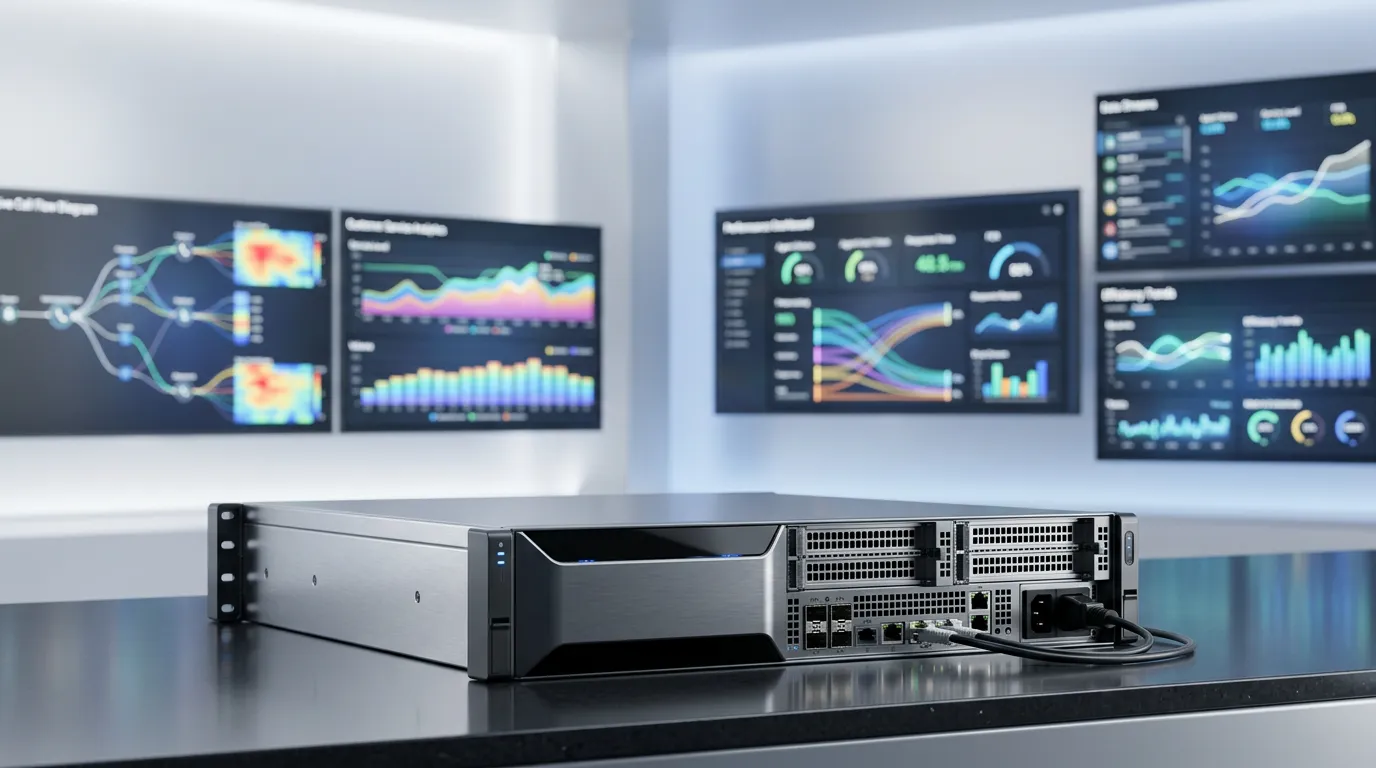
- Deploy unified dashboards: Use analytics tools that consolidate data from your telephony, CRM, and ticketing systems into a single view.
- Conduct real-time monitoring: Identify spikes in call volume or drops in Service Level immediately to deploy rapid interventions.
- Establish regular review cycles: Schedule weekly and monthly performance reviews to discuss metric trends with the team and adjust training programs accordingly.
- Invest in reliable infrastructure: Modern businesses require secure, flexible, and high-performance communication systems to capture accurate data without downtime.
Advancing Your Call Center Operations in Saudi Arabia
Optimizing a call center requires a steadfast commitment to tracking the right data and taking decisive action based on those insights. By focusing on essential metrics like FCR, AHT, CSAT, and Service Level, Saudi managers can build highly efficient, customer-centric support teams.
Begin by auditing your current tracking capabilities. Identify which metrics are missing or inaccurate, and upgrade your communication infrastructure to capture a complete picture of your operational performance. Empowering your team with clear goals and the right technology is the most reliable path to exceptional service.
Frequently Asked Questions
-
What is the difference between FCR and CSAT?
First Contact Resolution (FCR) measures the operational efficiency of solving a problem in one interaction. Customer Satisfaction (CSAT) measures the emotional sentiment and overall happiness of the customer after the interaction. High FCR typically leads to high CSAT.
-
How often should call center KPIs be reviewed?
Managers should monitor Service Level and AHT in real-time to manage daily operations. FCR and CSAT should be reviewed weekly and aggregated monthly to identify long-term trends and training opportunities.
-
Can AI tools help improve call center KPIs?
Yes. Artificial Intelligence can analyze speech patterns to ensure quality assurance, utilize chatbots to deflect routine inquiries (improving Service Level), and provide agents with real-time knowledge base suggestions (improving FCR and AHT).
-
Why do Service Levels drop during peak hours?
Service Levels typically drop when call volume exceeds the forecasted capacity of the available workforce. This can be mitigated by utilizing historical data to improve forecasting accuracy and offering self-service options to reduce the volume of inbound calls.