Shopping Cart



How to Retrofit an Old Building With Smart Technology
Learn how to retrofit an old building with smart technology using smart HVAC, lighting, access control, IoT devices, and building management systems to improve efficiency.
By Blue Edge Team | Jun 14, 2026
How to Retrofit an Old Building With Smart Technology
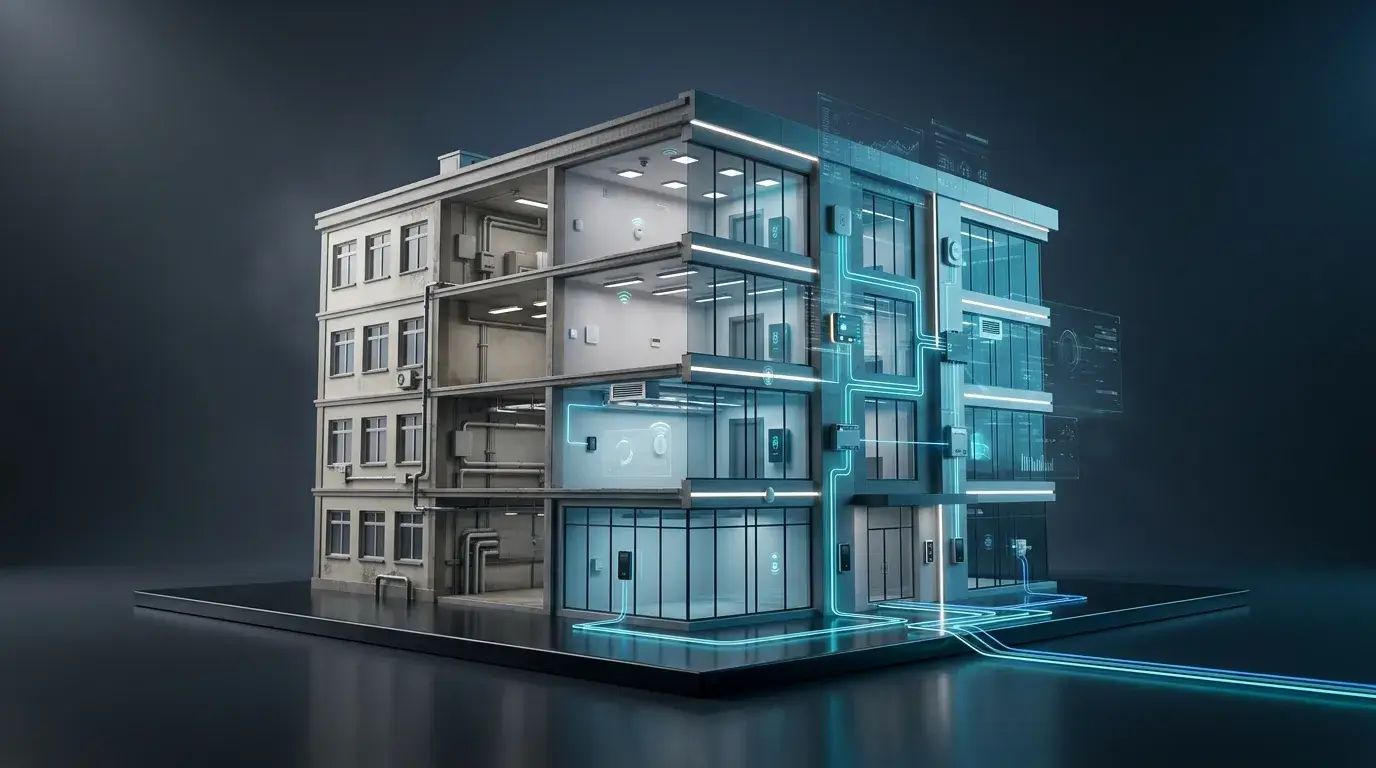
Quick answer: Retrofitting an old building with smart technology involves upgrading existing infrastructure with connected systems—such as smart lighting, HVAC controls, access management, and energy monitoring—without requiring full reconstruction. The process is scalable, cost-effective, and delivers measurable improvements in efficiency, security, and occupant comfort.
Older buildings were not designed with digital infrastructure in mind. Yet as smart technology becomes the standard for modern facilities, building owners and facility managers are under increasing pressure to close the gap—without tearing everything down and starting over.
The good news: retrofitting is not only possible, it is increasingly practical. Advances in wireless sensors, IoT platforms, and modular smart systems mean that buildings of virtually any age can be upgraded incrementally, with minimal disruption to daily operations. This guide walks through exactly how to do it.
Why Should You Retrofit an Old Building With Smart Technology?
Before addressing the how, it helps to understand what is at stake.
- Energy savings: According to the U.S. Department of Energy, smart building technologies can reduce energy consumption by 20–30% in existing commercial structures.
- Regulatory pressure: Many jurisdictions are introducing building performance standards that require measurable energy efficiency improvements.
- Asset value: Smart-enabled buildings command higher lease rates and resale values, particularly in commercial real estate markets.
- Occupant expectations: Tenants and employees increasingly expect connected, responsive environments—from automated climate control to keyless access.
Retrofitting addresses all of these demands without the cost or disruption of new construction.
Step 1: Conduct a Comprehensive Building Assessment
Every successful retrofit begins with a clear picture of existing conditions.
- Audit current systems: Document existing electrical, HVAC, plumbing, and mechanical infrastructure. Identify what is functional, what is obsolete, and what can be integrated with new technology.
- Assess network readiness: Determine whether the building has sufficient wired or wireless network coverage to support IoT devices. Wi-Fi dead zones and outdated cabling are common barriers.
- Identify priority areas: Not every upgrade delivers equal return. Focus first on the systems that consume the most energy or create the most operational friction—typically HVAC and lighting.
A structured assessment prevents costly mid-project discoveries and ensures the retrofit plan is grounded in reality.
Step 2: Prioritize Smart HVAC and Energy Management
Heating, ventilation, and air conditioning typically account for 40–60% of a commercial building's total energy use. It is the highest-impact starting point for most retrofits.
- Smart thermostats and sensors: Devices such as occupancy sensors and wireless temperature monitors can be installed without modifying existing ductwork. They feed real-time data to a building management system (BMS) to optimize performance automatically.
- Variable frequency drives (VFDs): Retrofitting HVAC motors with VFDs allows the system to modulate speed based on actual demand, reducing energy waste significantly.
- Energy monitoring platforms: Sub-metering systems provide granular visibility into consumption by zone, floor, or system—enabling data-driven decisions rather than estimates.
Smart HVAC retrofits typically deliver the fastest return on investment of any building upgrade category.
Step 3: Upgrade Lighting to Smart LED Systems
Lighting retrofit is one of the most straightforward and cost-effective smart building upgrades available.
- LED conversion: Replace fluorescent and incandescent fixtures with LED alternatives. LED systems use 50–75% less energy and last significantly longer.
- Occupancy-based controls: Wireless occupancy sensors automatically adjust lighting based on room usage, eliminating waste in unoccupied spaces.
- Daylight harvesting: Photosensors detect natural light levels and dim artificial lighting accordingly—an especially valuable feature in buildings with large window areas.
Most smart lighting systems operate on wireless protocols such as Zigbee or DALI, which means they can be installed without rewiring.
Step 4: Modernize Access Control and Security Systems
Legacy access control—physical keys, outdated card readers—creates both security vulnerabilities and operational inefficiencies.
- Cloud-based access control: Replace traditional systems with IP-based or cloud-managed platforms. These allow administrators to grant, revoke, or audit access remotely in real time.
- Video surveillance integration: Modern IP cameras integrate directly with access control and building management platforms, centralizing security monitoring.
- Visitor management systems: Digital check-in platforms replace paper logbooks and integrate with access credentials, improving both security and the visitor experience.
Wireless access control systems are specifically designed for retrofit scenarios, requiring no significant structural modification.
Step 5: Deploy a Centralized Building Management System (BMS)
Individual smart upgrades deliver value in isolation—but a centralized BMS multiplies that value by connecting every system into a single, manageable platform.
- System integration: A modern BMS unifies HVAC, lighting, access control, energy monitoring, and fire safety into one dashboard.
- Automated workflows: Set rules that trigger responses across systems—for example, switching off HVAC and lighting in zones when occupancy sensors detect no activity.
- Predictive maintenance: BMS platforms with AI capabilities analyze equipment performance data to flag maintenance needs before failures occur, reducing downtime and repair costs.
When selecting a BMS for a retrofit project, prioritize platforms that support open protocols such as BACnet or Modbus. These standards ensure compatibility with both existing equipment and future technology additions.
Step 6: Plan Network Infrastructure to Support IoT Devices
Smart devices are only as reliable as the network that connects them.
- Wireless coverage audit: Use professional tools to map signal strength throughout the building. Address dead zones with access point additions or mesh networking solutions.
- Network segmentation: Place IoT devices on a dedicated network segment, separate from corporate or guest traffic. This protects sensitive systems from cybersecurity threats.
- Structured cabling where needed: In areas where wireless is insufficient—such as server rooms or high-density device zones—invest in structured cabling infrastructure to ensure stable, high-bandwidth connectivity.
Network planning is often underestimated in retrofit projects. Treating it as a foundational requirement, not an afterthought, prevents performance issues once smart systems are live.
What Are the Most Common Challenges When Retrofitting Old Buildings?
- Structural limitations: Thick concrete walls and older construction materials can interfere with wireless signal propagation. Wireless site surveys are essential before finalizing system design.
- Integration complexity: Legacy equipment rarely supports modern communication protocols. In these cases, protocol converters or middleware platforms bridge the gap.
- Budget constraints: Phased implementation—starting with the highest-impact systems—allows organizations to spread costs while still achieving early results.
- Regulatory compliance: Historic buildings may have preservation restrictions that limit the types of modifications permitted. Engaging local authorities early prevents compliance delays.
Frequently Asked Questions
-
How much does it cost to retrofit a building with smart technology?
Costs vary significantly based on building size, existing infrastructure, and the scope of upgrades. Small commercial retrofits may begin at $50,000–$100,000, while large-scale projects can reach several million dollars. Phased implementations allow organizations to manage budget while prioritizing highest-impact upgrades first.
-
How long does a smart building retrofit take?
A basic retrofit—covering lighting, HVAC controls, and access management—typically takes three to six months for a mid-sized commercial building. Larger or more complex projects involving full BMS integration may take twelve to eighteen months, depending on infrastructure readiness and project phasing.
-
Can smart technology be installed without major construction?
Yes. The majority of modern smart building systems are designed specifically for retrofit scenarios. Wireless sensors, cloud-based platforms, and modular devices minimize the need for structural modifications, allowing upgrades to proceed with limited disruption to building occupants.
-
What is the ROI of retrofitting a building with smart technology?
Return on investment depends on the systems installed and baseline energy consumption. Smart HVAC and lighting upgrades typically achieve payback periods of two to five years through energy savings alone. Factoring in reduced maintenance costs and increased asset value shortens that timeline further.
-
Where should a retrofit project start if budget is limited?
Begin with HVAC optimization and smart lighting—these two systems typically represent the largest share of a building's energy spend and offer the fastest, most measurable return. Access control and BMS integration can be added in subsequent phases as budget allows.
Take the Next Step Toward a Smarter Building
Retrofitting an old building with smart technology is a structured, achievable process. Conducted systematically—starting with assessment, prioritizing high-impact systems, and building toward full integration—it delivers real and lasting improvements in energy efficiency, security, and operational performance.
The critical factor is working with experienced technology partners who understand both the possibilities and the constraints of retrofit environments.
Ready to upgrade your building? Contact our team to schedule a building assessment and discover which smart technologies will deliver the greatest impact for your specific facility.