Shopping Cart


- Articles
- IP Telephony
- IP Telephony Disaster Recovery: Stay Connected When It Matters Most
IP Telephony Disaster Recovery: Stay Connected When It Matters Most
Learn how IP telephony disaster recovery helps businesses maintain communication during outages with cloud VoIP, failover, redundancy, and business continuity strategies.
By Blue Edge Team | Published Aug 02, 2026 | Updated Oct 03, 2026 | 7 min read
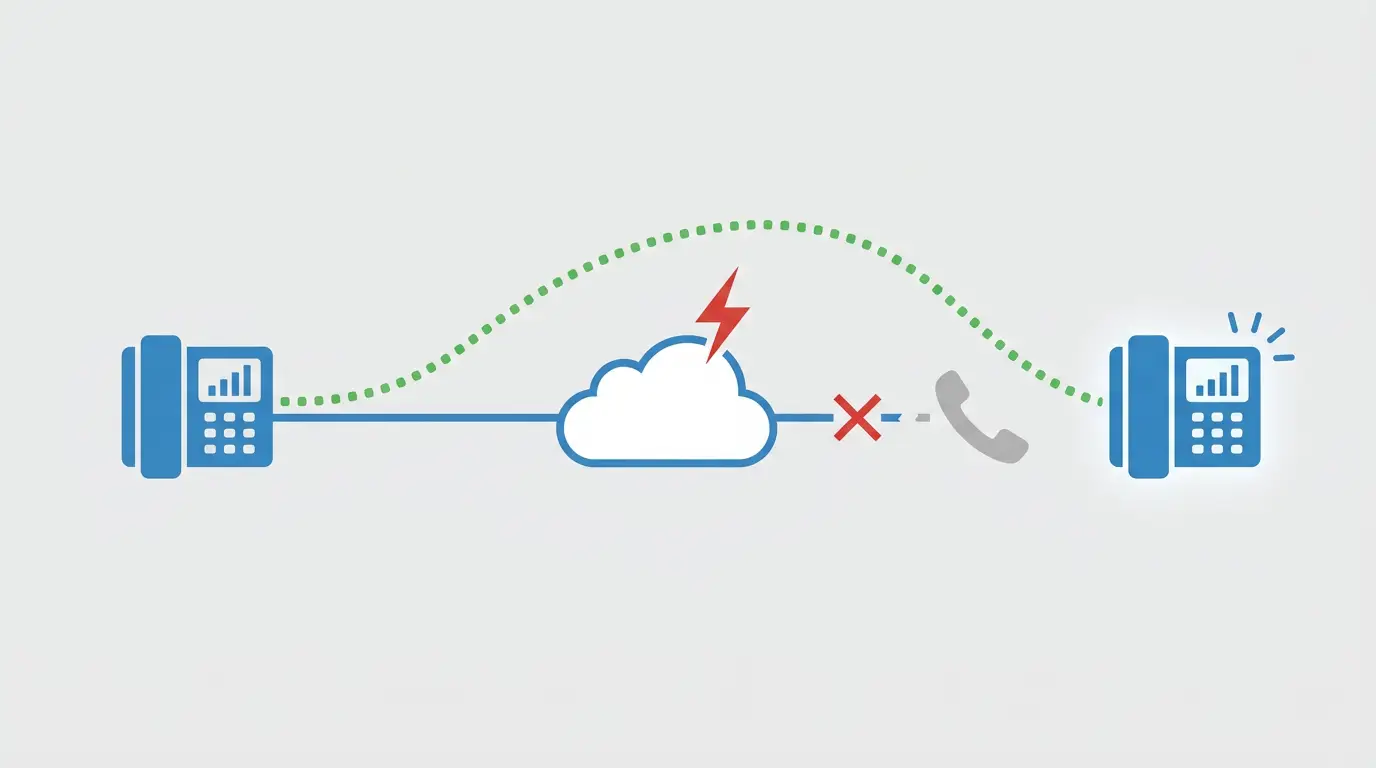
IP telephony disaster recovery ensures business communication systems remain operational during outages, cyberattacks, or infrastructure failures. A robust recovery strategy combines redundant infrastructure, failover protocols, cloud-based backups, and clearly defined recovery objectives—minimizing downtime and protecting business continuity.
Communication failures are costly. According to Gartner, the average cost of IT downtime is $5,600 per minute—and for businesses that rely on IP telephony for customer service, sales, and internal coordination, even a brief outage can translate into significant revenue loss and reputational damage.
IP telephony systems—also known as VoIP (Voice over Internet Protocol) systems—are the backbone of modern business communication. Unlike traditional PSTN (Public Switched Telephone Network) lines, IP telephony transmits voice data over internet networks, making it highly flexible and scalable. But that same reliance on internet infrastructure introduces vulnerabilities that demand a well-structured disaster recovery plan.
This guide covers everything you need to know about IP telephony disaster recovery: what it is, why it matters, the strategies that work, and how to compare your options. Whether your organization is building a recovery plan from scratch or auditing an existing one, the information here will help you make informed, confident decisions.
What Is IP Telephony Disaster Recovery—and Why Does It Matter?
IP telephony disaster recovery refers to the policies, technologies, and procedures designed to restore voice communication services following a disruptive event. These events can include natural disasters, power outages, cyberattacks, hardware failures, or internet service provider (ISP) disruptions.
The goal is straightforward: minimize downtime, preserve call continuity, and protect the data transmitted through your communication infrastructure.
For organizations operating across multiple sites—or those in industries where continuous communication is non-negotiable, such as healthcare, finance, and logistics—disaster recovery is not a luxury. It is a fundamental operational requirement.
Two key metrics define the scope of any recovery plan:
- Recovery Time Objective (RTO): The maximum acceptable time your communication system can be offline before it causes unacceptable business impact.
- Recovery Point Objective (RPO): The maximum acceptable amount of data loss measured in time (e.g., losing no more than one hour of call logs or configurations).
Establishing clear RTO and RPO targets is the first step toward building a recovery architecture that genuinely protects your business.
What Are the Most Common Causes of IP Telephony Outages?
Understanding the root causes of outages allows organizations to address vulnerabilities proactively, rather than reactively.
Internet and Network Failures
Because VoIP systems depend entirely on network connectivity, any disruption to the underlying internet infrastructure—ISP outages, router failures, or bandwidth congestion—directly impacts call quality and availability.
Power Outages
Traditional phone systems often operate independently of local power grids. IP telephony systems do not. Without backup power solutions such as UPS (Uninterruptible Power Supply) units or generator systems, a power failure can silence an entire communication infrastructure instantly.
Cybersecurity Incidents
VoIP systems are increasingly targeted by cybercriminals. Distributed Denial of Service (DDoS) attacks, toll fraud, and SIP (Session Initiation Protocol) hijacking can disrupt services and expose sensitive communication data. According to the FBI's Internet Crime Complaint Center (IC3), business communication fraud remains one of the fastest-growing categories of cybercrime.
Hardware and Software Failures
PBX (Private Branch Exchange) servers, session border controllers, and IP handsets are all subject to hardware degradation. Firmware bugs and misconfigured software updates can also bring down an otherwise stable system.
Natural Disasters and Physical Damage
Flooding, fires, and earthquakes can physically destroy on-premises infrastructure—making geographic redundancy a critical consideration for organizations operating in high-risk regions.
Key Strategies for IP Telephony Disaster Recovery
A resilient disaster recovery plan layers multiple strategies together. No single solution eliminates all risk; the goal is to reduce the probability and impact of any single point of failure.
Geographic Redundancy and Failover Routing
Deploying IP telephony infrastructure across multiple geographic locations ensures that if one site goes offline, call traffic automatically reroutes to an operational site. This is particularly important for enterprises with distributed teams or multi-branch operations.
Cloud-Based VoIP Backup Systems
Cloud-hosted VoIP platforms provide an off-premises fallback that remains accessible even when on-site infrastructure fails. Many organizations implement a hybrid model—maintaining an on-premises PBX as the primary system while using a cloud VoIP provider as a secondary failover.
SIP Trunking with Multiple Carriers
Relying on a single SIP trunk provider creates a single point of failure. Configuring SIP trunks with two or more carriers allows automatic failover if one provider experiences an outage, with no manual intervention required.
Survivable Remote Site Telephony (SRST)
For branch offices connected to a central IP telephony system, SRST enables local call processing to continue independently if the WAN (Wide Area Network) link to the central system is lost. Cisco's SRST feature, for example, allows IP phones to register locally and maintain basic call functionality during a WAN outage.
Regular Configuration Backups
System configurations—including dial plans, user extensions, call routing rules, and voicemail settings—must be backed up regularly and stored securely off-site or in the cloud. Without current configuration backups, restoring a system after a hardware failure can take days instead of hours.
Disaster Recovery Testing
A plan that has never been tested is not a plan—it is a hypothesis. Organizations should conduct scheduled failover drills at least twice per year, simulating realistic outage scenarios and measuring actual RTO and RPO performance against defined targets.
IP Telephony Disaster Recovery: Feature Comparison
Not all recovery solutions offer the same level of protection. The table below compares the most common approaches across key criteria to help organizations identify the right architecture for their needs.
| Feature / Criteria | On-Premises PBX Only | Cloud VoIP (Hosted) | Hybrid (On-Prem + Cloud Backup) | Geo-Redundant Cloud |
|---|---|---|---|---|
| Failover Speed | Manual / Slow | Automatic | Automatic | Automatic |
| Uptime SLA | Varies | 99.9%+ | 99.9%+ | 99.99%+ |
| Data Sovereignty | High | Medium | High | Medium |
| Scalability | Limited | High | High | Very High |
| Disaster Recovery Cost | High (hardware) | Low–Medium | Medium | Medium–High |
| Dependent on Internet? | Partial | Yes | Yes (backup) | Yes |
| Configuration Backup | Manual | Automatic | Automatic | Automatic |
| Suitable for Multi-Site? | Limited | Yes | Yes | Yes |
| Setup Complexity | Medium | Low | Medium | High |
| Best For | SMBs with low risk | Startups / Remote Teams | Mid-size enterprises | Large enterprises |
Key takeaway
For most mid-to-large organizations, a hybrid or geo-redundant cloud architecture offers the best balance of resilience, speed of recovery, and cost-efficiency. On-premises-only solutions carry the highest risk in outage scenarios because they lack automatic failover capabilities.
How to Build an IP Telephony Disaster Recovery Plan: Step by Step
Step 1: Conduct a Risk and Impact Assessment
Map all communication dependencies across your organization. Identify which teams, processes, and customer-facing functions rely on IP telephony, and quantify the cost of downtime for each.
Step 2: Define RTO and RPO Targets
Set realistic recovery objectives based on your risk assessment. A contact center, for example, may require an RTO of under 15 minutes, while an internal HR department may tolerate several hours of downtime.
Step 3: Audit Your Existing Infrastructure
Identify single points of failure within your current IP telephony setup—including ISP dependencies, power backup gaps, and hardware redundancy limitations.
Step 4: Select and Implement Recovery Technologies
Based on your RTO/RPO targets and infrastructure audit, deploy the appropriate combination of failover routing, cloud backup systems, SIP trunk redundancy, and SRST configurations.
Step 5: Document and Communicate the Plan
A disaster recovery plan must be documented clearly and distributed to all relevant stakeholders. Include escalation procedures, vendor contact details, and step-by-step restoration instructions.
Step 6: Test, Review, and Update Regularly
Schedule biannual failover tests and review your plan annually—or after any major infrastructure change. Communication systems evolve, and your recovery plan must evolve with them.
The Right Partner Makes the Difference
IP telephony disaster recovery is a technically complex discipline that requires both strategic planning and precise implementation. The difference between a 10-minute outage and a 10-hour outage often comes down to the quality of the infrastructure design and the expertise of the team that built it.
Partnering with an experienced communication technology provider—one that understands both the technical architecture of IP telephony and the operational realities of business continuity—ensures that your recovery strategy is built to perform under pressure, not just on paper.
Protect your communication infrastructure before the next outage occurs. Contact Blue Edge today to discuss a tailored IP telephony disaster recovery solution for your organization.
Frequently Asked Questions
-
What is the difference between IP telephony disaster recovery and business continuity?
Disaster recovery focuses specifically on restoring systems and services after a disruptive event. Business continuity is a broader strategy that ensures critical operations—including communication—continue functioning during and after a disruption. IP telephony disaster recovery is a key component of any business continuity plan.
-
How long does it typically take to recover an IP telephony system after an outage?
Recovery time depends on the architecture in place. Organizations with automatic failover systems—such as geo-redundant cloud VoIP or configured SIP trunk fallback—can restore services in seconds to minutes. On-premises-only systems without redundancy may take hours to recover, depending on the nature of the failure.
-
Is cloud-based VoIP more reliable than an on-premises PBX for disaster recovery?
Cloud-based VoIP platforms typically offer higher uptime SLAs (99.9% or above) and automatic failover capabilities that on-premises PBX systems cannot match without significant additional investment. However, cloud VoIP is dependent on internet connectivity, making a hybrid approach—combining on-premises infrastructure with a cloud backup—the most resilient option for many organizations.
-
How often should organizations test their IP telephony disaster recovery plan?
Industry best practice recommends conducting failover tests at least twice per year. Additionally, the plan should be reviewed and updated after any significant infrastructure change, such as a new SIP trunk provider, a system upgrade, or a shift to remote or hybrid working models.
-
What security measures should be included in an IP telephony disaster recovery plan?
A comprehensive plan should address both availability and security. Key measures include SIP encryption (SRTP/TLS), session border controllers (SBCs) to protect against unauthorized access, DDoS mitigation protocols, and regular security audits. Cybersecurity incidents—such as VoIP fraud or SIP hijacking—can cause outages just as effectively as hardware failures, making security an integral part of disaster recovery planning.
About Blue Edge
Blue Edge Company is a value-added technology distributor based in Dammam, Saudi Arabia, supplying interactive displays, smart building systems, networking infrastructure and IT security software to businesses and residential projects across the Kingdom, with installation and technical support.
Learn more about Blue Edge →Published 2 August 2026 • Last updated 3 October 2026 • This article is reviewed when standards, regulations or product guidance change.