Shopping Cart



Migrating from Analog PBX to IP Telephony Without Downtime
Learn how to migrate from analog PBX to IP telephony without downtime using SIP trunks, VoIP gateways, phased deployment strategies, and enterprise communication solutions.
By Blue Edge Team | Jun 01, 2026
Migrating from Analog PBX to IP Telephony Without Downtime
Quick answer: To migrate from an analog Private Branch Exchange (PBX) to Internet Protocol (IP) telephony without downtime, businesses must run both systems concurrently during the transition. This requires auditing existing network infrastructure, deploying Session Initiation Protocol (SIP) trunks, and utilizing VoIP gateways to route calls seamlessly between the legacy analog hardware and the new IP network during a strictly phased rollout.
Modern businesses require secure, flexible, and high-performance communication systems. Relying on legacy analog infrastructure severely limits organizational agility, restricts remote work capabilities, and incurs high maintenance costs. Transitioning to a modern digital infrastructure is a critical operational priority for enterprise environments.
However, organizations often delay this infrastructure upgrade due to the fear of communication blackouts. Dropped calls and offline support lines directly translate to lost revenue and damaged client trust. By executing a highly structured, phased deployment strategy, IT leaders can entirely eliminate the risk of operational disruption. This guide details the precise, point-by-point methodology required to achieve a zero-downtime migration from analog PBX to IP telephony.
Why should businesses migrate from analog PBX to IP telephony?
Maintaining legacy analog hardware introduces escalating physical and financial liabilities. IP telephony replaces physical copper wires with internet-based data transmission, offering distinct enterprise advantages.
Choose IP telephony if operational scalability and long-term cost reduction matter to your organization. The primary benefits include:
- Cost reduction: IP telephony eliminates the need for expensive legacy hardware maintenance and significantly reduces long-distance calling charges through SIP trunking.
- Infinite scalability: Adding new users to an IP telephony system requires basic software configuration rather than complex physical wiring installations.
- Advanced feature integration: Digital systems seamlessly integrate with Customer Relationship Management (CRM) software, video conferencing solutions, and unified communications platforms.
- Geographic flexibility: IP telephony routes calls to user devices globally, ensuring continuous connectivity for remote and hybrid workforces.
What are the key phases of a zero-downtime IP telephony migration?
A successful, uninterrupted migration relies entirely on meticulous preparation and a concurrent system rollout. Organizations must maintain the legacy analog PBX while gradually activating the IP telephony network.
How do you audit your existing analog PBX infrastructure?
Before deploying new technology, you must fully document the current communication environment. Missing a single analog endpoint can cause unexpected operational failures during the transition.
- Inventory all endpoints: Document every active analog phone, fax machine, point-of-sale (POS) terminal, and physical alarm system connected to the legacy PBX.
- Assess network readiness: IP telephony requires substantial data bandwidth. Evaluate your Local Area Network (LAN) and Wide Area Network (WAN) to ensure they can handle increased data traffic without latency.
- Verify Power over Ethernet (PoE) capabilities: IP phones require direct power from network switches. Ensure your existing network switches support PoE to avoid installing separate power supplies for every desk phone.
How should you design the new IP telephony network?
Proper network architecture ensures that voice data receives priority over standard internet traffic, guaranteeing clear call quality and system reliability.
- Implement Quality of Service (QoS): Configure QoS protocols on your enterprise routers to prioritize voice packets over standard data packets. This prevents audio jitter during periods of high network congestion.
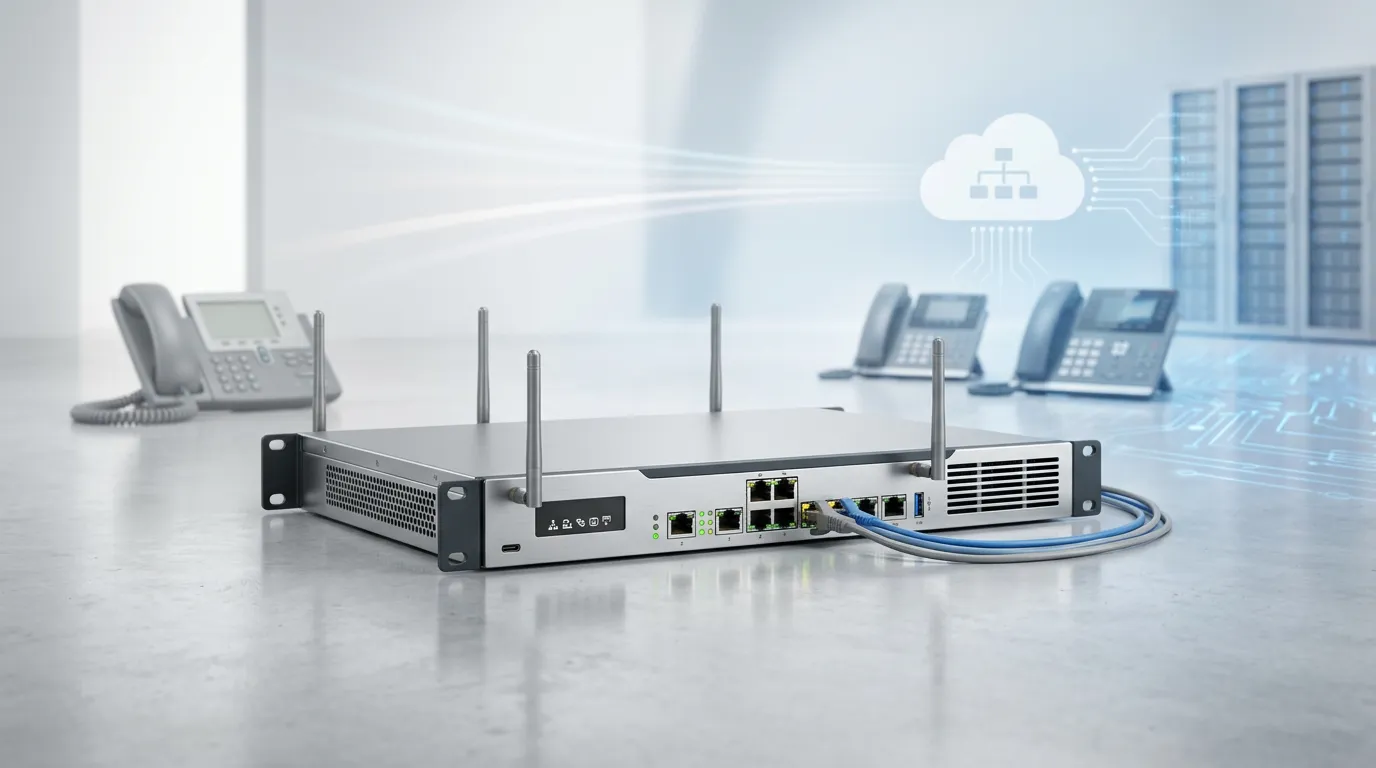
- Deploy VoIP gateways: A Voice over Internet Protocol (VoIP) gateway acts as the critical bridge between the analog PBX and the IP network. This device allows both systems to communicate, enabling internal calls between analog users and new IP users during the transition.
- Provision SIP trunks: SIP trunks connect your enterprise IP network to the Public Switched Telephone Network (PSTN). Configure these trunks in advance to handle inbound and outbound external routing.
What is the best way to execute a phased PBX to IP telephony rollout?
A "rip-and-replace" methodology guarantees downtime. Instead, organizations must use a concurrent deployment strategy, transferring small groups of users systematically.
- Execute a pilot program: Select a low-impact department (such as internal IT or administrative staff) to receive the first IP phones. Monitor their usage for 48 hours to identify and resolve any network configuration errors.
- Enable concurrent routing: Keep the legacy analog PBX connected to the main PSTN lines, but route specific extensions through the VoIP gateway to the new IP network. This ensures external customers never experience a disconnected number.
- Migrate users by department: Transition users in logical groups. Once a department's physical IP phones are connected and verified, disable their corresponding analog extensions.
- Port external numbers: Coordinate with your telecommunications service provider to port your primary business phone numbers from the legacy analog lines directly to the new SIP trunks. Schedule this porting process for after-hours or weekends.
Which common IP telephony migration risks should you avoid?
Even with a phased approach, network administrators must proactively mitigate specific technical risks to ensure continuous communication.
- Failing to support legacy analog devices: Fax machines, elevator phones, and security alarms often cannot connect directly to an IP network. You must install Analog Telephone Adapters (ATAs) to convert their analog signals into digital IP packets.
- Inadequate bandwidth allocation: Voice data is highly sensitive to packet loss. Upgrading your corporate internet circuit prior to migration prevents systemic audio degradation.
- Overlooking user training: A new communication system is useless if employees do not know how to operate it. Provide comprehensive training on voicemail configuration, call forwarding, and unified communication software interfaces before removing the analog devices.
Next Steps for a Seamless IP Telephony Transition
Replacing an aging analog PBX with modern IP telephony is not just an IT upgrade; it is a strategic business enablement initiative. By auditing your current environment, integrating VoIP gateways for concurrent operation, and executing a phased departmental rollout, you can fully modernize your communication infrastructure with zero disruption to your daily operations.
We partner with world-leading brands to deliver innovative and reliable solutions. To guarantee your organization transitions smoothly, begin by engaging a certified enterprise networking provider to perform a comprehensive bandwidth and hardware readiness assessment.
Frequently Asked Questions
-
How long does an analog PBX to IP telephony migration take?
The timeline depends entirely on the size of the organization. A small business with 50 endpoints can typically complete a phased migration in two to four weeks. Large enterprise deployments with thousands of endpoints may require three to six months of concurrent operation.
-
How much does an IP telephony migration cost?
Initial costs include the purchase of IP desk phones, PoE network switches, and VoIP gateways. However, organizations typically recover these hardware costs within 12 to 18 months due to the elimination of PBX maintenance contracts and reduced monthly SIP trunking rates.
-
Can we keep our existing business phone numbers when moving to IP telephony?
Yes. Through a process called Local Number Portability (LNP), your new SIP trunk provider will legally transfer your existing analog phone numbers to your new digital network. This process ensures customers continue using the same contact information.
-
What happens to IP telephony during a corporate power outage?
Unlike legacy analog phones that draw power directly from the phone company lines, IP phones require local electrical power. To maintain uptime during a power failure, organizations must connect their PoE network switches and internet routers to Uninterruptible Power Supplies (UPS) and backup generators.
-
Do we need to rewire our entire office building for IP telephony?
Most modern offices utilize standard Category 5e (Cat5e) or Category 6 (Cat6) ethernet cabling, which perfectly supports IP telephony. If your building only possesses legacy two-wire phone cabling, you will need to upgrade your structured cabling infrastructure before migrating.