Shopping Cart



What Is Threat Intelligence and Why Your SOC Needs It
Learn what threat intelligence is, how it helps Security Operations Centers (SOCs) detect cyber threats faster, improve incident response, and strengthen enterprise cybersecurity.
By Blue Edge Team | Jul 23, 2026
What Is Threat Intelligence and Why Your SOC Needs It
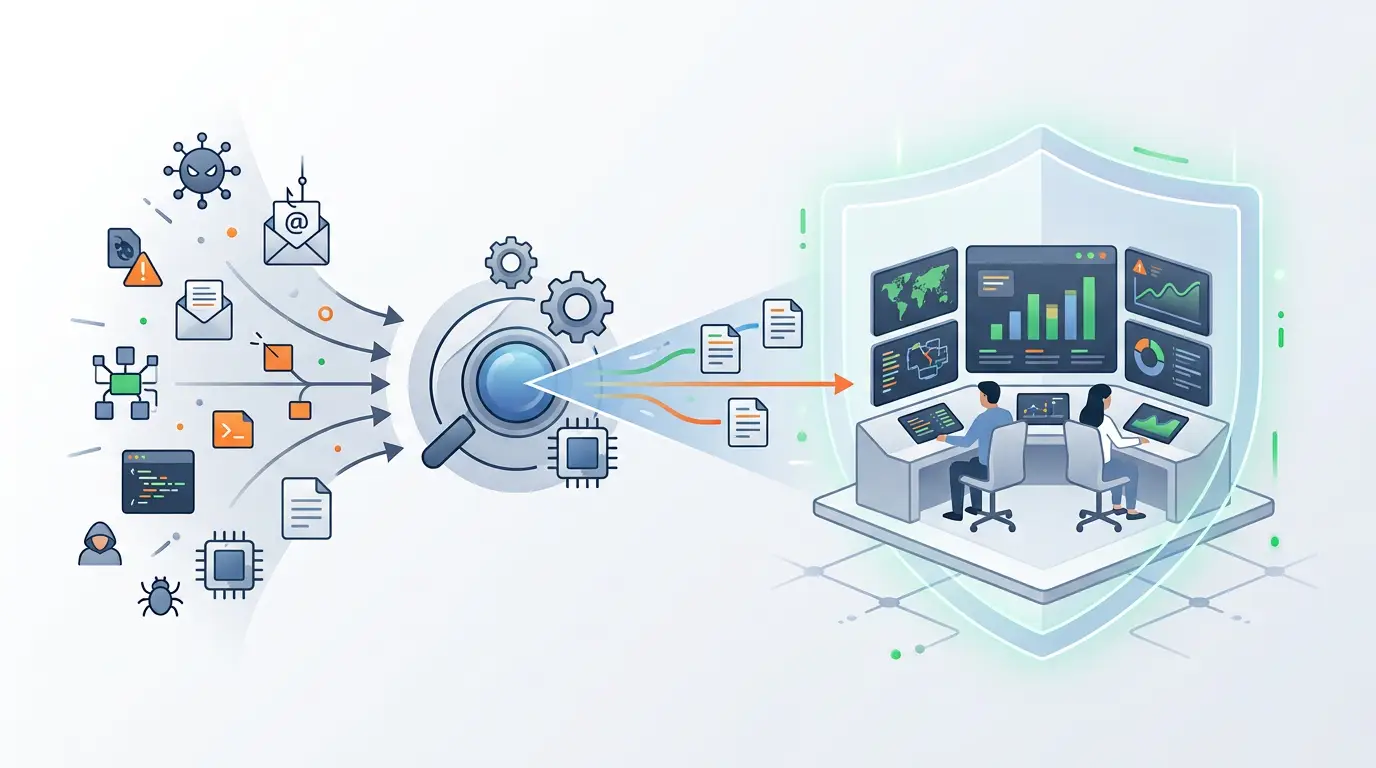
Threat intelligence is the process of collecting, analyzing, and applying data about cyber threats to improve an organization's security posture. For Security Operations Centers (SOCs), it transforms reactive defense into proactive protection—enabling faster detection, smarter prioritization, and more informed decision-making.
Every SOC faces the same core challenge: too many alerts, too little context. Security analysts sift through thousands of events daily, often without the situational awareness needed to distinguish a genuine attack from background noise. Threat intelligence solves this by giving SOC teams the knowledge they need to act decisively—before damage occurs.
This post breaks down what threat intelligence is, how it works, and why it has become an essential component of any modern SOC operation.
What Is Threat Intelligence?
Threat intelligence—also called cyber threat intelligence (CTI)—refers to evidence-based knowledge about existing or emerging threats targeting an organization's digital environment. This includes information about threat actors, their tactics, techniques and procedures (TTPs), indicators of compromise (IOCs), and the broader threat landscape affecting a specific industry or region.
Threat intelligence is not raw data. Raw data becomes intelligence only after it has been collected, processed, correlated, and analyzed in context. The goal is to produce actionable insights that security teams can use to make better decisions, faster.
What Are the Four Types of Threat Intelligence?
Threat intelligence is typically categorized into four types, each serving a different audience within the organization:
- Strategic intelligence — High-level analysis of threat trends and attacker motivations, designed for executive and board-level decision-makers.
- Tactical intelligence — Details about attacker TTPs, useful for security architects and SOC managers refining detection strategies.
- Operational intelligence — Information about specific, active attack campaigns, helping incident responders understand what is being targeted and how.
- Technical intelligence — Granular IOCs such as malicious IP addresses, file hashes, and domain names, consumed directly by security tools like SIEMs and firewalls.
Each type plays a distinct role. Effective SOC programs leverage all four to cover both immediate threats and longer-term risk management.
Why Does Your SOC Need Threat Intelligence?
A SOC without threat intelligence operates reactively. Analysts respond to alerts after events have already occurred, with limited context about what triggered them or how serious they are. Threat intelligence shifts the model toward proactive defense.
How Does Threat Intelligence Improve SOC Detection and Response?
Integrating threat intelligence into SOC operations delivers measurable improvements across the detection and response lifecycle:
- Faster threat detection — By enriching alerts with known IOCs and attacker TTPs, analysts can identify malicious activity earlier in the kill chain.
- Reduced alert fatigue — Contextual intelligence helps analysts prioritize high-fidelity alerts and filter out false positives, reducing wasted investigation time.
- Smarter incident response — When analysts understand the likely objectives and methods of an attacker, they can contain and remediate incidents more effectively.
- Proactive threat hunting — Intelligence about active campaigns targeting similar organizations allows SOC teams to hunt for threats before they trigger automated alerts.
According to IBM's Cost of a Data Breach Report (2023), organizations with strong threat intelligence programs identified and contained breaches significantly faster than those without—demonstrating a direct impact on breach costs and operational resilience.
Key Features of an Effective Threat Intelligence Program
Not all threat intelligence programs deliver equal value. The most effective programs share several core characteristics:
| Feature | Description |
|---|---|
| Timeliness | Intelligence must be current to be actionable. Stale IOCs create noise, not value. |
| Relevance | Intelligence should be specific to your industry, geography, and technology stack. |
| Accuracy | Low-quality feeds generate false positives and erode analyst trust. |
| Actionability | Intelligence must integrate with existing tools—SIEM, SOAR, EDR—to drive response. |
| Context | Raw IOCs without context have limited value. Attribution and motivation matter. |
Selecting a threat intelligence platform or feed that meets all five criteria is essential. Many organizations combine commercial feeds with open-source intelligence (OSINT) and information sharing communities such as ISACs (Information Sharing and Analysis Centers) to build comprehensive coverage.
How Threat Intelligence Integrates with Your SOC Workflow
Threat intelligence delivers the most value when embedded directly into SOC workflows—not treated as a standalone function.
Operationally, this means:
- Ingesting threat feeds into your SIEM to enrich log data with known malicious indicators in real time.
- Automating IOC matching through SOAR platforms to reduce manual analyst effort.
- Informing detection rules by mapping intelligence to the MITRE ATT&CK framework, ensuring coverage aligns with real-world adversary behavior.
- Briefing analysts regularly with tactical and operational intelligence relevant to current campaigns.
Organizations that embed threat intelligence into their SOAR and SIEM platforms enable automated triage of high-confidence threats, freeing senior analysts to focus on complex investigations requiring human judgment.
Build a More Resilient SOC with Threat Intelligence
A SOC's effectiveness is directly tied to the quality of its intelligence. Without it, even well-staffed teams operate with significant blind spots. With it, organizations gain the contextual awareness needed to detect threats earlier, respond with precision, and reduce overall risk exposure.
If your SOC is still operating in a primarily reactive mode, threat intelligence is the most impactful capability you can invest in. Start by assessing your current visibility gaps, then evaluate threat intelligence platforms that align with your existing security stack and industry-specific threat landscape.
Frequently Asked Questions
-
What is the difference between threat intelligence and threat data?
Threat data refers to raw, unprocessed information—such as lists of IP addresses or file hashes. Threat intelligence is the result of analyzing and contextualizing that data to produce actionable insights. Threat data alone is not intelligence; it requires processing and human or automated analysis to become operationally useful.
-
Who uses threat intelligence in a SOC?
Threat intelligence is used across multiple SOC roles. Tier 1 analysts use technical intelligence to triage alerts. Incident responders use operational intelligence to understand active attack campaigns. SOC managers and security architects use tactical intelligence to refine detection strategies and security controls.
-
How much does threat intelligence cost?
Costs vary significantly depending on the source and depth of coverage. Open-source threat intelligence feeds are available at no cost, while commercial platforms range from thousands to hundreds of thousands of dollars annually. Many organizations use a combination of free and paid sources to balance coverage with budget constraints.
-
Is threat intelligence only relevant for large enterprises?
No. Small and mid-sized organizations face many of the same threats as large enterprises—and often have fewer resources to defend against them. Threat intelligence is scalable; even small SOC teams can benefit from curated feeds and ISAC membership relevant to their industry.
-
What is the MITRE ATT&CK framework and how does it relate to threat intelligence?
MITRE ATT&CK is a globally recognized knowledge base of adversary tactics, techniques, and procedures derived from real-world observations. Threat intelligence teams use ATT&CK to map known threat actor behaviors to specific detection opportunities, ensuring SOC coverage aligns with how actual attackers operate.