Shopping Cart



Codec Selection for Crystal-Clear VoIP Calls: A Complete Guide
Learn how to choose the best VoIP codecs for crystal-clear voice quality, lower bandwidth usage, and reliable business communications with this complete guide.
By Blue Edge Team | Jul 26, 2026
Codec Selection for Crystal-Clear VoIP Calls: A Complete Guide
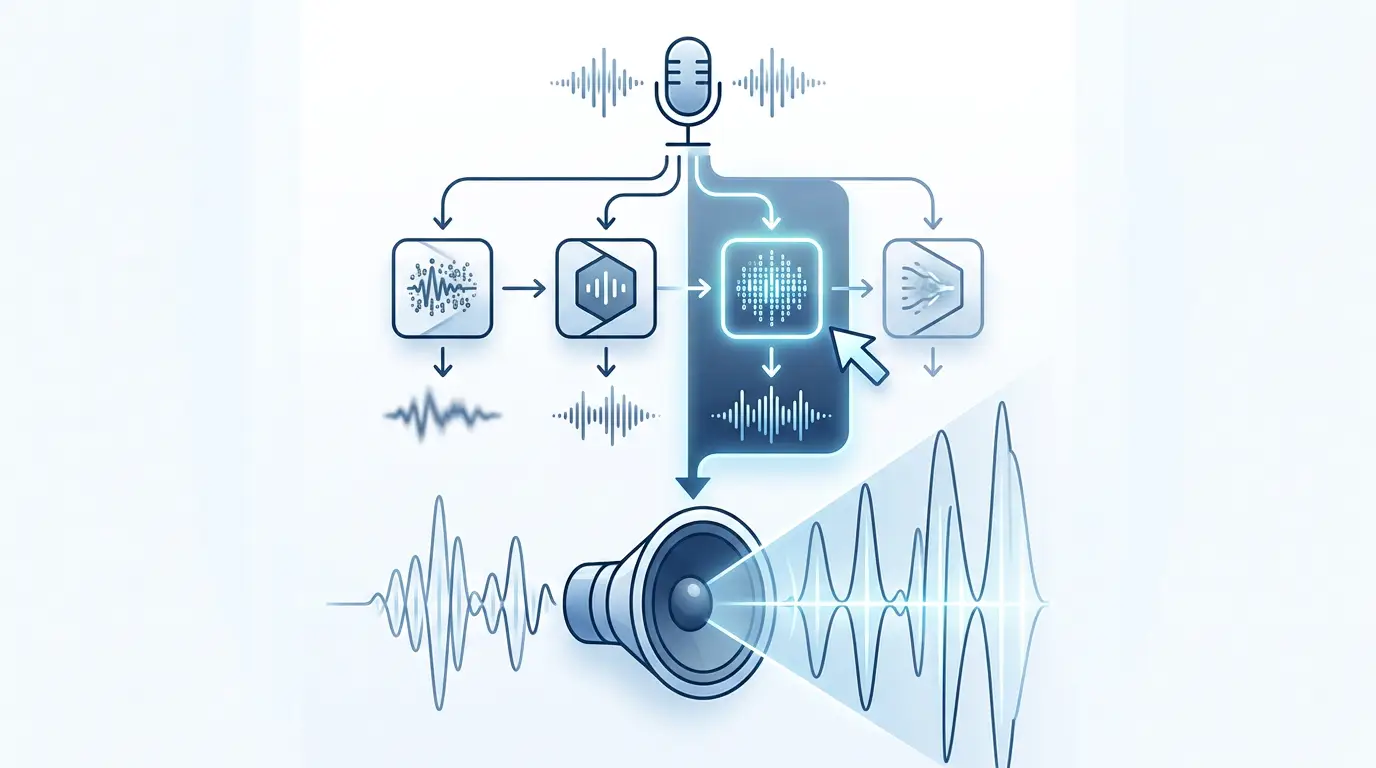
A VoIP codec determines call quality, bandwidth usage, and compatibility across your phone system. Selecting the right codec—such as G.711 for high quality or G.729 for bandwidth efficiency—directly impacts how clear and reliable your business communications will be.
VoIP call quality doesn't come down to luck. Behind every clear, lag-free conversation is a carefully chosen codec doing the heavy lifting—compressing, transmitting, and reconstructing audio in real time. Choose the wrong one, and your calls suffer from choppy audio, high latency, or excessive bandwidth consumption.
For businesses relying on IP telephony, understanding codec selection is not optional. It's a foundational decision that affects every call your team makes and receives. This guide breaks down what codecs are, which ones matter most, how to compare them, and how to make the right choice for your communication environment.
What Is a VoIP Codec and Why Does It Matter?
A codec (short for coder-decoder) is a software algorithm that encodes analog voice into digital data for transmission over an IP network, then decodes it back into audio on the receiving end. Every VoIP call depends on a codec to function.
The codec you use determines three critical factors:
- Audio quality — how natural and intelligible voices sound
- Bandwidth consumption — how much network capacity each call requires
- Latency and packet loss tolerance — how well the codec handles imperfect network conditions
Selecting an appropriate codec requires balancing these three factors against your available infrastructure and business requirements.
Key VoIP Codecs: Features and Benefits
G.711 — The High-Quality Standard
G.711 is the most widely used VoIP codec and the benchmark for audio quality. It operates at 64 kbps per call and delivers audio that closely mirrors traditional PSTN phone quality.
Best for: Businesses with reliable, high-bandwidth networks seeking maximum call clarity.
Key features:
- Uncompressed audio with minimal processing delay
- Two variants: G.711 µ-law (North America) and G.711 A-law (Europe and international)
- Native support across virtually all VoIP platforms and devices
- No licensing fees
Limitation: Higher bandwidth consumption makes it less practical for organizations with limited or congested networks.
G.729 — The Bandwidth-Efficient Choice
G.729 compresses voice data to just 8 kbps, making it approximately eight times more bandwidth-efficient than G.711. Despite the compression, G.729 maintains acceptable call quality for most business applications.
Best for: Organizations with limited bandwidth, remote workers on variable connections, or high call volumes.
Key features:
- Low bandwidth usage supports more simultaneous calls
- Built-in noise reduction
- Widely supported across enterprise PBX systems
Limitation: Slight reduction in audio fidelity compared to G.711; may require licensing depending on deployment.
G.722 — HD Voice for Premium Clarity
G.722 delivers wideband audio at 48–64 kbps, capturing a broader frequency range (50 Hz–7 kHz) than standard codecs. This results in noticeably richer, more natural-sounding voice quality—often referred to as HD Voice.
Best for: Executive communications, video conferencing integrations, and environments where call quality is a priority.
Key features:
- Superior audio clarity through wideband encoding
- Reduced listener fatigue during long calls
- Compatible with most modern IP phones and UC platforms
Limitation: Requires both endpoints to support G.722; falls back to a lower codec if the remote party doesn't.
Opus — The Modern Adaptive Codec
Opus is an open-source, royalty-free codec designed for real-time internet communications. It dynamically adjusts its bitrate between 6 kbps and 510 kbps based on network conditions, making it highly resilient.
Best for: WebRTC applications, cloud-based VoIP platforms, and environments with variable network quality.
Key features:
- Adaptive bitrate responds to network fluctuations automatically
- Supports both narrowband and ultra-wideband audio
- No licensing cost
- Native to WebRTC, used by platforms such as Google Meet and Microsoft Teams
Limitation: Less universally supported on legacy hardware compared to G.711 or G.729.
VoIP Codec Comparison Table
| Codec | Bitrate | Audio Quality | Bandwidth Use | Best Use Case |
|---|---|---|---|---|
| G.711 | 64 kbps | Excellent | High | High-bandwidth enterprise networks |
| G.729 | 8 kbps | Good | Very Low | Limited bandwidth or remote workers |
| G.722 | 48–64 kbps | HD / Superior | Moderate-High | Premium voice quality, conferencing |
| Opus | 6–510 kbps | Excellent | Adaptive | Cloud VoIP, WebRTC, variable networks |
How to Choose the Right Codec for Your Business
Codec selection should be guided by a structured assessment of your environment, not simply defaulting to the most popular option.
Consider the following criteria:
- Network capacity: If your organization has a dedicated, high-bandwidth connection, G.711 or G.722 are strong choices. For constrained or shared networks, G.729 or Opus will provide greater reliability.
- Call volume: High call volumes require bandwidth-efficient codecs. G.729's low bitrate allows significantly more concurrent calls without degrading network performance.
- Endpoint compatibility: Verify that your IP phones, softphones, and PBX system support your preferred codec. Mismatched codec support can force fallback to lower-quality options.
- Regulatory or industry standards: Some industries require call recording at specific quality thresholds. G.711 is commonly recommended in these cases.
- Cloud or on-premise deployment: Cloud and WebRTC-based platforms benefit from Opus due to its adaptive capabilities and open-source nature.
A general recommendation: choose G.711 if audio quality is the primary concern and bandwidth is not a constraint. Choose G.729 if maximizing call capacity on limited bandwidth is the priority. Choose Opus for cloud-native or WebRTC environments.
Invest in the Right Codec—and the Right Infrastructure
Codec selection is one part of a broader VoIP architecture decision. The clearest calls come from pairing the right codec with properly configured Quality of Service (QoS) settings, reliable network infrastructure, and compatible hardware.
If your organization is evaluating or upgrading its IP telephony system, consulting with a qualified communications technology provider ensures that every component—from codec selection to network design—is aligned with your operational requirements.
Ready to optimize your VoIP infrastructure? Contact our team to discuss the right communication solution for your business.
Frequently Asked Questions
-
What is the best VoIP codec for businesses with limited bandwidth?
G.729 is the most bandwidth-efficient widely-supported VoIP codec, operating at just 8 kbps per call. It allows businesses to support a high volume of simultaneous calls without overloading the network, while maintaining acceptable call quality.
-
What is the difference between G.711 and G.722 in VoIP?
G.711 delivers standard telephone-quality audio at 64 kbps, while G.722 provides HD Voice at a similar bitrate by encoding a wider audio frequency range (50 Hz–7 kHz). G.722 produces noticeably clearer and more natural-sounding audio, but requires both endpoints to support the codec.
-
Does codec selection affect VoIP latency?
Yes. Codecs with higher compression ratios—such as G.729—introduce slightly more processing delay due to the complexity of the compression algorithm. G.711, being largely uncompressed, has minimal codec-induced latency. For most business environments, the latency difference is negligible if the network is properly configured.
-
Is Opus a reliable codec for enterprise VoIP?
Opus is highly reliable for cloud-based and WebRTC-native VoIP platforms, offering adaptive bitrate adjustment that responds to changing network conditions. Its adoption by platforms such as Google Meet and Microsoft Teams reflects its technical maturity. However, Opus is less supported on legacy on-premise hardware compared to G.711 or G.729.
-
Can you use multiple codecs on the same VoIP system?
Yes. Most modern PBX systems and VoIP platforms support multiple codecs simultaneously, applying a priority order to negotiate the best available codec between endpoints. This flexibility ensures compatibility across diverse devices and network conditions without compromising call quality unnecessarily.