Shopping Cart



AI-Powered Smart Buildings Explained | Intelligent Building Technology Guide
Learn how AI-powered smart buildings improve energy efficiency, security, automation, and facility management using IoT sensors and intelligent building systems.
By Blue Edge Team | May 21, 2026
AI-Powered Smart Buildings Explained
Modern businesses require secure, flexible, and high-performance environments. The integration of artificial intelligence into physical infrastructure is fundamentally changing how commercial properties operate. AI-powered smart buildings deliver unprecedented levels of control, efficiency, and safety.
This comprehensive guide explains how artificial intelligence transforms traditional structures into responsive ecosystems. By reading this, you will understand the core technologies driving smart buildings, the tangible benefits for your operations, and the infrastructure required to support these advanced systems.
What is an AI-Powered Smart Building?
A traditional smart building uses basic automation to control lighting, heating, and security based on fixed schedules. An AI-powered smart building takes this concept much further. It utilizes interconnected devices to collect data and applies artificial intelligence to analyze, learn, and act upon that data in real time.
These structures do not simply follow instructions. They anticipate needs, optimize resources autonomously, and adapt to changing conditions without human intervention. The architecture of these buildings relies on three fundamental pillars:
- Internet of Things (IoT) Sensors: These are distributed throughout the facility to monitor environmental factors. They track occupancy levels, ambient light, air quality, temperature, and equipment vibration.
- Machine Learning Algorithms: Artificial intelligence processes the massive volume of data generated by IoT sensors. The algorithms identify historical patterns and establish performance baselines.
- Centralized Management Platforms: This software acts as the central nervous system of the building. It provides administrators with a single, unified dashboard to monitor operations, generate reports, and control the entire facility network.
Core Benefits of Implementing AI in Building Management
Upgrading to an AI-powered infrastructure provides immediate and measurable advantages. We believe in empowering our clients by delivering cutting-edge communication and technology solutions that yield a high return on investment.
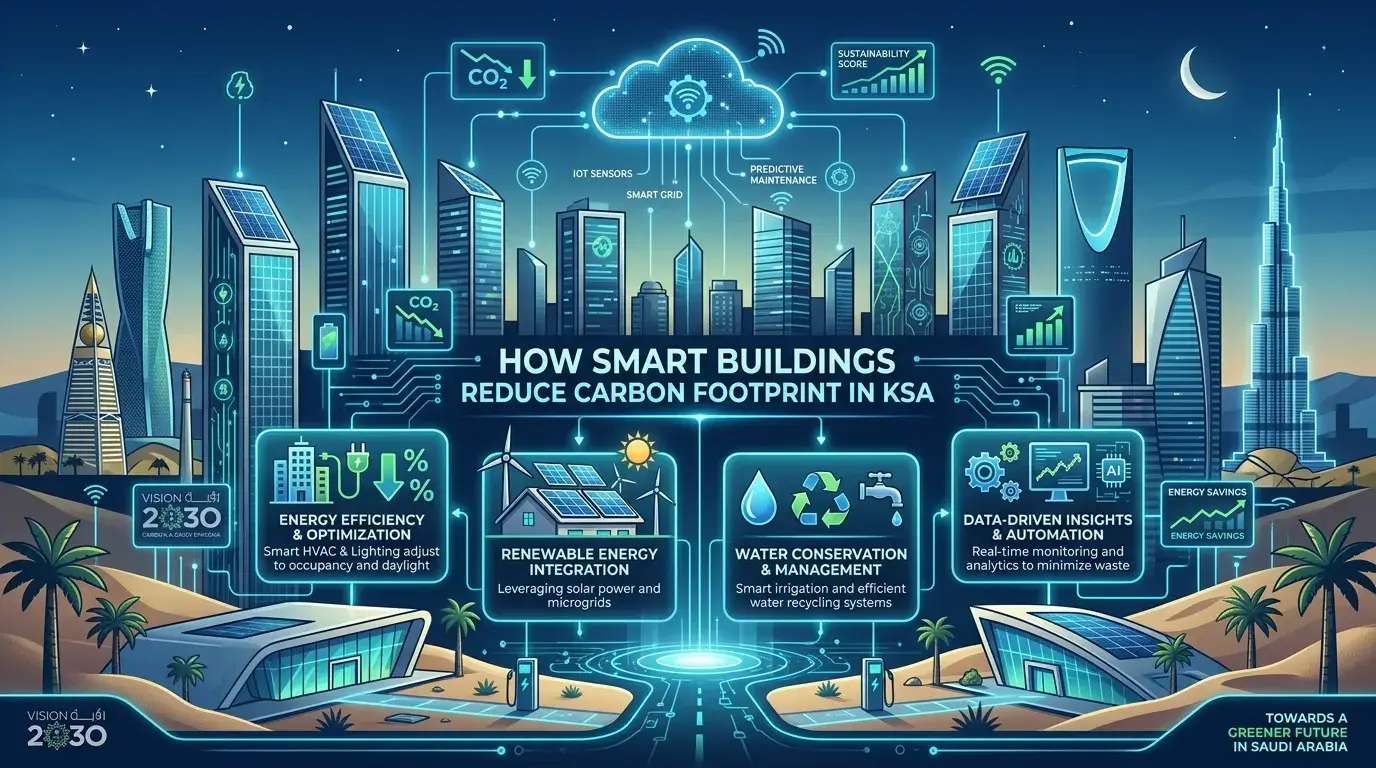
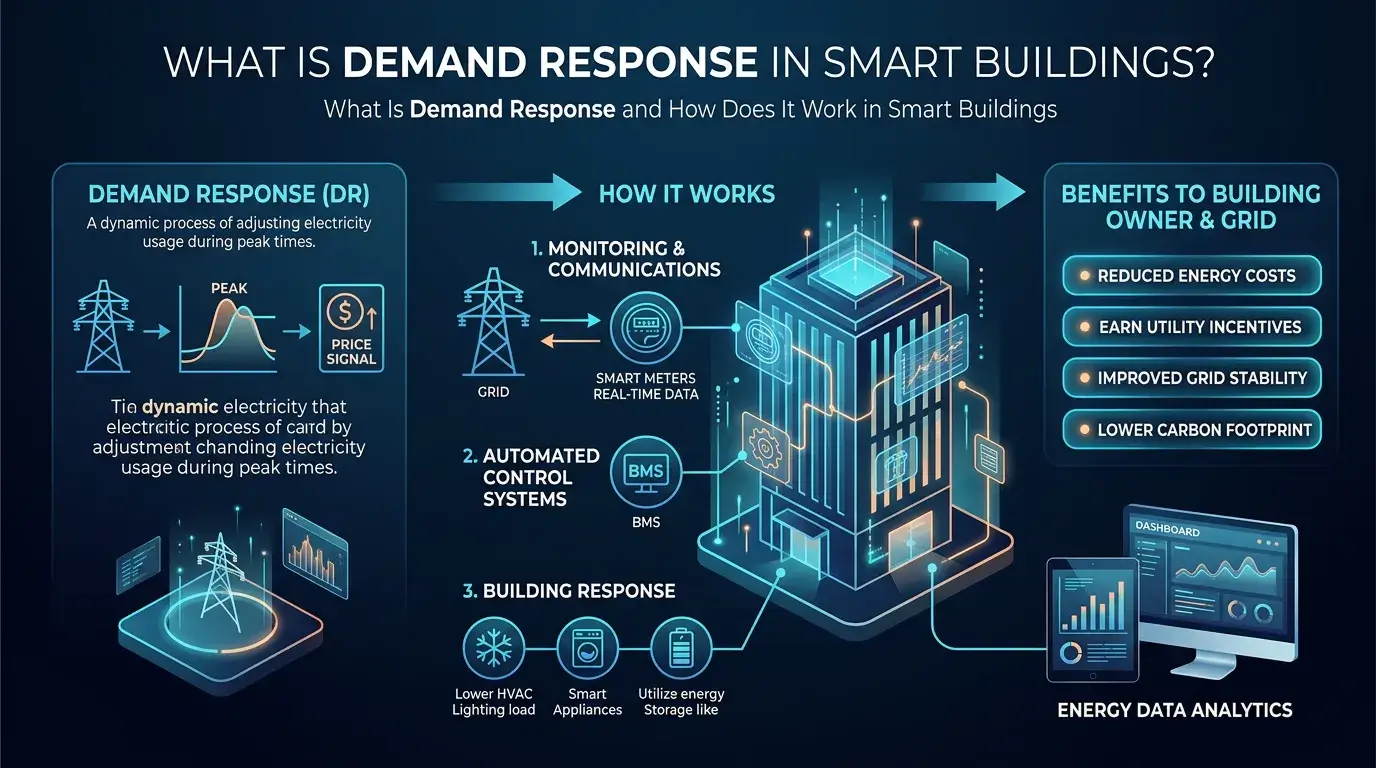
- Maximized Energy Efficiency: AI continuously monitors facility usage. If a conference room is empty, the system automatically powers down the lighting and adjusts the HVAC output. By aligning energy consumption precisely with actual demand, organizations significantly reduce their utility expenses and lower their carbon footprint.
- Predictive Maintenance: Traditional maintenance is either reactive (fixing broken equipment) or scheduled (replacing parts based on a calendar). AI introduces predictive maintenance. Sensors monitor the operational health of critical assets like elevators, generators, and servers. The AI detects minute anomalies in vibration or power draw, alerting technicians to potential failures before a breakdown occurs. This prevents costly downtime and extends the lifespan of expensive machinery.
- Advanced Security and Access Control: Modern enterprises demand uncompromising security. AI enhances physical safety through intelligent video surveillance. Cameras equipped with computer vision can detect unauthorized personnel, identify abandoned objects, and recognize license plates. Furthermore, AI monitors the building's digital network to identify and neutralize cybersecurity threats before they compromise operational data.
- Enhanced Occupant Well-being: The richest source of productivity is a comfortable and supportive environment. Smart buildings monitor indoor air quality, automatically increasing ventilation when CO2 levels rise. Lighting systems adjust color temperature throughout the day to match natural circadian rhythms, reducing eye strain and fatigue for your personnel.
How Artificial Intelligence Transforms Daily Operations
To fully appreciate the impact of these technologies, it is helpful to examine how they function in daily business scenarios.
- Dynamic Climate Control: Instead of relying on a static thermostat, an AI system analyzes external weather forecasts, the angle of the sun, and the number of people inside a specific zone. It then preemptively adjusts the cooling systems to maintain a perfect internal temperature, preventing the system from overworking during peak heat hours.
- Intelligent Space Utilization: For large corporations, real estate is a premium expense. AI systems generate detailed heat maps showing how employees use the office space over time. If data reveals that specific zones are consistently underutilized, management can confidently redesign the layout, sublease the space, or reduce their overall real estate footprint.
- Frictionless Visitor Management: When a scheduled guest arrives, the building's AI can automatically issue a temporary digital access pass to their mobile device. The system guides the visitor to the correct meeting room via digital wayfinding screens, while simultaneously notifying the host of their arrival.
Building a Reliable Technology Infrastructure
An AI-powered building is only as intelligent as the network that supports it. To process vast amounts of data in real time, the underlying infrastructure must be flawless. Every product and system integrated into the facility must be tested and proven to meet the highest industry standards, ensuring optimal performance and durability.
- Structured Cabling Infrastructure: The backbone of any smart building is its physical cabling. High-performance fiber optic and copper cabling ensure that data travels rapidly and securely between IoT sensors, local servers, and cloud computing platforms.
- Enterprise Networking: A robust and secure local area network (LAN) is required to handle the high bandwidth demands of AI systems. This includes deploying advanced routers, switches, and wireless access points to guarantee uninterrupted connectivity throughout the facility.
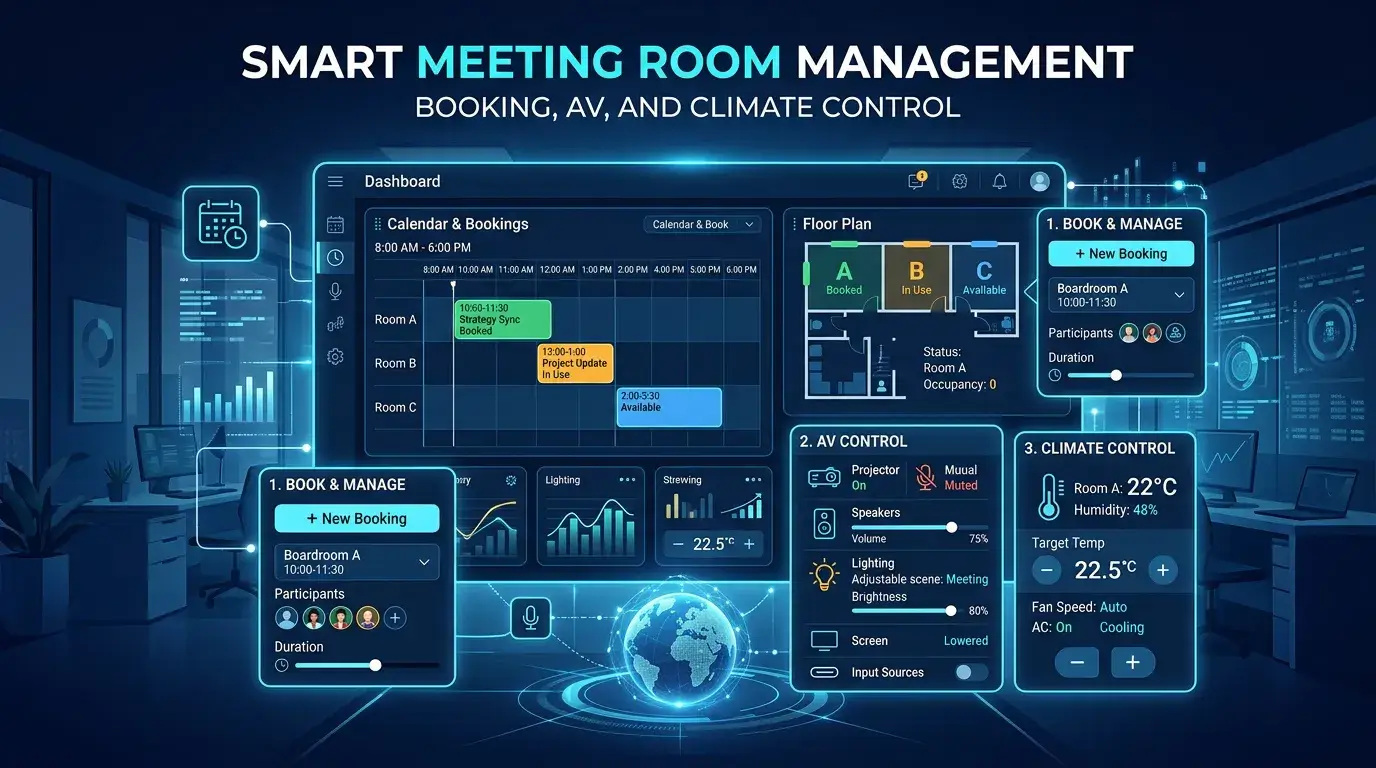
- Integrated Communication Systems: Smart buildings seamlessly incorporate IP telephony and video conferencing solutions. Meeting rooms automatically configure audiovisual settings, adjust lighting, and connect remote participants the moment an employee enters the room.
Frequently Asked Questions
-
What is the difference between a smart building and an AI-powered smart building?
A standard smart building relies on pre-programmed rules and schedules for automation. An AI-powered smart building utilizes machine learning to continuously analyze real-time data, allowing the system to make autonomous decisions, predict future needs, and optimize its own performance over time.
-
Is it possible to retrofit an existing building with AI technology?
Yes. You do not need to construct a new facility to benefit from artificial intelligence. Wireless IoT sensors and cloud-based AI platforms can be integrated into existing infrastructure, allowing older buildings to upgrade their efficiency and security systems without requiring massive structural overhauls.
-
How does AI improve building security?
AI enhances security by analyzing data from cameras and access control systems in real time. It can instantly recognize abnormal behaviors, track unauthorized access attempts, and integrate with cybersecurity protocols to protect the building's operational technology networks from digital intrusions.
-
Will implementing AI in my building reduce my operational costs?
Implementing AI typically leads to significant cost reductions. By optimizing HVAC and lighting, businesses save substantially on energy bills. Furthermore, predictive maintenance prevents catastrophic equipment failures, saving money on emergency repairs and operational downtime.
-
How secure is the data collected by a smart building?
Data security is paramount. Professional technology providers utilize advanced cybersecurity systems, end-to-end encryption, and secure enterprise networking protocols to ensure that all data collected by building sensors remains protected against external and internal threats.
Empower Your Organization with Smart Technologies
The implementation of artificial intelligence in facility management is no longer a futuristic concept; it is a current business necessity. By optimizing energy usage, securing physical and digital assets, and providing a superior environment for occupants, AI-powered smart buildings deliver a decisive competitive advantage.
Transitioning to an intelligent infrastructure requires precise planning and reliable execution. We encourage you to evaluate your current facility operations and explore how cutting-edge communication, robust networking, and smart technology solutions can empower your business for long-term success.