Shopping Cart



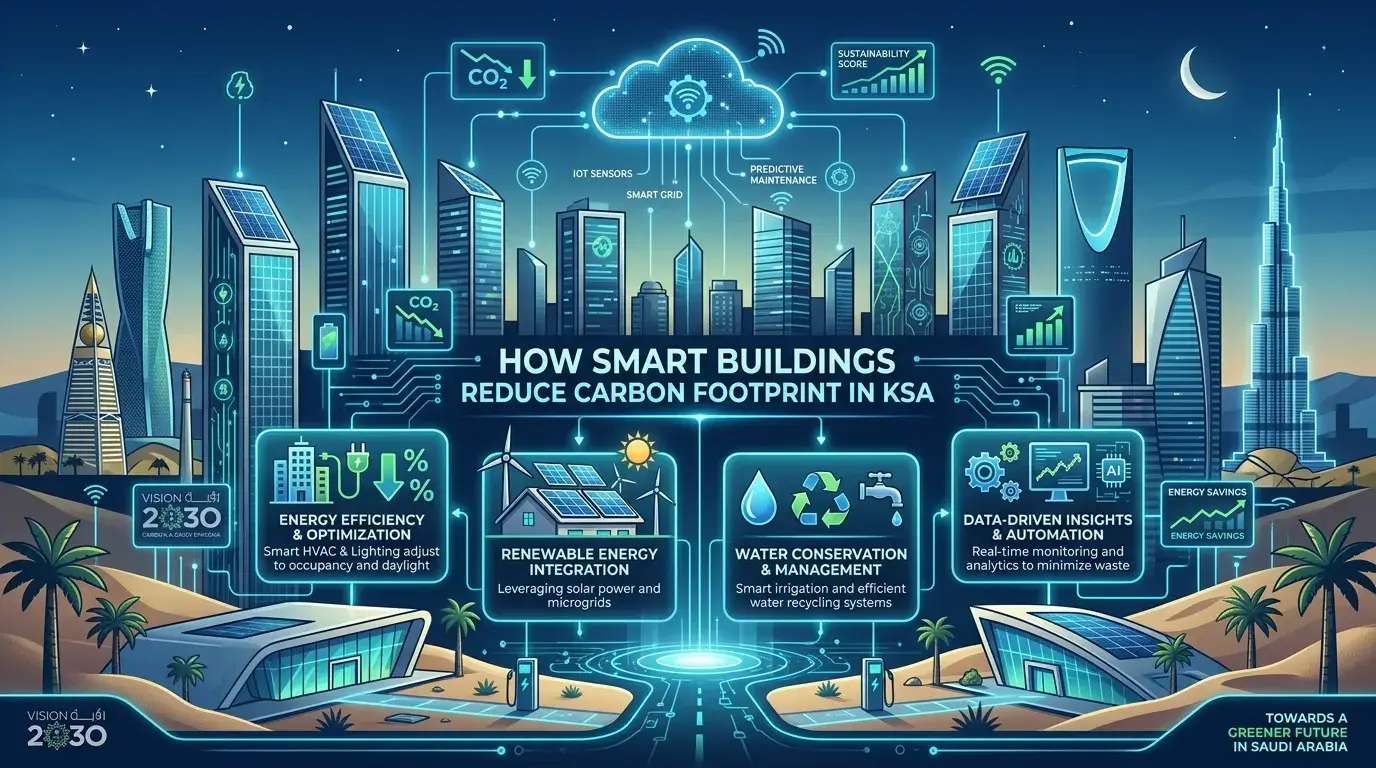
How Smart Buildings Reduce Carbon Footprint in KSA
Learn how smart buildings reduce carbon footprint in KSA through energy-efficient automation, intelligent HVAC systems, smart lighting, and real-time building management technologies.
By Blue Edge Team | Jun 22, 2026
How Smart Buildings Reduce Carbon Footprint in KSA
Quick answer: Smart buildings reduce carbon footprint in KSA by using automated systems—such as intelligent HVAC controls, smart lighting, energy monitoring, and IoT sensors—to cut energy waste. These technologies lower electricity consumption, optimize cooling in Saudi Arabia's hot climate, and support the sustainability goals outlined in Saudi Vision 2030.
Saudi Arabia is undergoing one of the most ambitious transformations in the region. With Saudi Vision 2030 placing sustainability at the center of national development, reducing carbon emissions has become a clear priority for both the public and private sectors. Buildings play a major role in this effort, as they account for a significant share of the Kingdom's energy use—largely driven by the demand for cooling in a hot, arid climate.
Smart buildings offer a practical and powerful solution. By combining automation, data, and intelligent technology, these buildings consume less energy, operate more efficiently, and produce a smaller carbon footprint. This post explains how smart building technologies achieve these results in the Saudi context, the specific systems involved, and what organizations stand to gain by adopting them.
What is a smart building, and how does it lower emissions?
A smart building uses connected technologies—sensors, automation systems, and data analytics—to monitor and control its operations. Instead of running systems at fixed settings, a smart building adjusts lighting, cooling, ventilation, and power use based on real-time conditions and occupancy.
This intelligent control directly lowers emissions in three ways:
- Reduced energy consumption: Systems run only when and where they are needed.
- Optimized cooling: Smart climate control prevents the over-cooling that wastes energy in Saudi Arabia's climate.
- Better data visibility: Building managers can identify waste and act on it quickly.
Because most carbon emissions from buildings come from electricity use, cutting that consumption translates directly into a lower carbon footprint.
Which smart building technologies reduce carbon footprint the most?
Several core technologies drive the largest reductions in energy use and emissions. Each addresses a specific source of waste common in Saudi buildings.
Intelligent HVAC and cooling control
Cooling is the single largest energy demand in most Saudi buildings. Smart HVAC systems use sensors and automation to match cooling output to actual occupancy and temperature needs. By avoiding unnecessary cooling in empty rooms and adjusting to real-time conditions, these systems significantly reduce electricity consumption—the main driver of building emissions in the Kingdom.
Smart lighting systems
Smart lighting uses occupancy sensors, daylight harvesting, and automated scheduling to ensure lights operate only when needed. In large commercial facilities, this reduces both direct lighting energy and the additional cooling load that lighting heat generates.
Energy monitoring and management systems
Building energy management systems (BEMS) collect data from across the facility and present it in a clear, actionable format. This visibility allows managers to spot inefficiencies, set energy targets, and verify the results of sustainability initiatives. You cannot reduce what you cannot measure—and BEMS make measurement precise.
IoT sensors and automation
Internet of Things (IoT) sensors track temperature, occupancy, air quality, and equipment performance throughout the building. These sensors feed data to automation systems that fine-tune operations continuously, removing the inefficiencies that come with manual control.
Why smart buildings matter for Saudi Vision 2030
Saudi Vision 2030 sets clear targets for sustainability, energy efficiency, and reduced reliance on fossil fuels. Smart buildings support these goals directly. Initiatives such as the Saudi Green Initiative aim to reduce carbon emissions across the economy, and the built environment is a critical part of that mission.
Adopting smart building technology helps organizations:
- Align with national sustainability targets set under Vision 2030.
- Reduce operating costs through lower energy bills.
- Meet green building standards, including certifications that are increasingly expected in new developments.
- Strengthen their reputation as responsible, future-ready organizations.
For businesses operating in Saudi Arabia, investing in smart building technology is both an environmental decision and a strategic one.
What are the business benefits beyond carbon reduction?
While lowering the carbon footprint is the headline benefit, smart buildings deliver value across several areas:
- Lower energy costs: Reduced consumption leads to measurable savings on electricity bills.
- Improved occupant comfort: Consistent temperature, lighting, and air quality create better working environments.
- Longer equipment life: Automated, optimized operation reduces wear on HVAC and other systems.
- Higher property value: Energy-efficient, certified buildings are more attractive to tenants and investors.
These advantages make smart building technology a sound long-term investment, not just a sustainability measure.
Putting smart building technology to work in KSA
Reducing your building's carbon footprint starts with understanding where energy is being used and wasted. The most effective path is to combine intelligent HVAC control, smart lighting, energy monitoring, and IoT automation into a single, well-integrated system. Together, these technologies cut energy consumption, lower emissions, and support the Kingdom's broader sustainability goals.
Organizations ready to begin should assess their current energy use, identify the systems with the greatest savings potential, and partner with an experienced technology provider to design a tailored solution. The result is a building that costs less to run, performs better for its occupants, and contributes directly to a more sustainable Saudi Arabia.
Frequently Asked Questions
-
How much energy can a smart building save in Saudi Arabia?
Savings vary by building type, age, and the technologies installed. Because cooling accounts for the largest share of energy use in Saudi buildings, intelligent HVAC and automation systems typically deliver the greatest reductions. A professional energy assessment is the best way to estimate the specific savings potential for your facility.
-
Are smart buildings expensive to set up?
There is an upfront investment in sensors, automation systems, and integration. However, the reduced energy bills and lower operating costs usually offset this cost over time. Many organizations view smart building technology as a long-term investment that pays back through ongoing savings and increased property value.
-
Can existing buildings be upgraded to smart buildings?
Yes. Many smart building technologies—including smart lighting, IoT sensors, and energy management systems—can be retrofitted into existing buildings. A phased upgrade allows organizations to start with the highest-impact systems and expand over time.
-
How do smart buildings support Saudi Vision 2030?
Smart buildings reduce energy consumption and carbon emissions, directly supporting the sustainability and energy-efficiency goals of Saudi Vision 2030 and the Saudi Green Initiative. They help organizations meet green building standards and contribute to national environmental targets.
-
What is the first step to making a building smarter?
The first step is an energy assessment to understand how and where the building uses energy. This identifies the systems with the greatest savings potential and forms the basis for a tailored smart building plan, usually developed with an experienced technology partner.