Shopping Cart

- Articles
- Smart Buildings
- Smart Meeting Room Management: Booking, AV, and Climate Control
Smart Meeting Room Management: Booking, AV, and Climate Control
Discover how smart meeting room management improves scheduling, audiovisual performance, and climate control to enhance productivity, comfort, and workplace efficiency.
By Blue Edge Team | Published Jun 22, 2026 | Updated Sep 23, 2026 | 5 min read
Quick answer
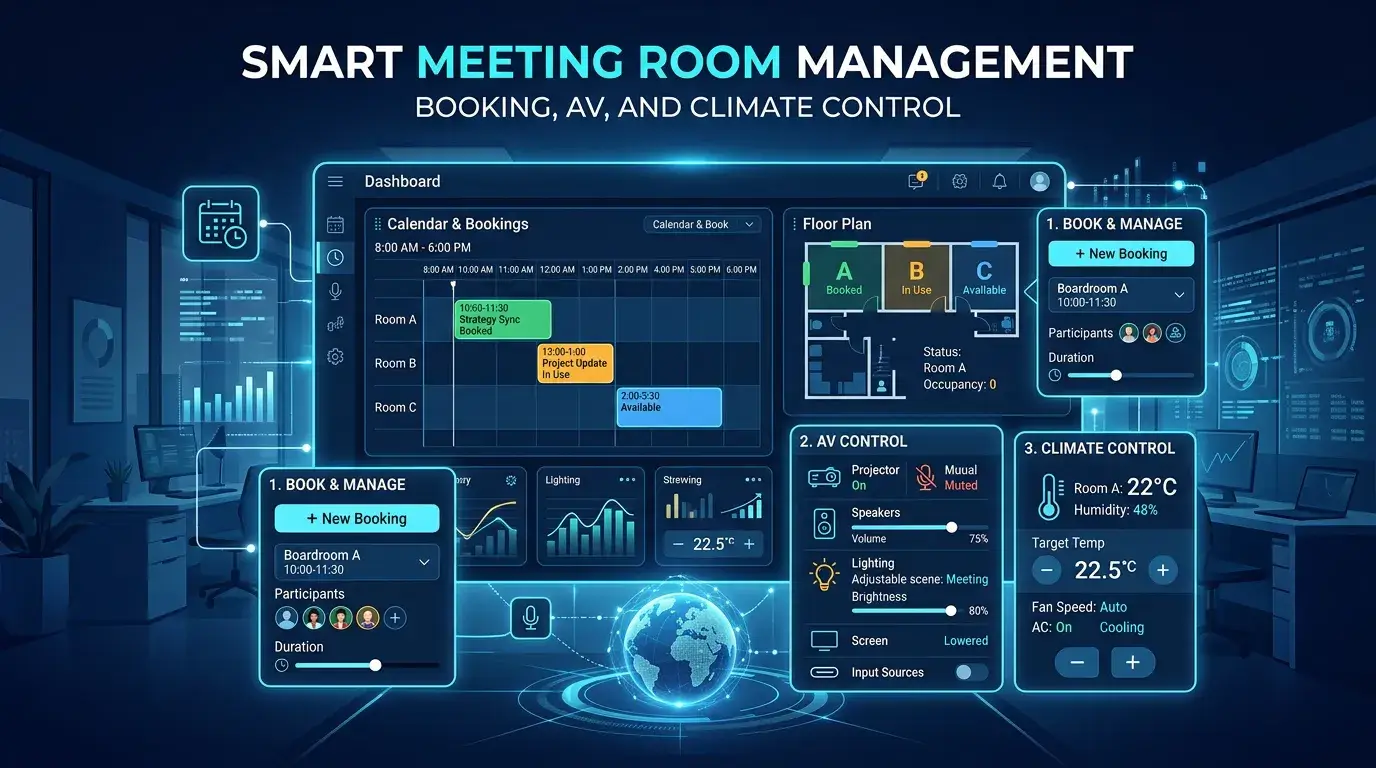
Smart meeting room management uses connected technology to automate three core functions—room booking, audiovisual (AV) control, and climate control. By integrating these systems, organizations reduce scheduling conflicts, eliminate wasted energy, and create comfortable, ready-to-use spaces that improve meeting efficiency and employee satisfaction.
Meeting rooms remain one of the most underused and mismanaged assets in modern workplaces. Double bookings, malfunctioning projectors, and rooms that feel like saunas by mid-afternoon are common frustrations. These issues cost time, disrupt productivity, and create unnecessary friction for teams trying to collaborate.
Smart meeting room management solves these problems by bringing booking, AV, and climate control into a single, connected ecosystem. This blog explains how each component works, why integration matters, and what benefits organizations can expect when they adopt these technologies. By the end, you'll have a clear understanding of how to transform your meeting spaces into efficient, intelligent environments.
What is smart meeting room management?
Smart meeting room management is the use of integrated technology to automate and optimize how meeting spaces are booked, equipped, and maintained. Rather than relying on manual scheduling, separate AV setups, and standalone thermostats, smart systems unify these functions through sensors, software, and connected devices.
The goal is straightforward: ensure every meeting room is available when needed, fully functional on arrival, and comfortable throughout the session. This is achieved by linking three core systems—booking platforms, AV equipment, and climate control—into a centralized management solution.
How does smart room booking work?
Smart room booking replaces outdated calendar guesswork with real-time visibility and automated scheduling. Employees can reserve a space through a desktop app, mobile device, or interactive display mounted outside the room.
Key features of modern booking systems include:
- Real-time availability: Occupancy sensors detect whether a room is actually in use, preventing "ghost meetings" where a room is booked but empty.
- Automatic release: If no one checks in within a set time, the system frees the room for others to use.
- Integration with calendars: Booking platforms sync directly with tools like Microsoft Outlook and Google Calendar, reducing double bookings.
- Usage analytics: Facilities managers gain data on which rooms are most used, helping inform space planning decisions.
These features ensure that meeting spaces are allocated efficiently, eliminating the wasted time and conflict caused by manual booking methods.
How does AV automation improve meetings?
Audiovisual problems are among the most common reasons meetings start late. Smart AV automation removes this friction by preparing equipment in advance and simplifying control during the session.
When a meeting begins, an integrated AV system can:
- Power on automatically: Displays, microphones, and speakers activate as the meeting starts.
- Connect instantly: Wireless presentation tools let participants share screens without cables or adapters.
- Support video conferencing: Cameras and microphones calibrate for hybrid meetings, ensuring remote attendees are seen and heard clearly.
- Offer one-touch control: A single interface manages volume, displays, and conferencing, removing the need for multiple remotes.
By automating these processes, organizations reduce technical delays and create a seamless experience for both in-person and remote participants.
Why does climate control matter in meeting rooms?
Room temperature has a direct effect on focus and comfort. A room that is too warm or too cold distracts attendees and shortens the productive value of a meeting. Smart climate control addresses this by adjusting conditions automatically based on occupancy and environmental data.
Smart climate systems typically:
- Adjust based on occupancy: Sensors detect how many people are in a room and regulate temperature and ventilation accordingly.
- Improve air quality: Carbon dioxide sensors trigger ventilation when air quality drops, keeping attendees alert.
- Save energy: Heating and cooling power down when rooms are empty, reducing utility costs and supporting sustainability goals.
- Sync with bookings: Rooms reach the ideal temperature just before a scheduled meeting begins.
This level of automation ensures comfortable conditions while minimizing energy waste—a benefit for both occupants and the organization's bottom line.
Why integrate booking, AV, and climate control?
Each of these systems delivers value on its own, but integration multiplies the benefits. When booking, AV, and climate control communicate, the meeting room becomes a fully responsive environment.
Consider a single integrated workflow: an employee books a room for 2:00 PM. By 1:50 PM, the climate system has adjusted the temperature, the AV equipment has powered on, and the booking display confirms the reservation. The employee arrives to a room that is comfortable, equipped, and ready—no manual setup required.
The combined benefits of integration include:
- Higher efficiency: Meetings start on time with no technical or scheduling delays.
- Lower costs: Energy savings and better space utilization reduce operational expenses.
- Improved experience: Employees enjoy reliable, comfortable spaces that support productive collaboration.
- Actionable data: Centralized analytics give facilities teams insight into usage patterns and performance.
Choose an integrated solution if operational efficiency and employee experience matter more to your organization than the lower upfront cost of standalone systems.
Building smarter meeting spaces
Smart meeting room management transforms a frequent source of workplace frustration into a streamlined, efficient experience. By unifying booking, AV, and climate control, organizations eliminate wasted time, reduce energy costs, and give employees the comfortable, well-equipped spaces they need to do their best work.
The most effective approach is to start with a clear assessment of your current pain points—whether that's double bookings, AV failures, or uncomfortable rooms—and select integrated technologies that address them directly. Partnering with an experienced technology provider can help ensure your systems are properly designed, installed, and supported for long-term success.
Frequently Asked Questions
-
What is smart meeting room management?
Smart meeting room management is the use of integrated technology to automate room booking, audiovisual control, and climate control. It ensures meeting spaces are available, fully functional, and comfortable, reducing scheduling conflicts and wasted energy.
-
How much does a smart meeting room system cost?
Costs vary based on room size, the number of rooms, and the technologies selected. A basic booking system is relatively affordable, while fully integrated solutions with AV automation and climate control require a larger investment. Most organizations recover costs over time through energy savings and improved productivity.
-
Can smart meeting room systems integrate with existing tools?
Yes. Most smart meeting room platforms integrate with widely used tools such as Microsoft Outlook, Google Calendar, and popular video conferencing services. This allows organizations to add smart features without replacing their existing workflows.
-
How do smart climate controls save energy?
Smart climate controls use occupancy sensors to heat or cool rooms only when they are in use. When a room is empty, the system powers down heating and cooling, reducing energy consumption and lowering utility costs.
-
Who benefits most from smart meeting room management?
Organizations with multiple meeting rooms and frequent collaboration benefit most. Facilities managers gain usage data and energy savings, IT teams reduce support requests, and employees enjoy reliable, comfortable spaces that help meetings run smoothly.
About Blue Edge
Blue Edge Company is a value-added technology distributor based in Dammam, Saudi Arabia, supplying interactive displays, smart building systems, networking infrastructure and IT security software to businesses and residential projects across the Kingdom, with installation and technical support.
Learn more about Blue Edge →Published 22 June 2026 • Last updated 23 September 2026 • This article is reviewed when standards, regulations or product guidance change.