Shopping Cart



Sustainability in Tech: Green IT Practices for Saudi Companies
Learn how green IT practices help Saudi companies reduce energy consumption, lower carbon emissions, optimize IT infrastructure, and achieve sustainable business growth.
By Blue Edge Team | Jul 13, 2026
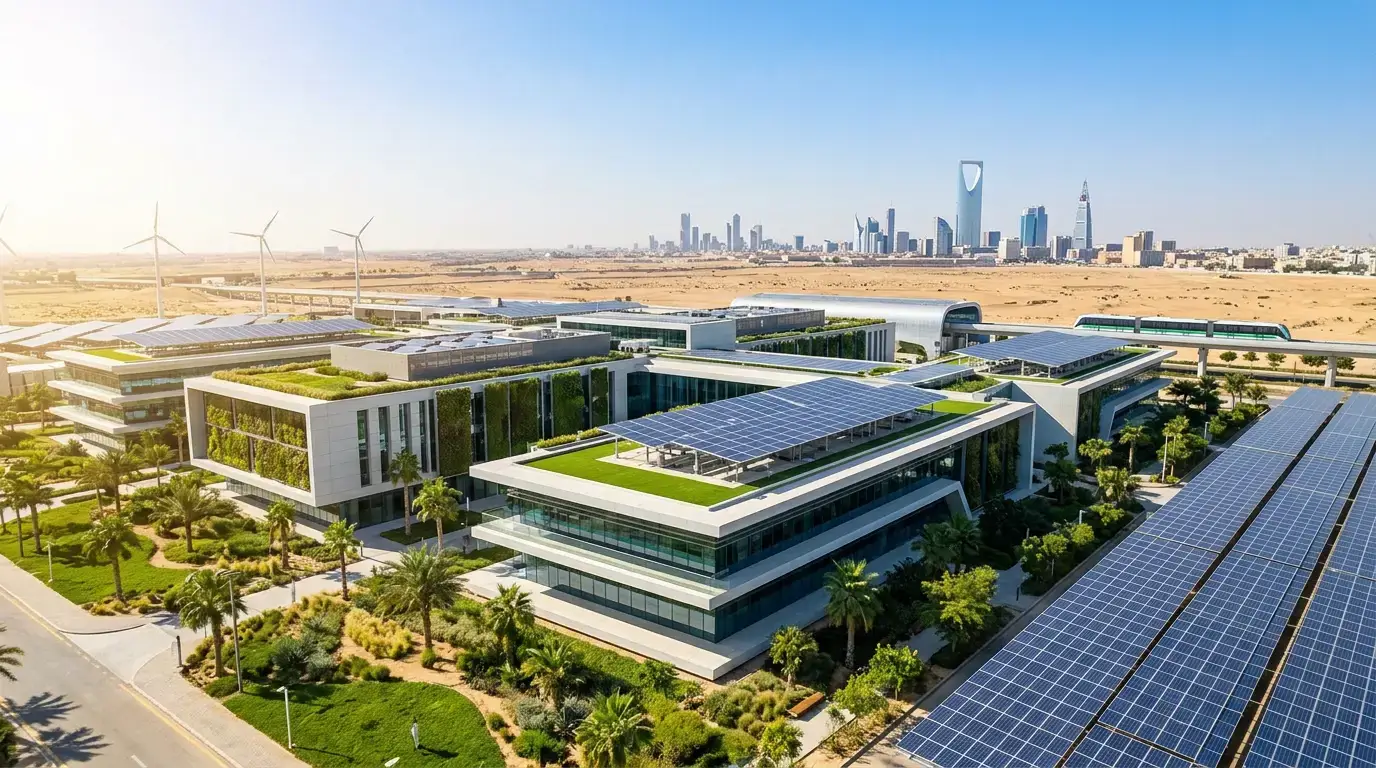
Green IT in Saudi Arabia: Practices Every Tech Leader Should Know
Green IT encompasses energy-efficient hardware, responsible e-waste disposal, sustainable procurement, and optimized data center operations. For Saudi companies, adopting Green IT practices aligns with Vision 2030 sustainability targets, reduces operational costs, and strengthens long-term competitiveness in an increasingly ESG-conscious global market.
Saudi Arabia is undergoing one of the most ambitious economic transformations in the world. Vision 2030 has placed sustainability at the heart of national development—and for technology leaders, that means rethinking how IT infrastructure is designed, managed, and retired. The country's tech sector is expanding rapidly, with data center investments, smart city projects like NEOM, and widespread digital transformation initiatives driving significant energy consumption.
The challenge is real: IT infrastructure currently accounts for approximately 1–2% of global energy consumption, with data centers alone responsible for around 200 terawatt-hours of electricity annually, according to the International Energy Agency (IEA, 2023). In a region where temperatures routinely exceed 40°C, cooling demands intensify this footprint further.
This post outlines the most effective Green IT practices for Saudi companies—backed by industry data, a realistic case study, and actionable steps your organization can implement now.
What Does Green IT Actually Mean for Businesses in Saudi Arabia?
Green IT, also called sustainable IT or ICT sustainability, refers to the design, procurement, use, and disposal of IT resources in ways that minimize environmental impact. For Saudi companies, this is particularly relevant given the Kingdom's pledge to reach net-zero emissions by 2060 and its commitment to generating 50% of energy from renewable sources by 2030.
Green IT is not limited to switching off monitors at the end of the day. It spans hardware lifecycle management, data center energy efficiency, cloud migration strategies, and vendor selection—each carrying measurable environmental and financial consequences.
Comparing Green IT Approaches: Which Strategy Fits Your Organization?
Different organizations require different entry points into Green IT. The table below compares four common strategies by cost, impact, and suitability:
| Strategy | Upfront Cost | Environmental Impact | Best For |
|---|---|---|---|
| Cloud Migration | Medium | High | SMEs and enterprises scaling rapidly |
| Data Center Optimization | High | Very High | Large enterprises with on-premises infrastructure |
| Device Lifecycle Management | Low | Medium | Organizations with large hardware fleets |
| Renewable Energy Procurement | Medium–High | High | Companies with significant energy bills |
| Virtualization & Server Consolidation | Medium | High | IT-heavy industries with underused servers |
Choose cloud migration if reducing physical infrastructure is a priority and operational flexibility matters more than full control. Choose data center optimization if your organization manages its own servers and energy costs represent a significant operational expense.
Green IT Best Practices Saudi Companies Should Implement
How Can Saudi Companies Reduce Data Center Energy Consumption?
Data centers are the most energy-intensive component of most IT environments. Saudi companies can significantly reduce consumption through the following measures:
- Improve Power Usage Effectiveness (PUE): The global average PUE is approximately 1.58, according to the Uptime Institute (2023). Best-in-class facilities achieve 1.2 or below. Achieving this requires advanced cooling systems, hot/cold aisle containment, and intelligent power distribution.
- Deploy AI-driven cooling management: Systems like those used by hyperscale providers can reduce cooling energy by up to 40%.
- Consolidate underutilized servers: Server virtualization reduces physical hardware requirements, cutting both energy use and hardware procurement costs.
What Are the Most Effective Green Procurement Policies for IT?
Procurement is where sustainability decisions begin. Effective green procurement policies include:
- Prioritizing devices with ENERGY STAR or EPEAT certifications
- Requiring vendors to disclose their own carbon footprint and sustainability credentials
- Extending device refresh cycles from three to five or more years where performance allows
- Sourcing refurbished or remanufactured hardware for non-critical workloads
How Should Saudi Organizations Handle E-Waste Responsibly?
Saudi Arabia generates an estimated 200,000 tonnes of electronic waste annually, according to the Global E-waste Monitor (2024). Responsible disposal requires:
- Partnering with certified e-waste recyclers operating under the Basel Convention standards
- Implementing asset tracking systems to document hardware from purchase through disposal
- Donating functional, older devices to schools or nonprofits before recycling
Case Study: Green IT Transformation at a Saudi Financial Services Firm
Background: A mid-sized financial services company in Riyadh operated an aging on-premises data center consuming approximately 2.4 megawatts annually. Cooling accounted for nearly 45% of total energy usage, and hardware refresh cycles averaged just three years.
Actions taken (2023–2024):
- Migrated 60% of workloads to a regional cloud provider with certified renewable energy operations
- Implemented server virtualization, reducing physical servers from 120 to 38
- Replaced legacy cooling systems with precision air conditioning and hot-aisle containment
- Established a formal e-waste program with a certified local recycler
Measurable results after 18 months:
- 38% reduction in total IT energy consumption
- PUE improved from 2.1 to 1.45
- SAR 1.2 million in annual cost savings from reduced hardware and energy spend
- 72 tonnes of e-waste responsibly recycled
This outcome demonstrates that Green IT delivers both environmental and financial returns—simultaneously reducing carbon footprint and operational overhead.
Common Green IT Mistakes Saudi Companies Should Avoid
Even well-intentioned sustainability programs can fall short due to avoidable errors:
- Treating Green IT as a one-time project: Sustainability requires ongoing monitoring, measurement, and iteration—not a single initiative.
- Overlooking the supply chain: Focusing only on internal operations while ignoring vendor and supplier practices limits overall impact.
- Failing to set measurable targets: Without defined KPIs—such as PUE targets, e-waste diversion rates, or carbon reduction percentages—progress cannot be tracked or reported.
- Underestimating cooling as a variable: In Saudi Arabia's climate, cooling is the dominant energy cost in IT environments. Neglecting it renders other green efforts less effective.
- Greenwashing through vague commitments: Stakeholders and regulators increasingly demand verifiable data. Vague sustainability claims without third-party validation damage credibility.
What Are the Key Green IT Trends Shaping Saudi Arabia's Tech Sector in 2026 and 2027?
The Green IT landscape is evolving quickly. Several trends are directly relevant to Saudi organizations planning ahead:
- AI-optimized infrastructure management: Artificial intelligence is being deployed to dynamically allocate computing resources, predict maintenance needs, and reduce idle energy consumption—cutting data center energy use by up to 30%, according to McKinsey (2025).
- Liquid cooling adoption: As high-density GPU workloads increase—driven by AI and machine learning applications—air cooling is reaching its physical limits. Direct liquid cooling systems are projected to represent 20% of global data center cooling by 2027, according to IDC.
- Saudi Green Building Standards integration: The Saudi Authority for Accredited Valuers and Vision 2030's building frameworks are increasingly requiring IT infrastructure within commercial developments to meet defined energy performance standards.
- Carbon accounting mandates: Regional and international regulatory pressure is pushing Saudi companies toward formal carbon accounting, particularly those with global trading relationships or multinational investors.
- Circular IT economy growth: Refurbishment, leasing, and product-as-a-service models are expanding, reducing the total volume of hardware manufactured and disposed of annually.
Build a Sustainable IT Strategy That Supports Long-Term Growth
Green IT is not an optional add-on for forward-looking Saudi companies—it is a foundational element of operational resilience, regulatory alignment, and brand credibility. The organizations that act now, by optimizing infrastructure, formalizing procurement policies, and investing in measurable sustainability programs, will be better positioned as Vision 2030 targets tighten and ESG expectations from investors and partners intensify.
Start with an energy audit of your current IT infrastructure, identify your highest-impact reduction opportunities, and establish clear, measurable targets. If your organization needs expert guidance in designing and implementing a sustainable IT infrastructure strategy, contact Blue Edge for Communication and Technology (BEC) to speak with a specialist.
Frequently Asked Questions
-
What is Green IT, and why does it matter for Saudi companies specifically?
Green IT refers to environmentally responsible practices across the IT lifecycle—from device procurement and energy use to disposal. For Saudi companies, it directly supports Vision 2030's sustainability goals, reduces energy costs in a high-consumption climate, and strengthens eligibility for ESG-aligned investment and government contracts.
-
How much can a Saudi company save by adopting Green IT practices?
Savings vary by organization size and starting point, but data center optimization and cloud migration frequently deliver 20–40% reductions in energy costs. The case study outlined above achieved SAR 1.2 million in annual savings within 18 months through a combination of cloud migration, virtualization, and cooling upgrades.
-
Is cloud migration always the most sustainable option for Saudi businesses?
Not necessarily. Cloud migration reduces on-premises energy consumption, but the environmental benefit depends on whether the cloud provider uses renewable energy. Saudi companies should verify a provider's energy sourcing and carbon commitments before assuming migration delivers a net environmental gain.
-
What regulations govern e-waste disposal in Saudi Arabia?
Saudi Arabia's environmental regulations, overseen by the National Center for Waste Management (Mwan), require proper handling and documentation of electronic waste. Companies should engage certified recyclers that comply with both local regulations and international standards such as the Basel Convention to avoid liability and ensure responsible disposal.
-
Where should a Saudi company start if it has no existing Green IT strategy?
Begin with a baseline energy audit of your IT infrastructure to identify your largest consumption sources. From there, prioritize the highest-impact interventions—typically data center cooling, server virtualization, and device lifecycle management—before expanding to procurement policies and supply chain sustainability.