Shopping Cart



IoT in Logistics: How Real-Time Tracking Is Reshaping Supply Chains
Discover how IoT in logistics enables real-time tracking, improves supply chain visibility, optimizes fleet management, reduces costs, and enhances operational efficiency.
By Blue Edge Team | Aug 11, 2026
IoT in Logistics: How Real-Time Tracking Is Reshaping Supply Chains
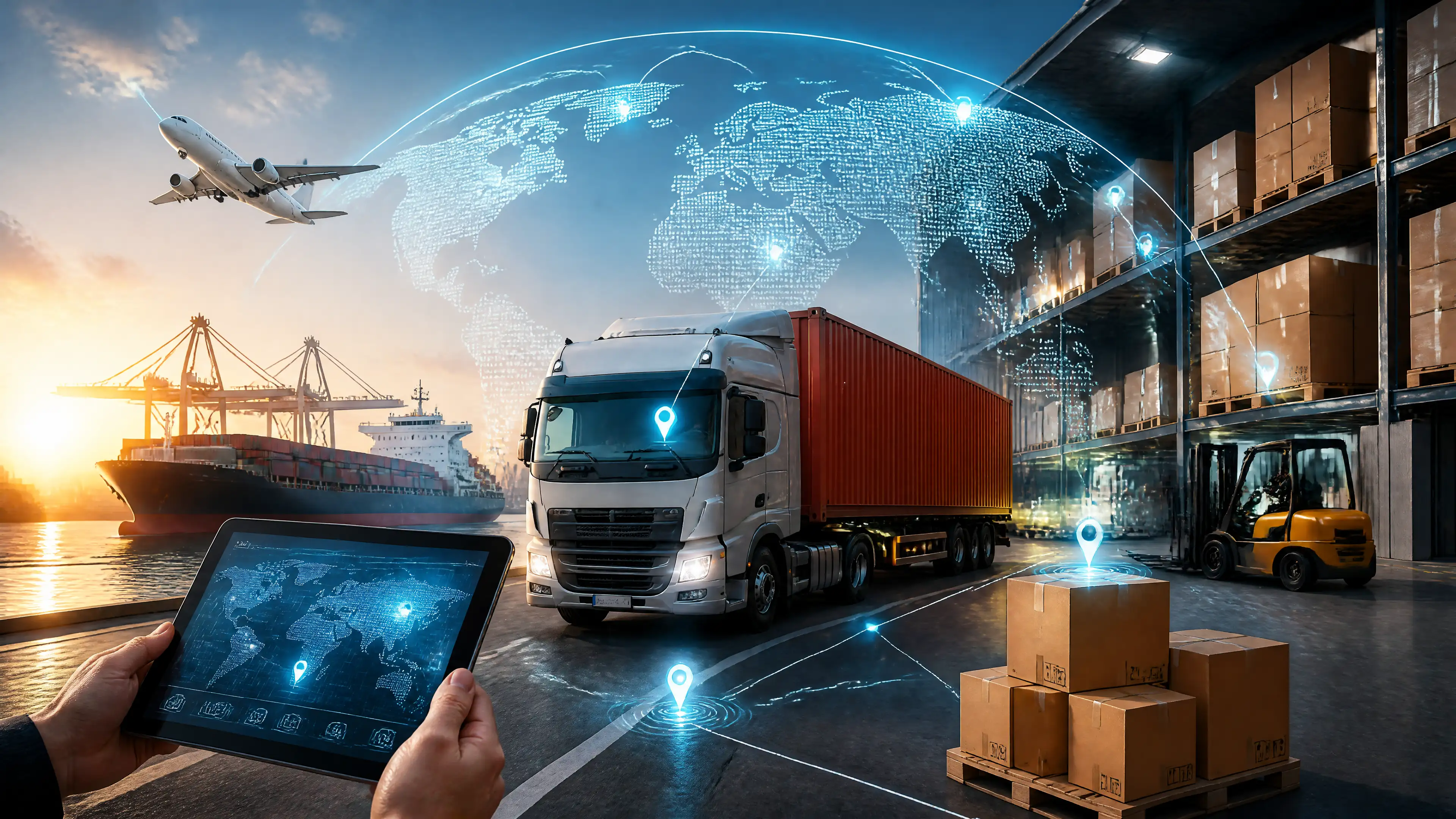
IoT in logistics enables real-time visibility across fleets and supply chains by connecting sensors, vehicles, and systems through a unified data network. Organizations that deploy IoT tracking solutions report significant reductions in operational costs, delivery delays, and cargo losses—making IoT adoption a strategic priority for modern logistics operations.
Fleet managers once relied on phone calls and paper logs to track shipments. Today, a single dashboard can display the location, temperature, fuel level, and engine status of every vehicle in a global fleet—updated every few seconds. That shift didn't happen overnight, but it is accelerating rapidly.
The Internet of Things (IoT) has fundamentally changed how logistics companies operate. By embedding connected sensors into vehicles, containers, warehouses, and infrastructure, organizations can now monitor their entire supply chain in real time—from the moment a product leaves the manufacturer to the second it arrives at its destination.
The global IoT in logistics market was valued at approximately $34.5 billion in 2023 and is projected to surpass $100 billion by 2030, according to Fortune Business Insights. That growth reflects a straightforward reality: supply chains are becoming more complex, customer expectations are rising, and the cost of inefficiency is higher than ever.
This post breaks down exactly how IoT technology is being applied across fleet management and supply chain tracking, what features to look for in an IoT platform, and how to determine whether your organization is ready to make the shift.
What Does IoT in Logistics Actually Mean?
IoT in logistics refers to the use of internet-connected devices—sensors, GPS trackers, RFID tags, telematics units, and edge computing nodes—to collect, transmit, and analyze data across the supply chain. These devices communicate with centralized platforms, enabling logistics managers to monitor operations without manual input or human-relayed updates.
The key distinction from traditional tracking systems is continuity. Legacy systems provided snapshots: a scan at a warehouse, a check-in at a border crossing. IoT-enabled systems provide a continuous stream of data, creating what industry professionals call "end-to-end supply chain visibility."
Three core components make this possible:
- Connected devices: GPS trackers, temperature sensors, load sensors, and telematics hardware installed in vehicles and containers
- Connectivity infrastructure: Cellular networks (4G/5G), LPWAN (Low Power Wide Area Networks), and satellite communications that transmit data from remote locations
- Analytics platforms: Cloud-based software that aggregates, visualizes, and interprets sensor data to generate actionable insights
Real-Time Fleet Tracking: What IoT Enables
How Does IoT Improve Fleet Visibility and Driver Safety?
Real-time fleet tracking goes well beyond knowing where a vehicle is on a map. IoT-enabled telematics systems monitor vehicle health, driver behavior, fuel consumption, and route efficiency simultaneously.
Key capabilities include:
- Live GPS positioning updated at intervals as short as 5–30 seconds
- Driver behavior monitoring: harsh braking, rapid acceleration, speeding, and idle time are all logged automatically
- Engine diagnostics: IoT sensors read OBD-II data to detect fault codes before they cause breakdowns
- Fuel monitoring: Real-time fuel level tracking reduces theft and identifies inefficient routes
- Geofencing alerts: Automatic notifications when a vehicle enters or exits a defined geographic zone
According to a report by McKinsey & Company, fleet operators who implement IoT-based telematics can reduce fuel costs by 10–15% and cut accident-related costs by up to 20% through driver behavior coaching informed by real-time data.
How Does Predictive Maintenance Work in IoT Fleet Management?
Predictive maintenance is one of the highest-value applications of IoT in fleet management. Rather than scheduling maintenance based on fixed mileage intervals, IoT sensors continuously monitor engine temperature, vibration, tire pressure, and brake wear. When sensor readings deviate from established baselines, the system flags the vehicle for inspection before a failure occurs.
The financial impact is significant. Unplanned vehicle breakdowns cost logistics companies an average of $448 to $760 per hour in lost productivity, according to FleetOwner. Predictive maintenance reduces unplanned downtime by an estimated 30–50%, according to Deloitte's analysis of industrial IoT deployments.
Supply Chain Tracking: Beyond the Vehicle
How Does IoT Enable End-to-End Supply Chain Visibility?
Fleet tracking is one layer of a broader IoT-enabled supply chain visibility system. At the cargo level, IoT sensors monitor conditions that directly affect product integrity.
Cold chain logistics—covering pharmaceuticals, perishables, and chemicals—relies heavily on temperature and humidity sensors embedded in containers and pallets. These sensors transmit data continuously, alerting operators the moment conditions drift outside acceptable thresholds. In pharmaceutical logistics, where a single temperature excursion can render an entire shipment non-compliant, this capability is not optional—it is regulatory.
RFID (Radio Frequency Identification) tags and Bluetooth Low Energy (BLE) beacons enable precise indoor tracking within warehouses and distribution centers. When combined with GPS tracking for transport legs, organizations achieve complete cargo traceability from origin to destination.
What Role Does IoT Play in Warehouse Operations?
IoT extends its value well beyond vehicles and containers. Smart warehouse systems integrate:
- Automated inventory tracking via RFID readers installed at entry and exit points
- Smart shelving equipped with weight sensors that detect stock depletion in real time
- Forklift telematics monitoring utilization, safety compliance, and maintenance needs
- Environmental monitoring for temperature-sensitive storage zones
- Dock management systems that coordinate inbound and outbound vehicle flow to reduce congestion
Together, these systems reduce manual scanning labor, shrink inventory discrepancies, and accelerate order fulfillment cycles.
IoT Platform Comparison: Key Features to Evaluate
Not all IoT logistics platforms are equal. The table below compares the most critical features organizations should evaluate when selecting a solution.
| Feature | Basic Platforms | Mid-Tier Platforms | Enterprise Platforms |
|---|---|---|---|
| Real-Time GPS Tracking | ✅ | ✅ | ✅ |
| Update Frequency | Every 60–120 sec | Every 15–30 sec | Every 5–15 sec |
| Cold Chain Monitoring | ❌ | ✅ | ✅ |
| Predictive Maintenance | ❌ | Limited | ✅ Advanced |
| AI-Driven Route Optimization | ❌ | ❌ | ✅ |
| Geofencing & Alerts | ✅ | ✅ | ✅ |
| ERP/WMS Integration | ❌ | Limited | ✅ Full API |
| Driver Behavior Scoring | Basic | ✅ | ✅ Detailed |
| RFID/BLE Asset Tracking | ❌ | ❌ | ✅ |
| Multi-Carrier Visibility | ❌ | Limited | ✅ |
| Compliance Reporting | ❌ | ✅ | ✅ Automated |
| Dashboard Customization | Limited | Moderate | ✅ Full |
How to choose: Basic platforms suit small fleets with straightforward domestic routes and no temperature-sensitive cargo. Mid-tier platforms are appropriate for regional operations with multiple vehicle types. Enterprise platforms are the correct choice when managing multi-modal, international, or cold chain logistics at scale—particularly when integration with existing ERP or warehouse management systems is required.
Barriers to IoT Adoption in Logistics—and How to Address Them
What Are the Main Challenges of Implementing IoT in Logistics?
Several factors slow IoT adoption despite its proven benefits.
Data security and privacy: IoT devices expand an organization's attack surface. Each connected sensor represents a potential entry point for unauthorized access. Mitigating this requires end-to-end encryption, device authentication protocols, and regular firmware updates.
Integration complexity: Legacy logistics systems were not designed to ingest continuous sensor data streams. Integrating IoT platforms with existing TMS (Transportation Management Systems) or ERP software requires careful planning and, often, custom API development.
Connectivity gaps: IoT devices depend on reliable network coverage. Remote or cross-border routes may have limited cellular coverage. Organizations operating in these environments should prioritize platforms that support satellite connectivity or LPWAN as a fallback.
Return on investment clarity: IoT investments can be difficult to justify without clear baseline data. Organizations that establish pre-deployment performance benchmarks—fuel costs, incident frequency, delivery accuracy—are better positioned to demonstrate measurable ROI post-implementation.
Industries Gaining the Most From IoT Logistics Solutions
While IoT fleet and supply chain tracking benefits virtually every sector that moves goods, three industries are seeing disproportionate impact.
Pharmaceutical and healthcare logistics depend on unbroken cold chains and regulatory-grade audit trails. IoT sensors provide both, with automated compliance documentation replacing manual temperature logs.
Retail and e-commerce fulfillment demands faster, more predictable delivery windows. IoT-enabled route optimization and real-time ETA updates directly improve last-mile delivery performance and customer satisfaction scores.
Food and beverage distribution operates under strict freshness and safety requirements. Real-time temperature monitoring reduces spoilage rates and strengthens food safety compliance across the distribution network.
The Road Ahead: AI, 5G, and Autonomous Logistics
IoT in logistics is not a static technology. Three developments will define the next phase of its evolution.
5G connectivity will enable faster data transmission, lower latency, and support for denser sensor networks—critical for urban last-mile operations and real-time warehouse coordination.
AI-driven analytics will shift IoT from monitoring to prediction and autonomous decision-making. Platforms are already beginning to combine sensor data with weather forecasts, traffic patterns, and demand signals to automatically reroute vehicles and rebalance inventory.
Digital twins—virtual replicas of physical supply chain networks—will allow logistics managers to simulate disruptions and test contingency plans before implementing changes in the real world.
Organizations that build their IoT infrastructure now will be positioned to incorporate these capabilities as they mature, rather than retrofitting them onto outdated systems later.
Building a Smarter, More Resilient Supply Chain With IoT
IoT in logistics has moved past the proof-of-concept stage. The organizations using real-time fleet tracking and supply chain monitoring today are reducing costs, meeting customer expectations more consistently, and responding to disruptions faster than competitors still operating on manual or legacy systems.
The technology is accessible, the return on investment is measurable, and the operational risks of inaction are growing. The practical question is no longer whether to adopt IoT—it is how to deploy it effectively for your specific operational context.
Ready to explore IoT tracking solutions for your fleet or supply chain? Contact our team today for a tailored consultation and learn how the right IoT platform can deliver measurable performance improvements across your logistics operations.
[Request a Free Consultation →]
Frequently Asked Questions
-
What is IoT in logistics and how does it work?
IoT in logistics refers to a network of connected sensors, GPS devices, RFID tags, and telematics hardware embedded in vehicles, cargo, and warehouse infrastructure. These devices continuously collect and transmit operational data—location, temperature, fuel levels, engine status—to a centralized platform, where it is analyzed and displayed in real time. The result is continuous supply chain visibility without manual data entry.
-
How much does an IoT fleet tracking system cost?
Costs vary significantly based on fleet size, required features, and platform tier. Basic telematics hardware typically ranges from $100 to $300 per vehicle, with software subscriptions between $20 and $75 per vehicle per month. Enterprise platforms with AI analytics, cold chain monitoring, and ERP integration can cost considerably more. Most providers offer ROI calculators or pilot programs to help organizations assess cost-effectiveness before full deployment.
-
Is IoT in logistics suitable for small and mid-sized logistics companies?
Yes. While enterprise-grade platforms are designed for large, complex operations, mid-tier and entry-level IoT solutions are specifically designed for smaller fleets. A company operating as few as 10 vehicles can benefit from real-time GPS tracking, driver behavior monitoring, and basic maintenance alerts. The key is selecting a scalable platform that can grow as the business expands.
-
How does IoT help with cold chain compliance in logistics?
IoT sensors embedded in refrigerated containers and trailers continuously monitor temperature and humidity throughout transit. When readings exceed preset thresholds, the system immediately alerts the relevant personnel, enabling corrective action before product integrity is compromised. The sensor data is logged automatically, creating a complete audit trail that supports regulatory compliance in pharmaceutical, food, and chemical logistics.
-
What connectivity options do IoT logistics devices use in areas with poor cellular coverage?
Devices operating in remote or cross-border areas where cellular networks are unreliable can use alternative connectivity technologies, including LPWAN (Low Power Wide Area Networks such as LoRa or Sigfox), satellite communication networks, or hybrid connectivity systems that automatically switch between cellular and satellite depending on signal availability. Organizations with operations in remote regions should confirm connectivity compatibility with their IoT platform provider before deployment.