Shopping Cart



What Is PropTech and How It's Shaping Saudi Real Estate
Learn how PropTech is transforming Saudi Arabia's real estate industry with smart buildings, AI, IoT, digital property management, and innovative real estate technologies.
By Blue Edge Team | Jul 21, 2026
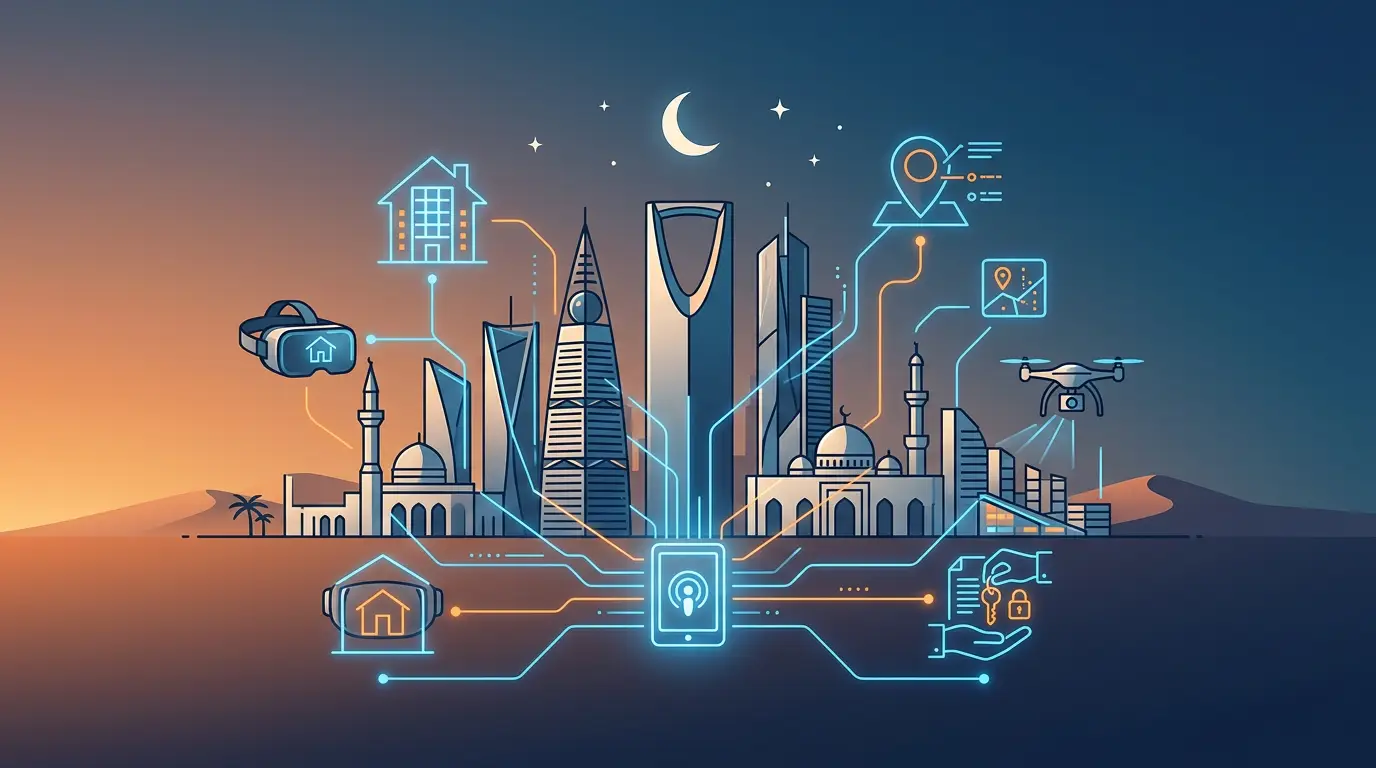
What Is PropTech and How It's Shaping Saudi Real Estate
Quick answer: PropTech (property technology) refers to digital tools and platforms that modernize how real estate is bought, sold, managed, and financed. In Saudi Arabia, PropTech adoption is accelerating rapidly, driven by Vision 2030 reforms, rising urban demand, and a growing appetite for data-driven real estate solutions.
Saudi Arabia's real estate sector is undergoing a structural transformation. New cities are being built from the ground up, homeownership targets are rising, and investors are demanding greater transparency. At the center of this shift is PropTech—a category of technology that is quietly redefining how property markets operate.
This post breaks down what PropTech is, which technologies are making the biggest impact, and why Saudi Arabia is emerging as one of the region's most dynamic PropTech markets.
What Is PropTech?
PropTech, short for property technology, is the application of digital innovation to the real estate industry. It encompasses a broad range of tools—from AI-powered property search platforms and digital mortgage services to smart building management systems and blockchain-based title registries.
The goal is straightforward: make real estate transactions faster, more transparent, and more efficient for buyers, sellers, developers, and investors alike.
PropTech is typically categorized across three layers:
- Residential PropTech – platforms that help individuals search, buy, rent, or finance homes
- Commercial PropTech – tools for managing office buildings, retail spaces, and logistics assets
- Construction Tech (ConTech) – digital solutions for project planning, building information modeling (BIM), and on-site management
How PropTech Is Transforming Saudi Arabia's Real Estate Market
What is driving PropTech adoption in Saudi Arabia?
Several structural forces are converging to accelerate PropTech growth in the Kingdom.
Saudi Arabia's Vision 2030 initiative has set ambitious targets for the real estate sector—including raising homeownership among Saudi nationals to 70% by 2030, up from around 47% in 2016 (Ministry of Municipal and Rural Affairs, 2022). Achieving that goal at scale requires digital infrastructure, not just physical construction.
At the same time, mega-projects such as NEOM, The Line, Diriyah Gate, and Qiddiya are generating unprecedented demand for smart building technology, integrated city management platforms, and data analytics tools. These projects are not simply large—they are designed to be digitally native from the ground up.
A young, tech-savvy population is also accelerating adoption. With more than 63% of Saudi Arabia's population under the age of 35 (General Authority for Statistics, 2022), demand for mobile-first, seamless property experiences is high and growing.
Which PropTech solutions are gaining traction in Saudi Arabia?
- 1. Digital Property PlatformsOnline property portals such as Bayut and Aqar have become primary search tools for homebuyers and renters across Saudi Arabia. These platforms provide verified listings, neighborhood data, and price trend analytics—reducing information asymmetry between buyers and sellers.
- 2. AI-Powered Valuation ToolsAutomated valuation models (AVMs) use machine learning to generate real-time property valuations based on comparable sales, location data, and market trends. For lenders and developers, this significantly reduces the time and cost associated with manual appraisals.
- 3. Smart Building TechnologyIntegrated building management systems (BMS) are being deployed across commercial and residential developments in Riyadh, Jeddah, and emerging smart districts. These systems manage energy consumption, access control, maintenance scheduling, and tenant services through a single digital interface.
- 4. Digital Mortgage and Financing PlatformsFintech-PropTech convergence is making mortgage access faster and more transparent. Platforms that integrate directly with the Saudi Real Estate Refinance Company (SRC) and licensed lenders allow applicants to receive pre-approvals digitally, reducing processing times from weeks to days.
- 5. Blockchain for Title RegistrationSaudi Arabia's Ministry of Justice has explored blockchain-based land registration systems to reduce fraud, streamline ownership transfers, and create immutable title records. While still developing, this represents a significant long-term shift in how property ownership is verified and transferred.
PropTech vs. Traditional Real Estate: A Comparison
| Feature | Traditional Real Estate | PropTech-Enabled Real Estate |
|---|---|---|
| Property Search | Agent-led, limited data | Digital platforms with analytics |
| Valuation | Manual appraisal | AI-powered automated models |
| Transactions | Paper-based, slow | Digital contracts, faster closings |
| Building Management | Reactive, manual | Proactive, IoT-integrated |
| Mortgage Processing | Weeks to months | Days, via digital platforms |
| Market Transparency | Limited | Real-time data and reporting |
What Are the Key Benefits of PropTech for the Saudi Market?
Greater Transparency: Digital platforms surface pricing data, transaction history, and neighborhood analytics that were previously difficult to access. This supports more informed decision-making for buyers, investors, and policymakers.
Operational Efficiency: Smart building systems reduce energy costs and improve tenant experiences. For developers managing large-scale mixed-use projects, this translates directly to higher asset values and lower operating expenses.
Expanded Market Access: Digital mortgage tools and virtual property tours make it easier for expatriates, overseas investors, and first-time buyers to participate in the Saudi property market without requiring physical presence at every stage.
Regulatory Alignment: PropTech solutions that support digital KYC (Know Your Customer), e-signatures, and automated compliance reporting align closely with Saudi Arabia's broader push toward digital government services.
The Road Ahead for Saudi PropTech
Saudi Arabia's PropTech ecosystem is still maturing, but the conditions for growth are strong. Government investment in digital infrastructure, a liberalized foreign investment framework, and the scale of ongoing real estate development projects create a compelling environment for PropTech companies to build and expand.
The real opportunity lies not just in digitizing existing processes, but in redesigning them. Saudi Arabia's mega-projects, in particular, provide a rare chance to integrate PropTech from the earliest stages of urban development—embedding smart systems, data platforms, and digital services as foundational infrastructure rather than retrofitting them later.
For real estate developers, investors, and technology providers operating in the Kingdom, PropTech is no longer an optional upgrade. It is quickly becoming a baseline requirement for competitiveness.
Frequently Asked Questions
-
What is PropTech in simple terms?
PropTech refers to technology tools designed to improve and modernize real estate processes—including how properties are searched, bought, sold, managed, and financed. Examples include online listing platforms, AI valuation tools, and smart building management systems.
-
How does Vision 2030 support PropTech in Saudi Arabia?
Vision 2030 includes specific targets for homeownership, urban development, and digital transformation, all of which create direct demand for PropTech solutions. Government-backed projects such as NEOM and Diriyah Gate are explicitly designed to incorporate smart city and PropTech infrastructure.
-
Is PropTech relevant for residential buyers, or only commercial investors?
PropTech serves both segments. Residential buyers benefit from digital search platforms, online mortgage tools, and virtual tours. Commercial investors and developers gain from AI analytics, smart building systems, and digital asset management platforms.
-
What are the main challenges to PropTech adoption in Saudi Arabia?
Key challenges include regulatory frameworks that are still catching up to digital transactions, a need for greater data standardization across the market, and varying levels of digital literacy among traditional real estate professionals.
-
Which PropTech technologies are most commonly used in Saudi Arabia right now?
Digital property portals, AI-powered valuation models, and smart building management systems currently see the widest adoption. Blockchain-based title registration and fully digital mortgage platforms are gaining attention but remain at earlier stages of deployment.