Shopping Cart



Smart Water Management Systems for Commercial Buildings
Discover how smart water management systems help commercial buildings reduce water waste, improve efficiency, detect leaks, lower operating costs, and support sustainability goals.
By Blue Edge Team | Jul 21, 2026
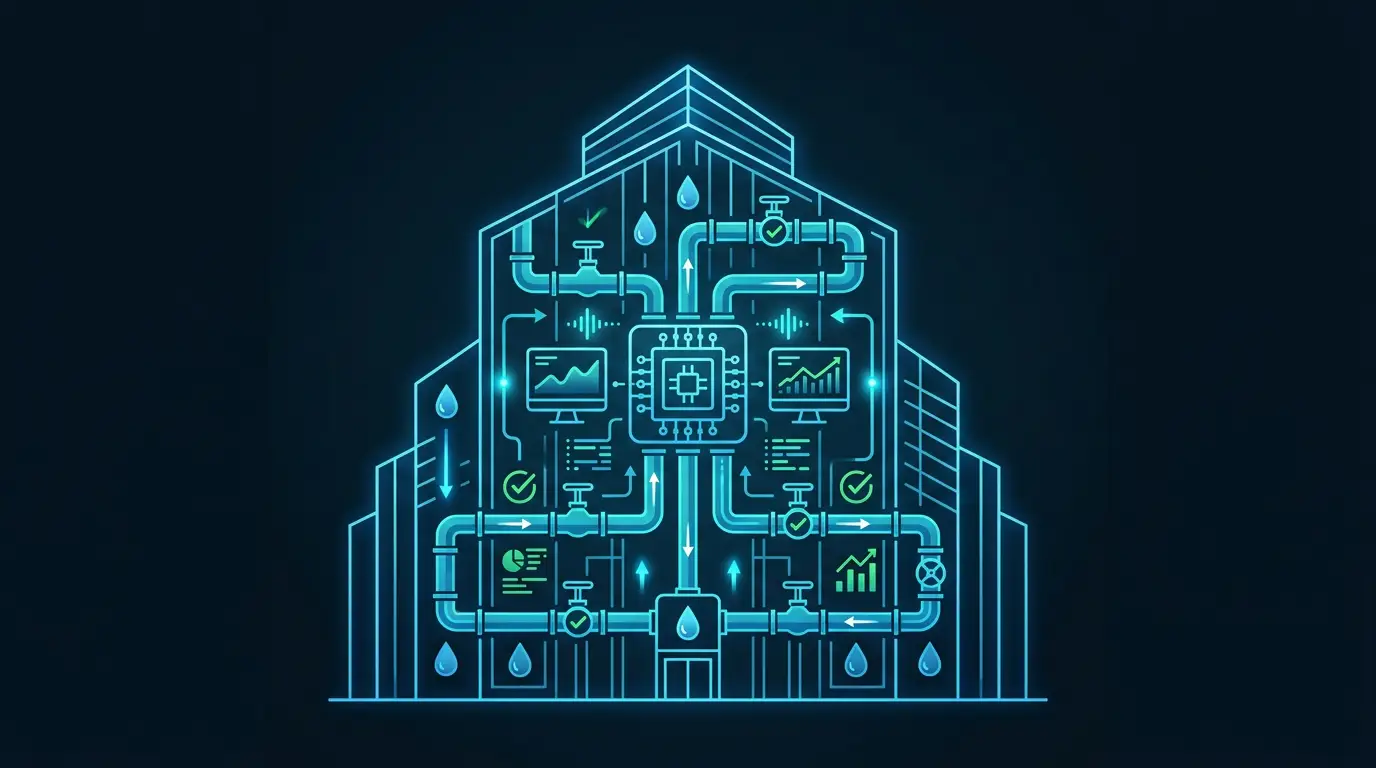
Smart Water Management Systems for Commercial Buildings
Smart water management systems use IoT sensors, real-time monitoring, and data analytics to help commercial buildings reduce water waste, lower utility costs, and meet sustainability targets. Buildings that adopt these systems typically reduce water consumption by 15–30%, making them a high-impact investment for facility managers and property owners.
Water is one of the most undermonitored utilities in commercial real estate. While energy management systems have been widely adopted, water consumption often goes untracked until a leak causes significant damage—or a utility bill demands attention. Smart water management systems change that dynamic entirely, giving building operators precise, real-time visibility into how water moves through their facilities.
This guide covers what these systems are, how they work, their core benefits, and how to evaluate your options. Whether you manage a corporate campus, a hospital, or a multi-tenant office complex, understanding smart water management is increasingly essential.
What Are Smart Water Management Systems?
Smart water management systems are integrated platforms that combine hardware sensors, connectivity infrastructure, and software analytics to monitor, control, and optimize water usage across a building or portfolio of buildings.
At their core, these systems collect data from flow meters, pressure sensors, and leak detectors installed throughout a building's water infrastructure. That data is transmitted—typically via IoT (Internet of Things) protocols—to a centralized dashboard where facility managers can view consumption patterns, set usage thresholds, and receive automated alerts.
Unlike traditional water meters that offer monthly snapshots, smart systems provide continuous, granular data—down to individual fixtures, floors, or systems such as HVAC cooling towers, irrigation networks, and restroom facilities.
Key Features of Smart Water Management Systems
Real-Time Flow Monitoring and Leak Detection
Real-time monitoring is the foundational feature of any smart water management platform. Sensors detect irregular flow patterns that indicate leaks, burst pipes, or malfunctioning equipment—often before the issue becomes visible or causes structural damage. According to the U.S. Environmental Protection Agency (EPA), leaks in commercial buildings account for approximately 6 trillion gallons of water lost annually across the United States.
Automated Alerts and Notifications
When consumption exceeds a defined threshold or an anomaly is detected, the system sends immediate alerts to facility managers via email, SMS, or in-app notifications. This eliminates reliance on manual inspection cycles and ensures a rapid response to potential problems.
Data Analytics and Usage Reporting
Advanced platforms include built-in analytics tools that benchmark water usage against industry standards, historical data, or comparable facilities. These insights support evidence-based decisions around operational changes, equipment upgrades, and sustainability reporting.
Integration with Building Management Systems (BMS)
Most enterprise-grade smart water platforms integrate with existing Building Management Systems, enabling centralized control of water, HVAC, lighting, and energy systems from a single interface. This integration streamlines facility operations and improves overall resource efficiency.
Remote Shut-Off and Flow Control
Select systems include remotely operable shut-off valves, allowing facility teams to isolate specific zones during a detected leak or after hours—without requiring on-site intervention.
Benefits of Smart Water Management in Commercial Buildings
Reduced Water Consumption and Utility CostsCommercial buildings that implement smart water management systems typically achieve water savings of 15–30%, according to the Alliance for Water Efficiency. For large facilities with high water usage—hospitals, hotels, and data centers—this translates to substantial cost reductions year over year.
Early Leak Detection and Risk MitigationUndetected leaks are among the leading causes of property damage in commercial buildings. Smart detection reduces the window between leak onset and response, directly limiting repair costs, business disruption, and potential liability.
Regulatory Compliance and Sustainability ReportingMunicipalities across the United States and globally are tightening water efficiency requirements for commercial properties. Smart water management systems generate the audit-ready data necessary to demonstrate compliance and support ESG (Environmental, Social, and Governance) reporting frameworks such as LEED and BREEAM certification.
Operational EfficiencyAutomating data collection and alerting frees facility teams from time-intensive manual monitoring tasks. Staff can focus on higher-value maintenance activities while the system handles routine surveillance.
Smart Water Management: Feature Comparison
| Feature | Basic Systems | Mid-Tier Systems | Enterprise Systems |
|---|---|---|---|
| Real-time flow monitoring | ✅ | ✅ | ✅ |
| Leak detection alerts | ✅ | ✅ | ✅ |
| Analytics dashboard | Limited | Standard | Advanced |
| BMS integration | ❌ | Partial | Full |
| Remote shut-off valves | ❌ | Optional | ✅ |
| Multi-site management | ❌ | Limited | ✅ |
| ESG / compliance reporting | ❌ | Limited | ✅ |
Choose a basic system if your building is small, has straightforward plumbing infrastructure, and your primary goal is leak alerting. Choose an enterprise system if you manage a large or multi-site portfolio and require deep analytics, BMS integration, and compliance documentation.
What to Look for When Selecting a Smart Water Management System
When evaluating platforms, facility managers and property owners should consider the following criteria:
- Scalability: Can the system expand to cover additional buildings or zones as your portfolio grows?
- Integration capability: Does it connect with your existing BMS, ERP, or sustainability platforms?
- Data security: Is the platform compliant with relevant data protection standards, particularly if connected to broader building infrastructure?
- Vendor support: Does the provider offer installation support, training, and ongoing technical assistance?
- Reporting output: Can the system generate reports formatted for LEED, BREEAM, or local regulatory requirements?
Selecting a solution without evaluating these factors can result in costly re-implementation later, particularly for multi-site operations.
The Operational Case for Acting Now
The business case for smart water management is strengthening. Water utility costs continue to rise in most U.S. markets. Regulatory requirements are becoming more stringent. And investors, tenants, and corporate clients increasingly scrutinize the sustainability credentials of the buildings they occupy.
Implementing a smart water management system positions a commercial building for long-term operational resilience—reducing costs, managing risk, and demonstrating a measurable commitment to responsible resource use.
Frequently Asked Questions
-
What is a smart water management system for commercial buildings?
A smart water management system is a technology platform that uses IoT sensors, flow meters, and data analytics to monitor and control water usage in real time across a commercial building. It detects leaks, tracks consumption by zone or fixture, and generates reports to support cost reduction and sustainability goals.
-
How much can a commercial building save with smart water management?
Commercial buildings typically reduce water consumption by 15–30% after implementing smart water management systems, according to the Alliance for Water Efficiency. Actual savings depend on building size, current usage patterns, and the level of system sophistication deployed.
-
How long does it take to install a smart water management system?
Installation timelines vary by building complexity and system scope. Basic sensor-based systems for smaller buildings can be deployed within days. Enterprise-grade systems with full BMS integration may require several weeks, including configuration, testing, and staff training.
-
Do smart water management systems support LEED certification?
Yes. Many enterprise-level smart water management platforms generate audit-ready consumption data and reports that support LEED (Leadership in Energy and Environmental Design) certification requirements, particularly under the Water Efficiency credit category.
-
Can smart water systems be retrofitted into existing commercial buildings?
Yes. Most modern smart water management systems are designed for retrofit installation. Wireless sensor options reduce the need for significant infrastructure modification, making them viable for older buildings with established plumbing systems.