Shopping Cart



Smart Buildings + Renewable Energy: A Practical Integration Guide
Learn how smart buildings and renewable energy work together to improve energy efficiency, reduce operating costs, lower carbon emissions, and support sustainable building management.
By Blue Edge Team | Jul 21, 2026
Smart Buildings + Renewable Energy: A Practical Integration Guide
Quick answer: Integrating renewable energy with smart building systems combines automated controls, IoT sensors, and clean energy sources—such as solar and wind—to reduce energy costs, lower carbon emissions, and improve operational efficiency. Buildings with this integration can reduce energy consumption by up to 30–50%, according to the International Energy Agency (IEA, 2023).
The way buildings consume and manage energy is undergoing a fundamental transformation. Driven by rising utility costs, tightening environmental regulations, and rapid advances in building automation, facility managers and building owners are increasingly turning to smart systems that work in tandem with renewable energy sources.
This isn't a trend reserved for large commercial developments. From mid-sized office complexes to industrial facilities, the integration of renewable energy with intelligent building infrastructure is becoming both accessible and economically compelling. This guide covers the core features, key benefits, and a practical comparison of integration approaches—giving you a clear foundation to evaluate your options.
What Does Renewable Energy Integration in Smart Buildings Actually Mean?
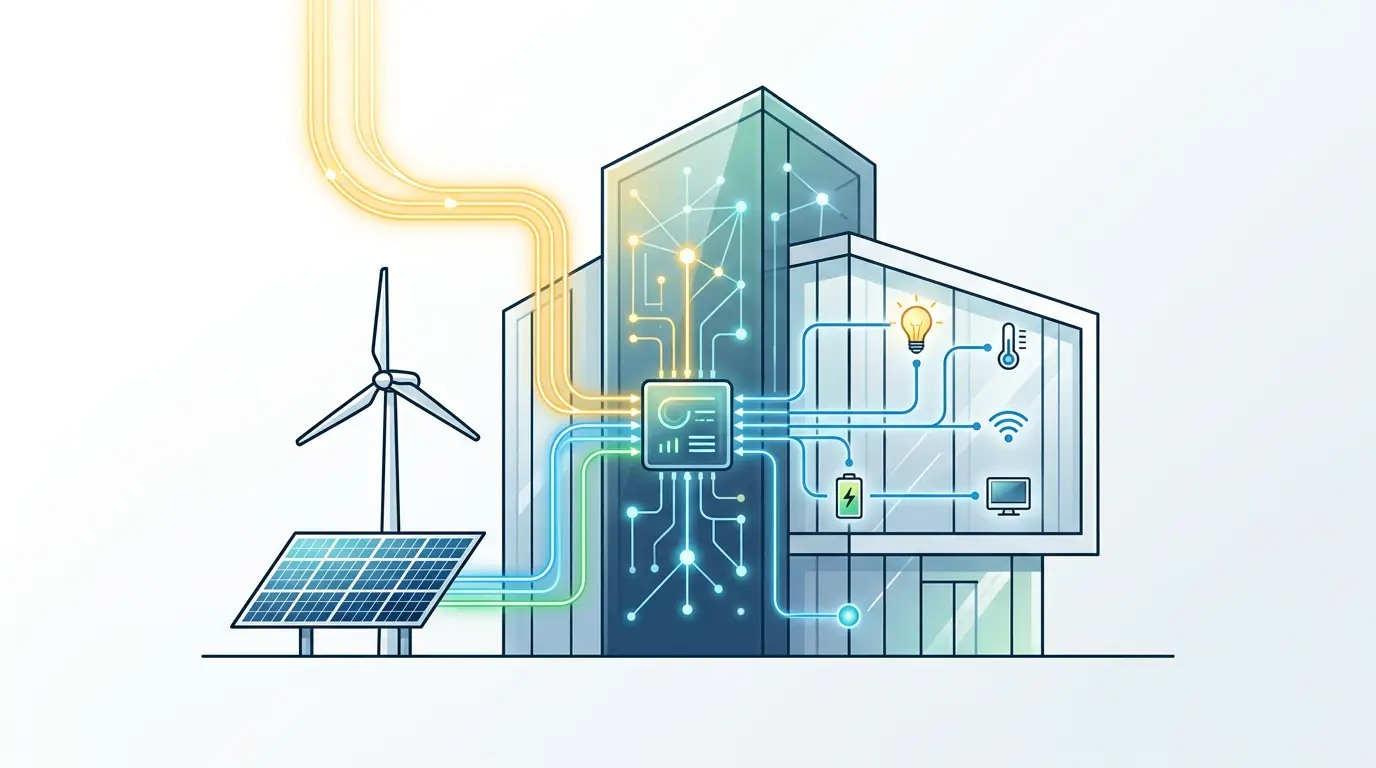
Smart building systems use a network of sensors, controllers, and automated software to manage a building's core functions—lighting, HVAC, security, and energy consumption. Renewable energy integration means linking these systems directly to on-site or grid-connected clean energy sources, such as solar photovoltaic (PV) arrays, wind turbines, or battery storage systems.
The result is a dynamic energy ecosystem. Rather than passively consuming power from the grid, a smart building actively monitors energy generation, predicts demand, stores surplus energy, and adjusts consumption in real time.
Core Technologies That Enable This Integration
Several technologies work together to make renewable-smart building integration function effectively:
- Building Energy Management Systems (BEMS): Centralized platforms that monitor and control energy use across all building systems.
- IoT Sensors: Devices that collect real-time data on occupancy, temperature, lighting levels, and equipment performance.
- Smart Inverters: Convert DC power from solar panels into AC power compatible with building electrical systems, while communicating with the BEMS.
- Battery Energy Storage Systems (BESS): Store excess renewable energy for use during peak demand periods or grid outages.
- Demand Response Controls: Automated systems that reduce or shift energy consumption based on grid signals or energy pricing data.
Key Benefits of Integrating Renewable Energy with Smart Building Systems
Significant Reduction in Energy Costs
One of the most measurable advantages is cost reduction. According to the U.S. Department of Energy, smart building technologies alone can reduce energy use by 15–30%. When paired with on-site solar generation and battery storage, that figure climbs considerably. Buildings can shift consumption to off-peak hours, draw from stored solar energy during peak tariff windows, and reduce reliance on expensive grid power.
Improved Carbon Performance and Regulatory Compliance
Global reporting frameworks—including the EU's Energy Performance of Buildings Directive (EPBD) and ASHRAE standards in North America—are placing greater accountability on building operators to demonstrate measurable emissions reductions. Renewable-integrated smart buildings generate verifiable performance data that supports sustainability reporting, green building certifications (such as LEED and BREEAM), and ESG disclosures.
Enhanced Grid Resilience
Buildings equipped with battery storage and smart energy controls are far better positioned to maintain operations during grid disruptions. Critical systems can be prioritized automatically, with stored renewable energy sustaining operations until grid power is restored.
Real-Time Operational Visibility
Integrated systems give facility managers a unified view of energy generation, consumption, and storage—across all floors, zones, and equipment. This visibility enables faster fault detection, more accurate maintenance scheduling, and data-driven decisions about energy procurement.
Comparing Renewable Energy Integration Approaches
Not all integration strategies are equal. The right approach depends on building size, existing infrastructure, budget, and operational priorities.
| Approach | Best For | Key Advantage | Consideration |
|---|---|---|---|
| Solar PV + BEMS Only | Small to mid-size buildings | Low upfront complexity | Limited resilience without storage |
| Solar PV + Battery Storage + BEMS | Commercial & industrial buildings | Peak shaving + grid independence | Higher initial investment |
| Solar + Wind + Full BAS Integration | Large campuses or facilities | Maximum generation diversity | Requires robust integration architecture |
| Grid-Tied Hybrid System | Buildings in deregulated markets | Demand response revenue potential | Depends on utility program availability |
For most commercial facilities beginning this journey, a solar PV and battery storage system integrated with an existing BEMS offers the most practical starting point—delivering measurable ROI while establishing the infrastructure for future expansion.
What to Consider Before Starting an Integration Project
Successful integration requires more than installing solar panels or upgrading a building controller. A structured approach improves outcomes significantly:
- Conduct an energy audit to establish a baseline for current consumption patterns and identify the highest-impact areas for improvement.
- Assess existing infrastructure to determine what building automation components are already in place and their compatibility with new systems.
- Define clear performance targets—whether that's a percentage reduction in energy costs, a carbon emissions goal, or a resilience benchmark.
- Engage certified system integrators with demonstrated experience connecting renewable energy assets to building automation platforms.
- Plan for data governance—establish how energy data will be collected, stored, and used to inform operational decisions.
The Path Forward for Smart, Sustainable Buildings
Renewable energy integration with smart building systems represents one of the most impactful investments a building owner or facility manager can make—both financially and environmentally. The technology is mature, the ROI is increasingly well-documented, and the regulatory pressure to act is only growing.
Buildings that make this transition are not simply reducing their utility bills. They are becoming active participants in a more resilient, distributed energy system—capable of generating, storing, managing, and even selling energy based on real-time conditions.
The question for most organizations is no longer whether to integrate, but how to sequence the investment strategically. Starting with a comprehensive energy assessment and engaging experienced integration partners are the most reliable first steps toward a building that performs as efficiently as it operates sustainably.
Frequently Asked Questions
-
How much can a smart building reduce energy costs by integrating renewable energy?
According to the U.S. Department of Energy, smart building technologies alone reduce energy use by 15–30%. When combined with on-site solar generation and battery storage, total savings can reach 30–50%, depending on building size, location, and energy tariff structure.
-
What renewable energy sources are most compatible with smart building systems?
Solar photovoltaic (PV) systems are the most widely integrated source, primarily due to their scalability, declining installation costs, and compatibility with standard BEMS platforms. Wind energy is increasingly used in larger campuses or industrial facilities. Battery storage systems are commonly paired with both sources to balance generation and consumption.
-
How long does it take to see a return on investment from renewable-smart building integration?
Payback periods vary based on system size, local energy prices, and available incentives. Most commercial solar-plus-storage projects achieve payback within 5–10 years, with some projects in high-tariff markets reporting returns within 3–5 years, according to the International Renewable Energy Agency (IRENA, 2023).
-
Do existing buildings need to be fully rewired to integrate renewable energy with smart systems?
Not necessarily. Many integration projects layer new smart controls and renewable energy assets onto existing electrical infrastructure. A thorough infrastructure assessment will identify which components require upgrading and which can be retained, minimizing disruption and cost.
-
What certifications or standards apply to smart buildings that integrate renewable energy?
Relevant standards include ASHRAE 90.1 (energy efficiency in commercial buildings), ISO 50001 (energy management systems), and green building certification frameworks such as LEED (Leadership in Energy and Environmental Design) and BREEAM. Compliance requirements vary by region and building type.