Shopping Cart

- Articles
- IoT Solutions
- IoT in Smart Buildings: Connected Workspaces in KSA (2026 Guide)
IoT in Smart Buildings: Connected Workspaces in KSA (2026 Guide)
Explore how IoT in smart buildings transforms workspaces in Saudi Arabia with energy efficiency, security, and intelligent automation.
By Blue Edge Team | Published Apr 22, 2026 | Updated Sep 23, 2026 | 7 min read
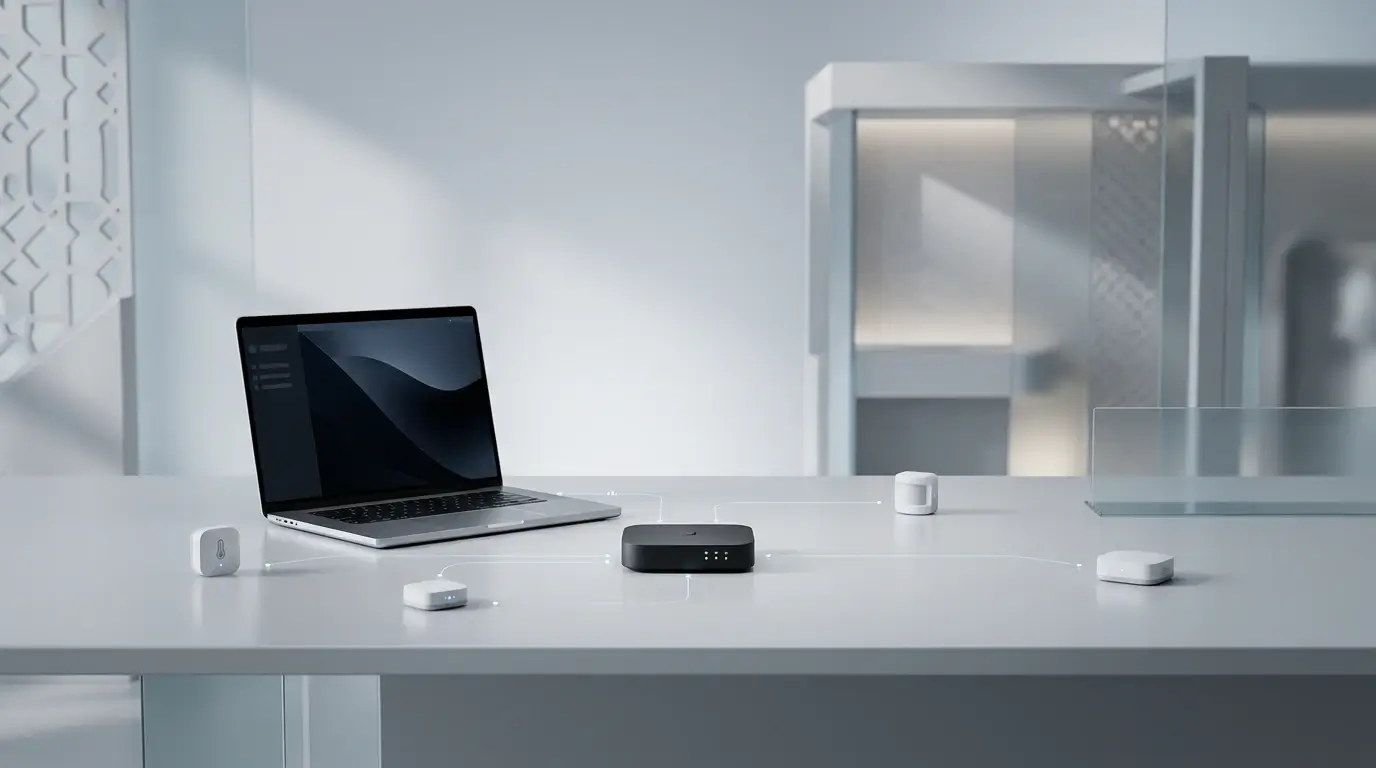
The integration of the Internet of Things (IoT) into commercial real estate is fundamentally changing how businesses operate. IoT in smart buildings refers to the network of interconnected devices, sensors, and software that collect and exchange data to optimize building performance. By transitioning traditional offices into intelligent environments, organizations can create spaces that are highly responsive to the needs of their occupants and the environment.
In the Kingdom of Saudi Arabia (KSA), this digital transformation is accelerating rapidly. Driven by the ambitious goals of Saudi Vision 2030, enterprises and government entities are prioritizing sustainable, technology-driven infrastructure. Connected workspaces are no longer a futuristic concept; they are a strategic requirement for modern businesses seeking to maximize operational efficiency and foster a productive workforce.
Implementing smart building technologies provides organizations with actionable insights derived from real-time data. Facility managers can monitor energy consumption, track space utilization, and automate critical systems such as climate control and security. This comprehensive guide details the mechanics of IoT in smart buildings, the specific benefits for enterprises in KSA, and the essential technologies required to build the connected workspaces of the future.
The Core of Smart Buildings: Understanding IoT Integration
A smart building relies on a sophisticated ecosystem of hardware and software working in unison. At the foundation of this ecosystem is the Internet of Things, which allows distinct physical systems to communicate seamlessly.
Sensors and Data Collection
The primary mechanism for intelligence in any smart building is data collection. Environmental sensors monitor variables such as temperature, humidity, and air quality. Occupancy sensors detect the presence and movement of people within specific areas. These devices operate continuously, feeding massive volumes of raw data into a centralized management system. This continuous stream of information provides a precise, real-time snapshot of how the building is functioning at any given moment. Products such as the human presence detection sensor, smart temperature and humidity sensor, and smart motion sensor are purpose-built for this role.
Cloud Computing and Real-Time Analytics
Collecting data is only the first step. The true value of IoT emerges during the analysis phase. Data transmitted by sensors is typically hosted on secure cloud platforms, where advanced algorithms process the information. Real-time analytics allow building management systems to make autonomous adjustments. For example, if a meeting room is empty, the system can automatically reduce the air conditioning and turn off the lights, conserving energy without requiring human intervention. Remote monitoring and management solutions make this level of automation achievable for enterprises across KSA.
Key Benefits of IoT for Workspaces in Saudi Arabia
The transition to connected workspaces offers measurable advantages for businesses operating in KSA. By leveraging IoT solutions, companies can address common operational challenges while improving the overall employee experience.
Enhanced Energy Efficiency and Sustainability
Energy management is a critical priority for commercial facilities. Traditional buildings often waste significant amounts of power by cooling or lighting unoccupied spaces. IoT-enabled smart HVAC systems and intelligent lighting controls solve this problem by adjusting output based on actual occupancy and ambient conditions. This precision reduces energy waste, lowers utility costs, and significantly decreases the carbon footprint of the enterprise, aligning directly with national sustainability initiatives.
Improved Security and Access Control
Modern businesses require secure, flexible, and high-performance communication and security systems. IoT enhances physical security through integrated access control technologies. Biometric scanners, smart badges, and mobile credentials allow employees to move seamlessly through the facility while restricting unauthorized entry. Products such as the smart facial recognition terminal and NFC and Bluetooth access control terminals are ideal for this purpose. Furthermore, interconnected video surveillance systems equipped with artificial intelligence can detect anomalies and alert security personnel instantly, ensuring a safe environment for all occupants. Learn more about AI-powered CCTV systems in Saudi Arabia.
Optimized Space Utilization
Real estate is a significant expense for any organization. Understanding exactly how office space is used allows business leaders to make informed financial decisions. Occupancy analytics reveal which areas of the office are frequently used and which remain empty. Facility managers can use this data to redesign floor plans, convert underutilized areas into productive collaboration zones, or optimize desk-sharing arrangements for hybrid workforces. Smart offices built on reliable IoT infrastructure make this level of insight accessible in real time.
Aligning Smart Workspaces with Saudi Vision 2030
The rapid adoption of smart building technology in Saudi Arabia is closely tied to the nation's broader strategic objectives. Saudi Vision 2030 emphasizes the development of a digital economy and the construction of sustainable, world-class cities.
Driving Digital Transformation
Saudi Arabia is heavily investing in digital infrastructure to diversify its economy. The implementation of enterprise networking and IoT solutions in commercial buildings is a core component of this transformation. By adopting these advanced technologies, local businesses improve their global competitiveness and attract top-tier international talent. Explore the latest technology trends shaping Saudi Arabia in 2026 to stay ahead of the curve.
Building Sustainable Cities
Projects like NEOM and the development of smart cities across the Kingdom demonstrate a strong commitment to environmental sustainability. IoT in smart buildings contributes directly to these goals by enforcing strict energy efficiency standards and promoting the responsible use of resources. Smart water management systems, for instance, can detect leaks instantly — devices like the smart flood sensor and valve controller are purpose-built to prevent waste in a region where water conservation is vital.
Essential IoT Technologies for Modern Enterprises
To fully realize the benefits of a connected workspace, organizations must deploy a specific set of integrated technologies. Every product and system must be carefully selected to ensure optimal performance and durability. Browse our full products catalogue to explore available solutions.
Smart HVAC Systems
Heating, ventilation, and air conditioning (HVAC) systems are the largest consumers of energy in commercial buildings. Smart HVAC technology uses data from IoT sensors to maintain optimal indoor climates automatically. These systems can even analyze weather forecasts to proactively adjust cooling strategies, ensuring maximum comfort for employees while minimizing energy expenditure. Solutions such as the smart AC controller for indoor units, fan coil thermostats, and ZigBee fan coil thermostats deliver this level of intelligent climate management.
Intelligent Lighting Controls
Lighting must be adaptable to both the time of day and the presence of occupants. Intelligent lighting networks utilize daylight harvesting, which automatically dims artificial lights when sufficient natural sunlight is available. Combined with motion sensors, these systems ensure that energy is never wasted on illuminating empty corridors or offices. Products including the ZigBee LED dimmer, ZigBee AC triac dimmer, and ZigBee triac dimmer pane are well-suited for enterprise lighting automation.
Advanced Cybersecurity Measures
As buildings become more connected, they also become potential targets for cyber threats. Securing the IoT ecosystem is paramount. Robust cybersecurity systems must be implemented to protect the data transmitted between devices and the cloud. This includes end-to-end encryption, regular firmware updates via automated patch management, and strict network segmentation to ensure that a vulnerability in a smart thermostat cannot be used to access sensitive corporate data. Read our guide on securing your office network in Saudi Arabia for a practical starting point.
Frequently Asked Questions
-
What is a smart building?
A smart building uses IoT devices, sensors, and automated systems to control and monitor its operations. This includes lighting, HVAC, security, and space utilization. The goal is to optimize efficiency, reduce operational costs, and create a comfortable environment for occupants.
-
How does IoT improve energy efficiency in commercial buildings?
IoT improves energy efficiency by using sensors to monitor occupancy and environmental conditions in real time. The building management system uses this data to automatically adjust lighting and climate control, ensuring that energy is only consumed when and where it is actually needed. Explore our range of smart building products to see what is available for your facility.
-
Why is IoT important for businesses in Saudi Arabia?
IoT aligns with the digital transformation and sustainability goals of Saudi Vision 2030. It enables KSA businesses to optimize operational costs, improve workplace security, and reduce their environmental impact through intelligent resource management. Discover more about smart office automation trends in KSA and how they are reshaping the workplace.
-
Can IoT systems be integrated into existing buildings?
Yes, older buildings can be retrofitted with IoT technology. Wireless sensors and cloud-based management platforms allow facility managers to upgrade existing infrastructure without the need for extensive and costly physical renovations. Our IT installation and configuration services and IT technical consultations can guide you through the process from assessment to deployment.
-
What are the security risks associated with smart buildings?
Connecting building systems to the internet introduces cybersecurity risks, such as unauthorized access to corporate networks or tampering with physical security systems. These risks are mitigated by deploying enterprise-grade cybersecurity measures, including network segmentation, encryption, and continuous endpoint monitoring. You can also review our cybersecurity checklist as a practical reference.
Transforming Your Workspace with Blue Edge for Communication and Technology
Developing a truly connected workspace requires a strategic approach and reliable technological infrastructure. Organizations must ensure that their communication systems, networks, and smart devices are perfectly aligned to deliver measurable results.
Blue Edge for Communication and Technology is dedicated to empowering partners and clients across Saudi Arabia by delivering cutting-edge communication and technology solutions. We partner with world-leading brands such as Akuvox and Akubela to provide a wide range of technology solutions, including enterprise networking, cybersecurity systems, and comprehensive smart building technologies. Every product we offer is tested and proven to meet the highest industry standards.
By upgrading your infrastructure with tailored IoT solutions, you can create an intelligent, secure, and highly efficient environment. Contact our team of experts today to learn how we can help you build the connected workspace of the future. You can also request technical support or explore our full range of IT services to get started.
About Blue Edge
Blue Edge Company is a value-added technology distributor based in Dammam, Saudi Arabia, supplying interactive displays, smart building systems, networking infrastructure and IT security software to businesses and residential projects across the Kingdom, with installation and technical support.
Learn more about Blue Edge →Published 22 April 2026 • Last updated 23 September 2026 • This article is reviewed when standards, regulations or product guidance change.