Shopping Cart



Power over Ethernet (PoE) for Saudi Businesses: Complete Guide 2026
Learn how Power over Ethernet (PoE) works and why it is the smart choice for Saudi workspaces including cost savings, flexibility, and scalability.
By Blue Edge Team | May 01, 2026
Power over Ethernet: The Smart Choice for Saudi Workspaces
Saudi Arabia is undergoing a profound digital transformation, driven by ambitious national goals and a rapidly evolving corporate landscape. Organizations across the Kingdom are upgrading their facilities to support advanced technologies, requiring infrastructure that is robust, adaptable, and highly efficient. As commercial real estate expands in cities like Riyadh, Jeddah, and Dammam, business leaders must select communication and networking frameworks that align with these modern demands.
At the foundation of this technological upgrade is the method by which devices receive data and power. Historically, deploying enterprise networks meant running separate cabling for network connectivity and electrical power. This dual-cabling approach increases installation costs, complicates building maintenance, and restricts where critical devices can be placed. Modern workspaces require a more streamlined solution to support the growing number of connected devices, from smart lighting panels to high-definition conferencing cameras.
Power over Ethernet (PoE) provides the exact structural efficiency that growing enterprises require. By transmitting both electrical power and data connections over a single standard network cable, PoE fundamentally changes how IT departments deploy hardware. This technology eliminates the need for strict proximity to electrical outlets, allowing you to optimize your workspace layout based on functional needs rather than power constraints.
Understanding the mechanics, applications, and strategic advantages of this technology will empower your organization to make informed infrastructure decisions. Adopting PoE is a crucial step in future-proofing your facilities, ensuring that your network can seamlessly scale alongside your business objectives.
Understanding the Mechanics of Power over Ethernet
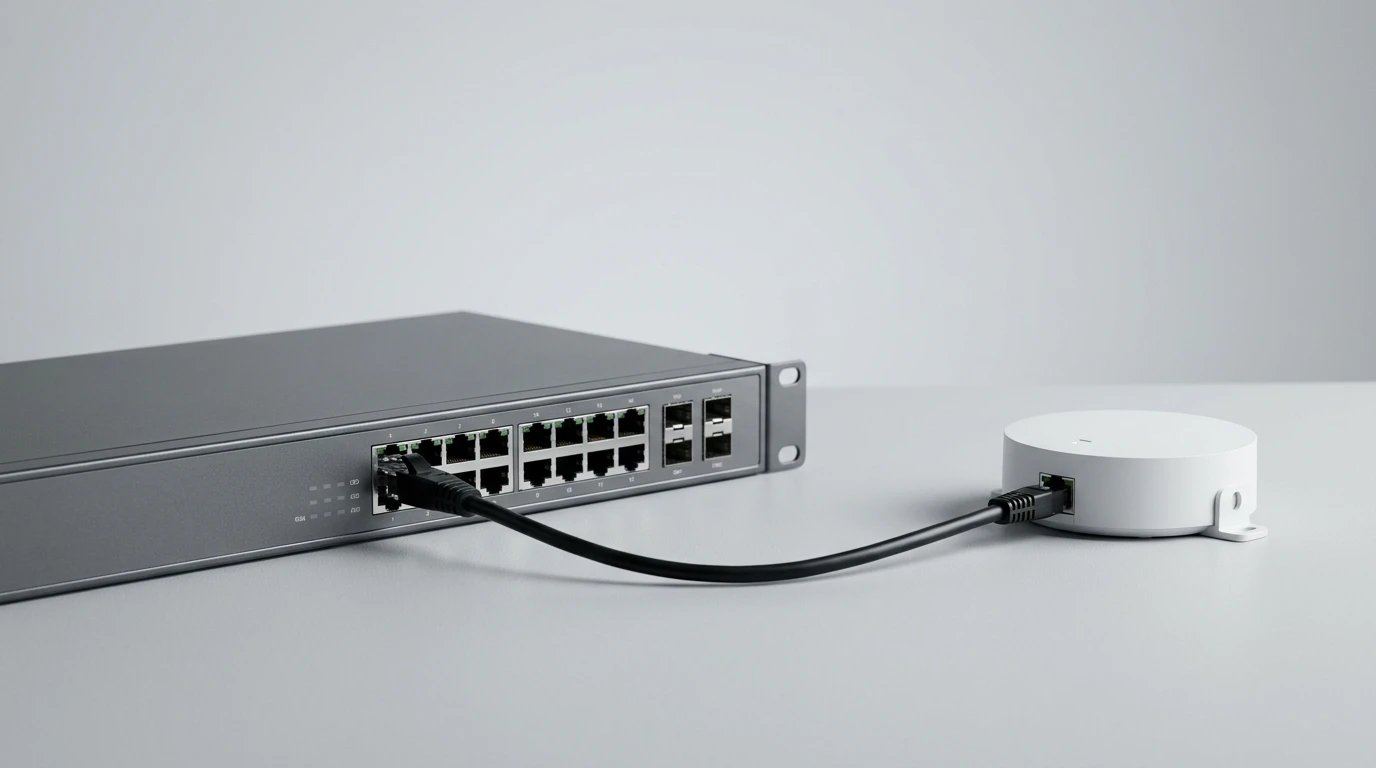
Power over Ethernet is a standardized networking technology that passes electric power alongside data on twisted-pair Ethernet cabling. This allows a single cable to provide both data connection and electrical power to devices such as wireless access points, IP cameras, and VoIP phones. The technology operates under strict IEEE standards, ensuring safety, interoperability, and consistent performance across different hardware manufacturers.
The system typically consists of Power Sourcing Equipment (PSE) and Powered Devices (PD). The PSE, often a PoE-enabled network switch or an injector, delivers the power to the network cable. The PD is the end device that receives this power to operate. Because the technology uses low voltage and includes smart negotiation protocols, the power source only sends the exact amount of electrical current the end device requests. This prevents accidental damage to non-PoE devices that might be plugged into the same network.
Recent advancements in PoE standards have significantly expanded its capabilities. Early iterations (IEEE 802.3af) provided up to 15.4 watts of direct current power. Subsequent updates, such as PoE+ (IEEE 802.3at) and PoE++ (IEEE 802.3bt), have increased this capacity to 30 watts, 60 watts, and even 90 watts per port. This massive increase in power delivery allows modern networks to support heavy-duty devices, including pan-tilt-zoom (PTZ) cameras, high-performance Wi-Fi 6 access points, and complete LED lighting systems.
Key Strategic Benefits for Saudi Enterprises
Implementing this unified cabling strategy offers substantial advantages for organizations operating within Saudi Arabia's dynamic business environment. The benefits extend from immediate financial savings to long-term operational resilience.
Significant Reduction in Installation Costs
Traditional hardware deployment requires an electrician to install dedicated power outlets near every new network device. This process incurs high labor costs, requires strict adherence to localized electrical codes, and often causes project delays. PoE eliminates the need for separate electrical wiring, allowing IT professionals to install devices anywhere a network cable can reach. By consolidating power and data into a single cabling infrastructure, your organization drastically reduces material expenses and deployment timelines.
Unmatched Flexibility and Scalability
Modern corporate environments are rarely static. Departments expand, desk layouts shift, and new technologies are continuously integrated. PoE provides the flexibility to relocate devices instantly without worrying about power availability. If a security camera needs to be moved to a different hallway, or an access point must be repositioned to eliminate a dead zone, your IT team simply routes the Ethernet cable to the new location. This agility ensures that your infrastructure easily scales as your workforce grows.
Enhanced Reliability and Centralized Management
Power outages and fluctuations can severely disrupt business operations. When devices are powered by traditional wall outlets, each unit is vulnerable to localized electrical issues. PoE centralizes power delivery, allowing you to connect your main network switches to an Uninterruptible Power Supply (UPS). During a power failure, the UPS keeps the centralized switch running, which in turn keeps all connected PoE devices fully operational. Furthermore, centralized power management allows IT administrators to remotely monitor energy consumption, reboot frozen devices, and schedule automated power-downs for smart lighting and displays during off-hours. Our remote management solutions can further extend this visibility across your entire device estate.
Core Applications in the Modern Workspace
The versatility of this technology supports a wide range of enterprise systems. Blue Edge for Communication and Technology (BEC) empowers partners and clients across Saudi Arabia by delivering cutting-edge solutions that rely heavily on robust PoE infrastructure.
IP Telephony and Unified Communications
Voice over IP (VoIP) phones were among the first devices to heavily utilize PoE technology. Modern businesses require secure, flexible, and high-performance communication systems. A single Ethernet cable connects the IP phone to the corporate network while simultaneously providing the power needed for its display and operating system. This guarantees that communication lines remain active even during brief power interruptions, provided the central switch is supported by a UPS.
Enterprise Networking and Wireless Access
The proliferation of mobile devices and cloud-based applications demands pervasive, high-speed wireless coverage throughout your corporate facilities. Deploying Wi-Fi access points in optimal locations—such as high ceilings or centralized corridors—is incredibly difficult when relying on traditional AC power. PoE allows access points to be mounted precisely where they deliver the best radio frequency coverage. As organizations upgrade to newer standards like Wi-Fi 6 and Wi-Fi 6E, the higher power limits of PoE+ and PoE++ easily accommodate the increased energy demands of these advanced networking devices.
Advanced Physical Security and Surveillance
Protecting corporate assets requires comprehensive surveillance coverage. Modern IP cameras, particularly those featuring high-definition sensors, motorized movement, and integrated heaters for extreme outdoor temperatures, require reliable power sources. PoE enables the strategic placement of these cameras on exterior walls, parking lot perimeters, and high-traffic entryways without the expense of running electrical conduits. Additionally, PoE powers network-based access control systems, including biometric scanners, RFID badge readers, and magnetic door locks, centralizing your physical security management.
Smart Building Technologies and IoT
The concept of the intelligent building is gaining massive traction across the Kingdom. Internet of Things (IoT) sensors are used to monitor occupancy, track ambient temperature, and adjust HVAC output to optimize energy efficiency. PoE is the ideal delivery mechanism for these sensors. Furthermore, PoE-based LED lighting systems are replacing traditional electrical lighting in advanced corporate headquarters. These lighting systems are highly energy-efficient, produce very little heat, and can be dynamically controlled via network software to align with natural daylight patterns. Explore our full range of smart building solutions to see how these technologies integrate in real-world deployments.
Aligning Infrastructure with National Objectives
Saudi Arabia's Vision 2030 emphasizes economic diversification, environmental sustainability, and the adoption of advanced digital technologies. Transitioning to smart, energy-efficient building standards directly supports these national pillars.
PoE infrastructure significantly lowers the carbon footprint of commercial buildings by enabling highly precise control over energy consumption. Smart sensors powered by the network can detect when a conference room is empty and automatically shut off the lights, HVAC systems, and display monitors. By partnering with world-leading brands to deliver innovative and reliable solutions, organizations can ensure they meet the highest industry standards for sustainability and digital readiness. This forward-thinking approach not only optimizes operational budgets but also positions your company as a leader in technological adoption.
Frequently Asked Questions
-
What happens if I plug a non-PoE device into a PoE network switch?
Nothing harmful will happen. Modern PoE switches use a negotiation protocol before sending power down the cable. If the switch does not detect a valid Powered Device (PD) signature from the connected equipment, it will only send data, acting exactly like a standard Ethernet switch. This safety feature prevents electrical damage to standard computers and legacy hardware.
-
Can PoE transmit power over long distances?
The maximum effective distance for transmitting both data and power over standard Ethernet cabling (such as Cat5e or Cat6) is 100 meters (328 feet). If a device needs to be placed further than this limit, your IT team can use PoE extenders or powered fiber-optic solutions to bridge the gap without losing data integrity or power capacity. Our IT technical consultations team can advise on the best approach for your specific facility layout.
-
Does Power over Ethernet reduce network speeds?
No. The electrical current travels over different wire pairs within the cable, or operates at a different frequency, than the data signals. Your devices will receive full Gigabit or Multi-Gigabit data speeds alongside the electrical power. There is no performance degradation when utilizing PoE technology.
-
Which types of Ethernet cables are required for PoE?
Standard twisted-pair network cables are required. Cat5e is generally sufficient for basic PoE (IEEE 802.3af). However, for newer standards pushing higher wattages (PoE+ and PoE++), it is highly recommended to use Cat6 or Cat6a cabling. These thicker cables dissipate heat more effectively, ensuring optimal performance and safety when delivering higher power loads. Learn more about how we design and deploy compliant structured cabling solutions across Saudi Arabia.
-
Is PoE technology secure against cyber threats?
PoE itself is a physical layer technology and does not introduce new software vulnerabilities. However, because it powers IoT devices and security cameras that reside on your network, those endpoints must be properly secured. Utilizing robust cybersecurity systems, segmenting network traffic, and enforcing strict access controls will protect your infrastructure from unauthorized access. Our endpoint security solutions provide an additional layer of protection for all networked devices.
Future-Proof Your Infrastructure Today
Investing in the right cabling and network architecture is a foundational step for any organization looking to scale securely and efficiently. Power over Ethernet consolidates your infrastructure, lowers your capital expenditures, and provides the ultimate flexibility for deploying advanced corporate technologies. As the Saudi corporate landscape becomes increasingly digitized, relying on restrictive traditional power layouts will only hinder your operational agility.
Blue Edge for Communication and Technology (BEC) is committed to empowering your enterprise with expertly designed technology frameworks. Every product we offer is tested and proven to meet the highest industry standards, ensuring optimal performance and durability. Contact our team today to discuss how we can upgrade your workspace infrastructure, optimize your operational efficiency, and prepare your business for the technological demands of tomorrow.